

Official statement from the Ministry of Economy, Environment and Agriculture: The Cabinet of Ministers is introducing a unified, transparent, and digitized mechanism for the special use of aquatic bioresources within the territories and objects of the nature reserve fund (NRF), where such activities are permitted by law.
It is noted that the goal of the initiative is to eliminate legislative gaps and create a transparent procedure for setting limits. The right to special use of aquatic bioresources will henceforth be distributed through open auctions in the “Prozorro. Sales” system. In addition, a mandatory fee for such catches is being introduced, which will allow for the replenishment of local budgets.
“For the first time, we are forming a unified digital system for the special use of aquatic bioresources within the nature reserve fund. This means transparent rules for business, minimization of corruption risks, and real control over the preservation of biodiversity. At the same time, we are creating preconditions for the sustainable development of the sector in line with modern European practices,” said Taras Vysotskyi, Deputy Minister of Economy, Environment and Agriculture.
In particular, catch limits will be approved by the Ministry of Economy in agreement with the State Agency for Fisheries. In turn, the State Agency for Fisheries will conduct auctions and conclude agreements with users. All operations, from record-keeping to the generation of accounting receipts, will be recorded in the electronic system “eFishery.”
It is expected that the implementation of this project will allow for the complete systematization of data on catch volumes, ensure open access to information, and create clear and equal conditions for the operation of fisheries entities.
From the editors: we invited a newspaper observer on environmental issues, an employee of a nature reserve institution – the Lower Dniester National Nature Park – to comment on the government’s decision.
Will nature become just a “resource”?
Reflections of an ecologist on the new fishing rules and the future of Ukraine’s nature reserve fund
The Cabinet of Ministers of Ukraine recently adopted Resolution No. 688 of May 20, 2026, “On the implementation of an experimental project for the special use of aquatic bioresources within the territories and objects of the nature reserve fund.”
For many people, this may seem like a purely technical document of interest only to fishermen or fisheries workers. But in reality, it concerns a much broader issue: how do we see the future of Ukrainian nature – as an inexhaustible source of resources or as a living system that must be protected for future generations?
As an ecologist and ornithologist, I would like to draw attention to several important aspects.
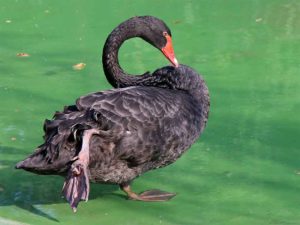 The Lower Dniester is not just fish
When we talk about the Lower Dniester, most people immediately think of fish. And this is understandable. However, the Lower Dniester floodplains are, first and foremost, one of the most valuable wetland ecosystems in Europe. Thousands of birds nest here, fish spawning grounds are located here, species listed in the Red Book of Ukraine live here, and internationally important migratory routes for waterfowl pass through here.
That is why the main value of the Lower Dniester National Nature Park lies not in the quantity of fish caught, but in the fact that it preserves natural processes that have been forming for millennia.
Without natural floodplains, there will be no fish, no birds, and no clean water.
Where is the line between use and preservation?
Any special use of natural resources must be based on the principle of environmental safety. In global nature conservation practice, the rule has long been: first, ecosystem preservation – then the use of its resources. That is why the greatest concern is not the resolution itself, but the possibility of its incorrect application in practice. It is extremely important that the new mechanisms for calculating permissible catch volumes do not turn into a tool for legalizing inflated quotas or excessive extraction of aquatic bioresources.
Unfortunately, the history of fisheries in many countries around the world knows many examples where errors in fish stock assessments led to a sharp decline in populations and ecological crises.
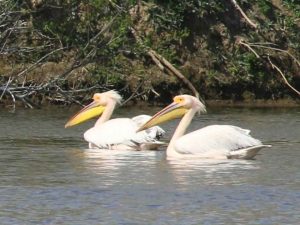 The nature reserve fund is not a fish warehouse
Special attention must be paid to nature reserve territories. National nature parks, biosphere and nature reserves were not created to maximize fish catches. Their main task, defined by law, is: biodiversity conservation; preservation of natural complexes; maintenance of natural ecological processes; scientific research; environmental education.
Therefore, objects of the nature reserve fund should not be considered primarily as a source of bioresources. They should remain natural refugia – territories where natural populations of fish, birds, plants, and animals are preserved, ensuring the stability of ecosystems far beyond the protected areas themselves.
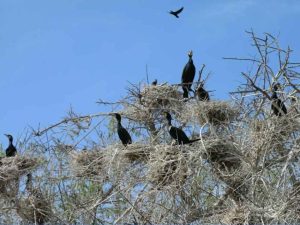 Why this is important for fish
Paradoxically, it is often nature conservation areas that are the best investment in the future of fisheries. It is here that the following are preserved: natural spawning grounds; nursery areas for young fish; wintering pits; food base for aquatic organisms. Without such natural “biodiversity banks,” no stocking programs can compensate for the loss of natural ecosystems.
Decisions must be based on science
Any catch limits must be based exclusively on: the results of scientific research; long-term monitoring; assessment of population status; analysis of ecological risks.
This is especially true for complex ecosystems like the Lower Dniester, where changes in water regime, climatic factors, invasive species, and anthropogenic impact interact.
Science must remain the main arbiter in matters of natural resource use.
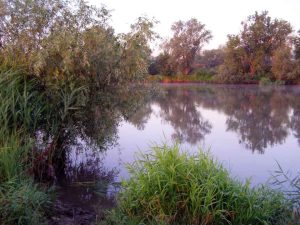
What will we leave behind?
Today we are faced with a choice. We can consider the nature reserve fund as a temporary source of additional resources. Or we can see it as the basis of the state’s environmental security, a repository of genetic diversity, and a guarantee that our children and grandchildren will also hear the singing of birds in the floodplains, see the living Dniester, and the richness of Ukrainian nature.
For an ecologist, the answer is obvious. Ukraine’s nature reserve fund is not a pantry of bioresources. It is, first and foremost, a territory of life. And that is why any new rules for the use of natural resources must work to preserve biodiversity, not to its gradual depletion.
Serhiy KUROCHKIN.











