

From the History of Black Sea Shipping
Now I rarely go to the sea. Age. But sometimes my son takes me to Arcadia or Lanzheron. I enjoy the cries of seagulls, the sharp gusts of salty wind, and I look at the horizon for a long time, remembering my voyages and the people whose names were once famous.
One of these names is Captain Vaisman, a person of difficult fate, known to all of maritime Odesa.
On August 23, 1939, the non-aggression pact between Nazi Germany and the Soviet Union was signed in Moscow. An economic cooperation treaty between the two countries was also signed. And strategic goods went to Germany: oil, cotton, grain, ore, and much more. And Germany began to supply the USSR with optics, machine tools, and other equipment for Soviet factories. The General Consulate of Germany opened in Odesa. It was located in the building of the current Reznik Children’s Hospital at the corner of Dvoryanskaya and Sadovaya streets. A swastika flag was raised over the building. Every day, Odesa residents stood opposite this building, waiting for someone to come out of the consulate to see a living fascist.
Almost all of the Black Sea Shipping Company’s vessels worked for Germany. Mikhail Mikhailovich Vaisman, a young navigator at the time, was the first mate of the motor ship “Donbas”.
On June 22, 1941, the ship was in Hamburg, unloading stacks of cotton. On that day, at 4 a.m., without a declaration of war, Nazi Germany attacked the Soviet Union. In the morning, two black trucks drove up to the side of the ship. SS men herded the sailors, shoved them into the trucks, and took them to a concentration camp. There, they were informed that they were interned. Mikhail Mikhailovich Vaisman was not overtly Jewish, but knowing how German fascists treated Jews, he managed to throw his maritime passport into the sea and gave his surname as Vorobyov. None of the crew members betrayed him.
Together with other sailors, he spent four years in a concentration camp, doing the hardest labor. They were liberated by the British, who, along with the Americans, landed in Normandy on June 6, 1944, opening a second front against Hitler’s Germany.
After the capitulation of Nazi Germany in May 1945, Mikhail Mikhailovich returned to Odesa. His family had perished in the Odesa ghetto, strangers lived in his apartment, and he had to make a lot of effort to become the owner of his home.
He went back to work at the Black Sea Shipping Company. Almost the entire fleet of the shipping company was sunk by fascist aviation and submarines during World War II. In early 1946, the shipping company began to receive German ships from defeated Nazi Germany as reparations. Mikhail Mikhailovich, who passed the exam for the title of long-distance captain, was sent to Germany, from where he brought a ship to Odesa, which was named “General Chernyakhovsky”. On this ship, Vaisman made several voyages to America until the “cold war” began between the USA and the USSR in 1947.
And at the end of 1948, when Stalin unleashed the anti-Semitic campaign – the “struggle against rootless cosmopolitans,” Captain Vaisman, like other Jews, was fired from the shipping company. In addition to Jews, sailors who were Bulgarians, Greeks, and Poles, born in Odesa but who became “foreigners” by Stalin’s whim, were also fired.
Fortunately, at this time, recruiters began to come to Odesa. In the north of the Soviet Union, in Murmansk and Arkhangelsk, the fishing fleet began to grow rapidly. This fleet desperately needed specialists: navigators, engineers, radio operators, electromechanics. Sailors dismissed from the shipping company on ethnic grounds rushed to the North. There, nationality didn’t matter. To work on fishing vessels, a diploma and a desire to work at sea were needed.
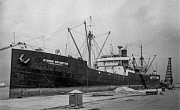
Captain Vaisman had both. After arriving in Murmansk, he immediately took command of a large freezer trawler that operated not only in the Barents Sea but also went out into the ocean. M.M. Vaisman worked in the North until March 1953. On March 5 of that year, Stalin died. Captain Vaisman, realizing that times would be different now, immediately returned to Odesa. He was not mistaken. He was readily hired by the shipping company, and he took command of the ship “The Second Five-Year Plan”. Stalin’s five-year plans, initiated in 1929, determined the industrial development of the Soviet Union. During the Second Five-Year Plan, the DneproGES, Uralmash, Kharkiv and Stalingrad tractor factories, and other giants of Soviet industry were built. Therefore, the ship on which Captain Vaisman began to work was given this name.
Through the efforts of the captain, “The Second Five-Year Plan” constantly fulfilled and overfulfilled planned tasks. And this meant a monetary bonus for the crew. But they were unlucky with the ship’s cooks. Then Mikhail Mikhailovich persuaded one of the best chefs from the “London Hotel” restaurant to go on a voyage with him. He added money from his representation funds to the cook’s salary. The crew of “The Second Five-Year Plan” began to eat as if in a restaurant.
In 1955, “The Second Five-Year Plan,” en route from Denmark to the Black Sea, collided with a French steamer in the English Channel in the fog. The “Frenchman” was at fault. But both ships, having sustained damage, were towed to the port of Dunkirk. The French authorities, blaming the Soviet captain for the collision, sent him to prison. Larisa Alekseevna Korotkova, the head of the legal department of the Black Sea Shipping Company, flew from Odesa to help Mikhail Mikhailovich. In court, having gathered the necessary documents and evidence, she secured the acquittal of the Soviet captain. The judges were also impressed that Mikhail Mikhailovich spoke French in his defense. He knew both French and English perfectly, as his mother was a foreign language teacher and taught him from childhood.
After returning to Odesa, he performed at the Palace of Sailors, talking about those unpleasant events. Along with other sailors of the shipping company, I listened to M.M. Vaisman, who unexpectedly ended his speech with verses by Eduard Bagritsky:
He who hears the shell’s song,
Will abandon the shore and go into the fog;
The ocean, surrounded by wind,
Will give him peace and inspiration…
The Black Sea Shipping Company has long been gone from Odesa – plundered and destroyed by high-ranking officials. The Museum of the Maritime Fleet burned down. And there is no one and nowhere to tell about the sailors our city was proud of.
Remembering Captain Vaisman, I tried to do so within my modest means.











