

In Memory of Marat Vasilyevich Tetenko
The other day, I was going through my father’s archive. I came across an article in “Vecherney Odessy” (Evening Odessa). And, as often happens, memories flooded in out of nowhere…
1967, I was six years old. We lived as a large family. Every day, I eagerly awaited the postman (with his thick bag on a strap), who brought me a bright, foreign postcard from faraway (but also close) Hungary.
Let me explain. My father, Marat Vasilyevich Tetenko, participated in the quiz “Do You Know Hungary,” organized by Odesa Television. Our whole family rooted for him and rejoiced greatly when he became the winner. And the winner received a prize – a free trip to Hungary (which was cool for those times!). And so, my father sent me a postcard every day from a new city, and I marked his route on a map. It was from that time that the names Budapest, Szeged, Pecs, Balaton, and even the hard-to-pronounce Dunaujvaros and Szekesfehervar became dear to me.
By the way, this passion of my father’s turned out to be “contagious.” As I grew older, I participated in several contests and also, as a winner, traveled for free to Hungary and Czechoslovakia. And for my mother, my father and I won a trip to Poland (her first and only trip abroad).
And so, it turns out that during his stay in Szeged (a sister city of Odesa), my father visited the Ferenc Mora Museum. He is one of the greatest Hungarian writers. And suddenly, on one of the stands, my father saw photographs with familiar faces from his distant past! My father recalled how, as a second-grader, he watched a film crew shooting a movie in 1935 on the slopes near his childhood home on Gogol Street. He even met a boy there who played the main role. And several times, he saw a gray-haired, stately man on the set, whose words everyone listened to attentively.
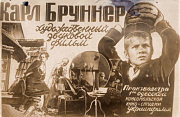
These were frames from that film, produced by the Odesa Film Studio, that my father saw on the stand. A frame with the same boy and the same gray-haired man. The museum staff told my father the man’s name – Bela Balazs. This writer, poet, playwright, screenwriter, film theorist, and Doctor of Philosophical Sciences, well-known in Hungary, turned out to be a native of Szeged.
Since my father worked with words, information, and books all his life, in various libraries of the city, he could not pass by such a story that life itself had presented him with. He “caught fire” with the idea of writing an article – about Bela Balazs, about another thread connecting the sister cities of Odesa and Szeged, about that film, the filming of which he witnessed in his childhood.
He collected materials for this article for seven years (from October 1967 to May 1974). The article itself, “Citizen of Szeged and Odesa,” was published in “Vecherney Odessy” on May 30, 1974. Numerous materials that he meticulously collected are preserved in my father’s archive. The work is similar to what investigative journalists do now.
Initially, with all the thoroughness characteristic of my father, a detailed and extensive work plan was drawn up, which was refined and supplemented as the work progressed, where my father outlined all possible sources of information: about Bela Balazs himself, and about the film, a frame from which later illustrated the article in “Vecherka.” The basis was the materials that were kindly copied for him from the museum in Szeged. The plan included participants of the film, the archives of “Gosfilmofond” and the Odesa Film Studio, and the editorial office of a Hungarian newspaper.
It’s hard to imagine now – after all, there was no Internet then, and more than 30 (!) years had passed since the filming of the movie. My father had to find the addresses of many people who now lived in different cities, the addresses of organizations located in different countries. Write them letters (sometimes, repeatedly – clarifying the received data). Then summarize the obtained information, translate a letter from Hungarian friends. Such a large amount of material, directly related, among other things, to the history of Odesa cinematography, served as the basis for another article by my father – about the history of the creation of the Odesa Film Studio.
From correspondence with “Gosfilmofond,” it became clear that a copy of the film was stored in its archive. The film was called “Karl Brunner” after the main character. And the Szeged museum, with my father’s help, ordered a copy of the film for its archives. My father managed to obtain photographs of several frames. Unexpectedly for historians of Odesa filmmaking, it turned out that Bela Balazs himself appeared in an episode of this film. But since the episode was not included in the final version of the picture, no one in our country knew about it. Szeged friends sent a photo with a frame from this episode. It was with this photograph that my father illustrated the article in “Vecherney Odessy.” Several photographic materials were also found in the archive of the Odesa Film Studio.
A rare photograph with most of the film crew, which my father also received from Szeged, he later transferred to the film studio’s archive (they didn’t have such a one). A characteristic of that time – the face of one of the group members, crossed out with a pen (he was declared an “enemy of the people”).
The result of my father’s research work was not only one article in “Vecherney Odessy” but also many unique materials that my father transferred to the Szeged museum, the archive of the Odesa Film Studio, and the Odesa Regional Museum.











