

Everyone has their own nightingales, asserted the hero of the story by writer Ivan Gaidaienko “Nightingales,” upon hearing the melodious nightingale song. For the seasoned captain of the merchant marine, the war, already distant from us, World War II, was associated, strangely enough, with nightingales.
It was these unpretentious gray birds, whose trills usually stir the soul in May, that became the trigger for those terrible days and nights, that memory of a beloved son, whom the cursed war took away just before victory, in Berlin.
Yes, everyone has their own nightingales, just as everyone has their own war…
My interlocutors at different times were Klara Semyonovna Chashina, a war veteran, a member of the Odessa Regional Peace Council, and Anna Lvovna Rozen, an Honored Worker of Culture of Ukraine, a lecturer-musicologist at the Odessa Regional Philharmonic named after David Oistrakh. I managed to record their pain about that war – World War II of 1939-1945.
Klara Semyonovna passed away, not quite reaching her centenary. And in 1941, she was 17. Her strong, youthful memory managed to capture and preserve forever, like a document, the horrific beginning of human grief, June 22, 1941:
“In 1941, there was a beautiful warm summer. My mother and I rested by the sea every day.
And then, as if in a terrible dream… Instead of a beach, an unclouded childhood – the wail of a siren and explosions. Together with my mother, we found ourselves at the Odessa railway station. For three days, we waited for a train to reach my father’s duty station. Odessa, from a lighthearted resort southern city, immediately became stern, as if it had matured, bristled, so to speak. Troops were being loaded onto trains and heading to the front, military personnel were leaving without finishing their rest in the Odessa health resorts.
I remember boarding the train, and we were bombed on the way. Small children hid under the benches in the carriage out of fear. Shells exploded somewhere very close in our Odessa steppe. And we miraculously continued to rush away from death. And only the whistle of the locomotive – alarming, drawn-out… It contained everything: overcoming fear, concern for the passengers, scaring away the enemy, and warning the Germans: ‘You lie, you won’t take us easily!’ That sound of the locomotive whistle is with me forever.
We traveled for several days, and the passengers – who wasn’t there, some from Western Ukraine, some from Belarus, many people were vacationing in Odessa then – everyone became dear to each other. No one ate their own food, everything was shared, they shared their last…”.
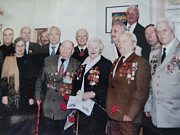
Anna Lvovna Rozen knows about the war from the stories of her relatives and loved ones who went through all the horrors of the Holocaust and survived. Eight of her relatives were taken by World War II. And she was destined to be born three weeks before June 22, 1941. All her close and even strangers tried to protect this new, still fragile life amidst the deaths.
On the eve of the war, Anna Lvovna’s father, a talented virtuoso musician who played several instruments and had a unique musical memory, worked in Moscow at “Gostkontsert.” Annushka’s mother, along with her sister and the newborn baby, decided to evacuate from Odessa to Ufa, where Anna Lvovna’s uncle worked. The journey was long. First, they traveled by a small boat to Novorossiysk. God spared them: they did not fall under an attack by German “Messer” and “Junkers,” but a mine fragment still grazed the side. The captain sent an SOS signal. A nearby warship came to rescue the people. Although the sea expanses are vast, minefields made maneuvering difficult for the ship. And the small boat with evacuees from Odessa was sinking deeper into the water. The military sailors took a risk. Fortunately, it was calm.
They transferred people using a rope ladder. But how could civilians, untrained people, and with an infant, climb the high side of the cruiser? In this terrible duel between life and death, life won!
Years later, upon becoming an adult, Anna Lvovna learned about the death of her rescuers. After the operation to save their sinking vessel, the cruiser was attacked by fascist aviation and sank in the Black Sea along with its crew.
Anna’s father traveled all the fronts of World War II, performing with cultural brigades of artists. Anna Lvovna’s family returned home to Odessa as soon as their beloved city was liberated.
And Klara Semyonovna Chashina’s journey to Odessa took a decade. Her father went to the front in 1941. She and her mother, joining her mother’s sister’s family, evacuated to Saratov. It was easier to survive together. Two families shared one walk-through small room, where two more children, one and a half and two years old, grew up with them. There weren’t enough sleeping places, as they were accommodated with the apartment owners, squeezed in. The youngest, Irochka, had to be put to sleep in an armchair. But the universally beloved cat Botsman could not tolerate such unprecedented “audacity.” He fought for his place every night, throwing the baby onto the floor.
In 1942, Klara graduated from the Higher Aviation School of Air Defense Pilots and was assigned to serve in the Stationary Aviation Workshops. With the Fifth Air Army, she went through the Southern and North Caucasian fronts, where her knowledge and skilled hands were needed.
The war forever connected Klara Semyonovna with aviation, with our oldest aircraft repair plant “Anatra.” Here, 40 years of her working life passed, here she deservedly became a labor veteran and was an indispensable employee at the Odessa Regional Peace Council.
In November 2024, Anna Lvovna Rozen will celebrate sixty years of service to people in art on the stage of the Odessa Regional Philharmonic named after David Oistrakh. How many professional and interesting programs, lectures about famous composers, singers, writers have been created during this time, how many concerts have been held, on what stages and platforms has her intelligent speech been heard.
She was not accustomed to luxury since childhood. After the war, they lived modestly, in an eleven-meter room of an Odessa communal apartment. They managed to fit a piano into this living space – a mandatory attribute of that post-war time. How cheerful and dignified their gatherings with guests were! Dad usually played the violin, Annushka – the piano. And they always remembered those who did not live “to see the dawn”: Dad’s sister, mother, father, burned in 1941 in the powder warehouses, near Tolbukhin Square in present-day Odessa; and relatives from Kharkov, burned by the fascists in 1942. And, of course, the fallen sailors from the cruiser who saved their family at the beginning of the war.
— I want to bring more light and kindness into this world for the sake of those who can no longer do it, who perished, — says Anna Lvovna.
She, who absorbed the strength of survival with her mother’s milk, did not give up during the COVID era. And today, in times of new trials, her priority is work, work to the extreme. Interesting, diverse programs at the cultural center of the BF “Hesed,” where she has been working for 24 years, the “University Without Borders” project, thanks to which people all over the world listen and communicate with each other virtually. It is no coincidence that Anna Lvovna is gratefully called “our therapist.” And concerts at the Odessa Regional Philharmonic, and her unfailing assistance to the Odessa Regional Peace Council.
— Art is in demand today as never before, it is like a breath of fresh water, — Anna Rozen is convinced. — And I so want to give people everything I know, in gratitude for life!
My interlocutors had their own nightingales, and they had their own war, but their lives are surprisingly similar and dedicated to us, to people!











