

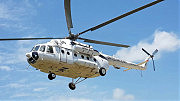
Sergey (my interlocutor asked not to name his last name) has been working as an aviation technician for almost 14 years. His specialization is Mi-8 civilian helicopters. He is involved in their maintenance, from basic cleaning in the cargo compartment to engine replacement.
Sergey does not name the company he works for, so as not to violate the terms of his contract. He only clarified that the company, in cooperation with the UN, is engaged in humanitarian transportation and assistance to the local population in various African countries, helping them overcome the consequences of armed conflicts, diseases, and natural disasters.
— Sergey, what are the difficulties of your job? — I ask my interlocutor my first question.
— Well, today, for example, we had to walk two kilometers from the airfield to the hotel where we live. And the thermometer shows plus 55. In the shade, it’s 47. It’s very difficult to work in such heat every day from morning till evening. When I was in Mali, the air seemed to burn my lungs when I inhaled. The most familiar temperature for a European in Africa is in December, 27-28 degrees Celsius. You can easily get malaria here, and all sorts of other nasty things. It’s better not to get sick here, I’ll tell you that. I know from personal experience, because I had malaria. I can also say that it’s hard to be away from home for months, to miss your family. And now, when there’s a war in the country, you worry a lot about your loved ones.
— By the way, how is the war in Ukraine perceived in Africa?
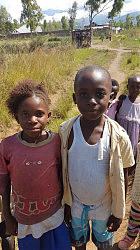
— When I was in Djibouti, they said they were delighted that such a small country, compared to Russia, did not surrender but fought. For example, you go through a checkpoint, and they say — Russia killers, Ukraine Slava. They watch the news there constantly. Compared to other countries in Africa, Djibouti is so calm because NATO is stationed there. The country is small. In South Sudan, where I am now, when you go into a store, they ask us how to say thank you in Ukrainian, and then they walk around saying: “dyakuyu.”
— As far as I know, there are contingents from other countries in Africa, from America, France, and Russia as well. How many Russians are there now?
— There are no Russians in South Sudan at all. When I arrived here in December, they were still carrying out maintenance work, and then they were kicked out of here. January 15 was the last helicopter crewed by Russians.
— And before the full-scale invasion, what were your relations like between missions?
— We avoided them. Of course, there were some separatists on our side who smiled at them and shook hands when they met. But mostly, we just gave them a look — go away. We had a situation recently, even before they left, a UN representative (he is from Ukraine but lives in New York) gave us the keys to their containers. The Russians came and complained. And there was a large water tank left there, for washing helicopters. So, our technician came to the airfield in the morning, and they cut it in half so that no one would get it. The tank held about half a ton of water.
— Let’s get back to the difficulties of working in Africa. There are many local conflicts on the continent. In which countries have you found yourself in war zones?
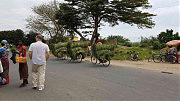
— In Somalia, we were forbidden to leave the city. They could kill you, rob you, or kidnap you — that’s it. If you go in there, you won’t come back. We were only on the airport territory, behind three rings of security. There were many terrorist attacks near the airport. When I was there in 2020, terrorists, they call them rebels there, drove a truck full of sand to the hotel and blew it up. Another incident happened in Congo. The villa in the city of Beni, where we lived, was attacked by local bandits. We hid from them on the second floor of the building, and the villa’s guard shot back. The bandits were high, in an inadequate state. And then, when we were leaving, there were many of their corpses near our villa. Here, in South Sudan, it’s generally quiet, although there are skirmishes, not without them.
— Everyone knows about diseases like Ebola, and that a severe epidemic began in West Africa in 2013. I know that your company, together with the UN, provided humanitarian and medical assistance in combating the epidemic in the Democratic Republic of Congo. How did you manage not to get sick?
— We were stationed in the city of Mbandaka then. A settlement was a 20-minute flight away. The UN reported that the local residents had contracted Ebola from monkeys. Africans hunt monkeys and bats. And these animals are carriers of Ebola. And so, little by little, village by village, the epidemic began. The UN cordoned off the area so that no one could enter or leave, and they delivered humanitarian aid to them. The biggest spreaders of Ebola there were the dead. Africans, when they bury deceased relatives, kiss them on the forehead. And Ebola is a terrible disease; blood comes from the nose, mouth, eyes; a person simply disintegrates alive. When we arrived there, we were told that they would be vaccinating. Voluntarily, of course. Before vaccination, we gave written consent, as the vaccine was not certified. We washed our hands constantly, underwent checks, and gave samples. The doctors there were not ours — they were Americans.
— What kind of emergency situations have you encountered?
— There was an incident when we couldn’t take off because the air starter failed. This happened a long time ago, back in 2010. There were presidential elections in Congo then, I think, and we were delivering ballots. We landed the helicopter on a football field in a village. We unloaded, and when we were about to take off, the second engine wouldn’t start. Fortunately, we didn’t have to spend the night there; they picked us up, and armed guards were sent to the helicopter. The UN later planned a flight there; we arrived, fixed it, and flew back on the same helicopter. We were lucky, but there was another aircraft from our company, and they had to spend the night. Right in the jungle. For such cases, there is a special ration in the helicopter, food for three days, as well as mosquito nets, repellents, and even a fishing rod.
— And how do people live in Africa?
— Africa is diverse. There are places where people live in prosperity. And there are countries where the poverty level is simply off the charts. As you understand, the UN does not work where everything is fine. Take Mbandaka, for example. A city near the Congo River, people live there in extreme poverty. They have an airport, but planes rarely fly there; mostly, everything is transported there along the Congo River by ships from the capital, Kinshasa. They bring drinking water and humanitarian aid. They grow rice and bananas locally. That’s all the food they have there. Well, they eat grasshoppers, worms. You go out right near the airport, and they sell them in basins. They fish in that river. The current is very strong, but they still catch some monsters there. We bought fish, fried it, it tasted normal. Interestingly, here in South Sudan, they have beaches by the river, and even though crocodiles crawl there, children still swim. In 2011, South Sudan separated from North Sudan. And I remember how they rejoiced here, celebrated, thinking they would immediately get rich because they have a lot of oil here. North Sudan was left empty-handed. There’s only desert and baobabs. And in South Sudan, there are jungles, fields, more greenery — that’s important in Africa. Plus oil. But only the rich drive cars; there is no middle class.
— You were in Mali too?
— In Mali, mercenaries from the Wagner PMC are now in charge. The UN has been kicked out of that country. Mali has a lot of diamonds, and bandits have taken control of the country.
— A slightly sensitive question: how do Ukrainian border guards feel about you leaving the country?
— They treat it normally. At the border, they let us out without problems, and when we enter, they are even happy to see us. Of course, to leave, you need to present a package of documents: certificates, contracts, agreements, and confirmation from the State Aviation Administration of Ukraine. Sometimes, the relevant services may want to talk to you, as there have been cases of document forgery.
— And to conclude our conversation, I will ask: what is the most pleasant thing about your job?
— The most pleasant thing is, of course, returning home.
— And the helicopters?
— Any job, honestly, gets boring. Flights, maintenance — the same thing every day, for eight hours. In a helicopter, you know every nut, every crack, every mark. Routine, in general. And when you return home, you start to miss it. Because you put your soul into the helicopter.











