

Crossovers and SUVs are categories of cars with a similar appearance but fundamentally different operating conditions. Inexperienced drivers often perceive a crossover as a subspecies of an SUV, but this opinion is mistaken. Let’s look at the main differences between crossovers and SUVs.
A Little Theory
If before 1999 the car market was flooded only with SUVs, then with the arrival of the millennium, crossovers rapidly entered it. At first glance, cars with similar characteristics have significant differences. The differences between cars lie in important structural criteria, which will be discussed below.
A crossover (CUV) is a car with average characteristics of a passenger car and an SUV. Owners of high ground clearance, high off-road capability, and a bold exterior do not have a body frame structure inherent in SUVs. The presence of independent suspension, like in passenger models, classifies them as “parketniks” (soft-roaders).
An SUV is a model with a frame structure, a truck chassis, solid axles, and all-wheel drive. The purpose of using the car is off-road capability in aggressive conditions.
The market offers many options with different seating capacities: from 4 to 8 people. By following the link, you will learn about the best used 7-seater crossovers and SUVs: TOP-10. Today, “off-roaders” and crossovers have a lot in common, the clear lines of distinction are barely noticeable, but the main differences remain.
SUVs and Crossovers: What’s the Difference
Specific structural units and features of construction allow distinguishing the belonging to one or another type of car.
Body
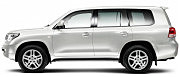
A frame, less commonly a semi-frame body scheme with uniform mass distribution and increased strength, is characteristic of all SUVs. Due to this configuration, it is possible to overcome any type of terrain without a road surface. When operating in difficult terrain, the important “guts” of SUVs are protected, as they are located inside the frame.
The body of a crossover is less rigid, but strong enough to withstand the load. A versatile car has embodied all the advantages of a hatchback body.
Frame
All SUVs have a frame, which serves to increase the stiffness of the car and, consequently, ensures the ability to climb hills, drive through potholes without body roll. SUV frames have excellent towing capabilities. The presence of a frame structure endows SUVs with truck-like qualities: handling, heavy weight, high fuel consumption.
The structure of a crossover includes a passenger car platform without a unibody frame.
Drive
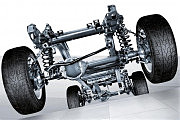
SUVs exclusively have all-wheel drive, capable of driving in snowy areas, mud, and sand. In this case, the 4×4 drive can be manually controlled. Crossovers, on the other hand, can boast of front-wheel drive. But, even with all-wheel drive, they activate this function automatically, but often for a short time. Due to system overheating in difficult road conditions, all-wheel drive also automatically disengages.
Engine Displacement
Powerful power units are the domain of SUVs, which typically have engines of 3.0L and more. Crossovers can boast engines of 2.3L, 2.6L.
Ground Clearance
- SUV ground clearance is impressive – the distance is 200-220 mm.
- Crossover ground clearance is usually lower – 160-180 mm.
Low Range Gear
For operation in aggressive conditions, manufacturers produce SUVs with a transfer case designed to increase torque. They have a low-range gear. Crossovers do not have low-range gears in their transmissions.
Despite the superior performance of SUVs over crossovers, many buyers prefer the latter due to their fuel efficiency, inexpensive maintenance, and elegant appearance.











