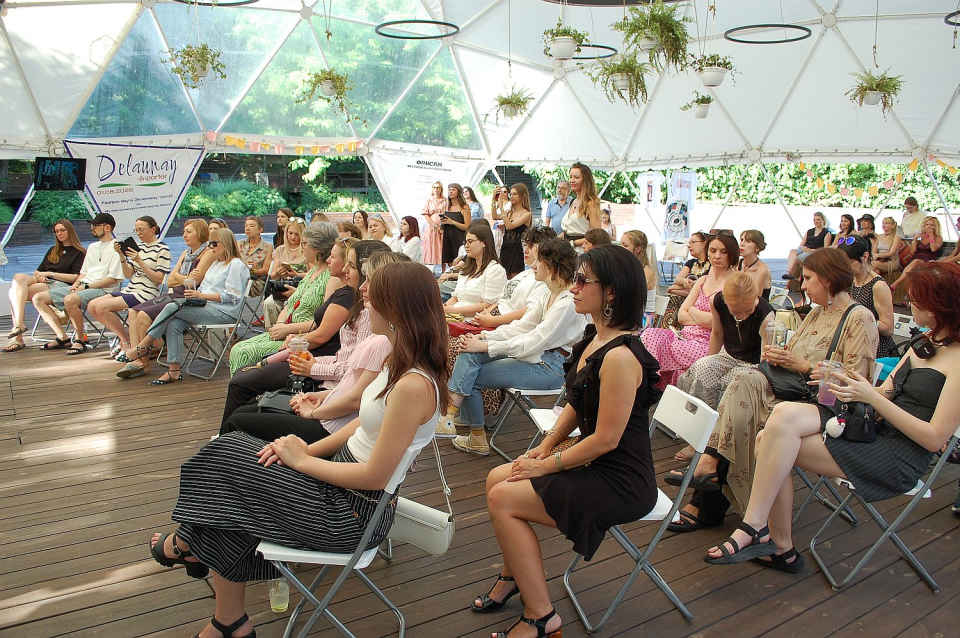
“Should the muses be silent when the cannons speak?” – this question was asked to the participants of the “round table” held in the editorial museum, dedicated to the topic “Culture during wartime.”
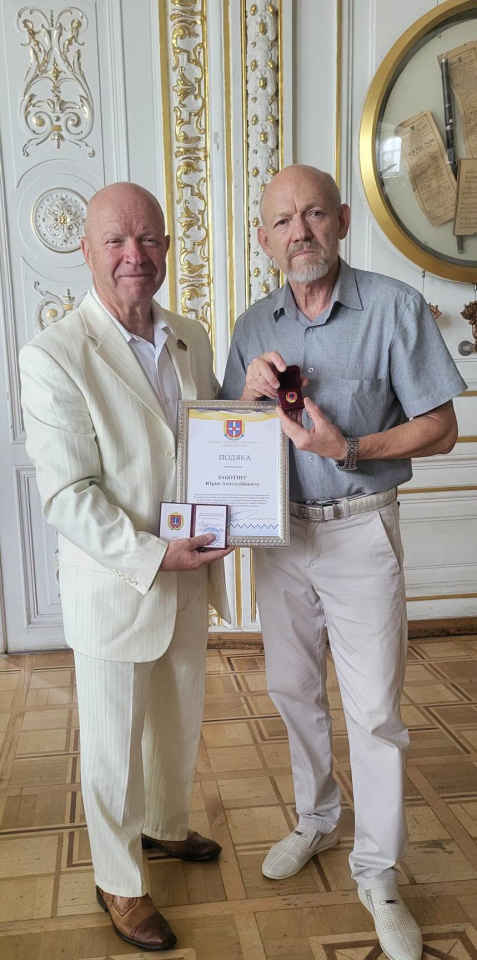
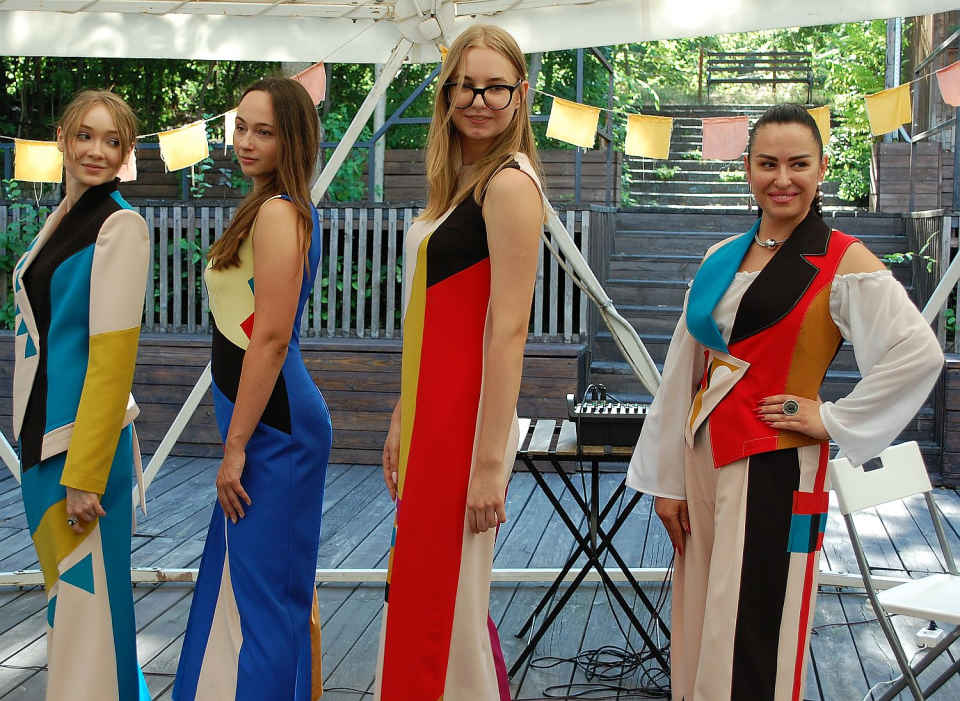
It is noteworthy that all our guests – Irina Sidoruk, organizer of the women’s festival “Anima-Odessa,” which the newspaper covered in the issue of November 2nd; Elena Palashek – singer, poet, producer, writer; Marina Sidoruk – volunteer; Dmitry Milyutin – entrepreneur, volunteer, expert in perfumery; Andrey Osipov – Chairman of the Board of PJSC “Odessa Film Studio,” and Alexander Fedorov, our colleague, journalist, chairman of the organizing committee of the caricature contest “Russian warship, go f*** yourself” – were unanimous: the muses should not be silent!
Moreover, as the head of the Odessa Film Studio noted, culture is a bridge to Ukraine’s tomorrow. The day when we win, and peace returns to our land. Therefore, if culture is silenced now, the bridge to the future will be destroyed, and it will not be restored…
It is noteworthy that the vast majority of Odessa’s cultural figures – at least those with whom we, the journalists of “Vechernaya Odessa,” communicate, and about whom we write – successfully and actively combine their creative activities with volunteering and helping the front. For example, Elena Palashek, a board member of the public organization “Association of Women of Ukraine ‘Diya’,” managed to talk to a unit of marines on her way to the editorial office for the “round table.” The soldiers needed a battery and three generators. The issue was promptly resolved.

Irina Sidoruk has her own story:
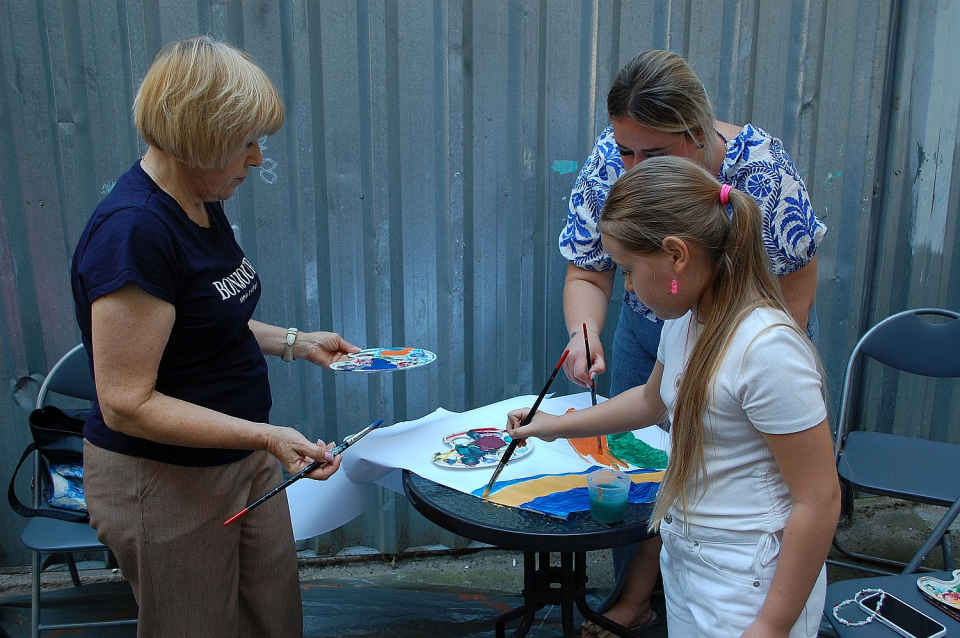
— During the war, my daughter Marina and I created a charity foundation called “Kryla” (Wings). During this time, we held many volunteer events, raised money for drones and radios, and helped military units stationed near Kherson, where Odesans serve. We held a large-scale New Year’s event for displaced children from Kharkiv, Mariupol, and Kherson at the “Evropeyskiy” Lyceum. We conducted small psychological training sessions for women.
However, we didn’t think about reviving the All-Ukrainian festival “Anima,” which has a rich history, admits Irina Sidoruk. But in the summer, the enemy launched a missile strike on the center of Odessa, damaging many buildings significant to our city.

— At first, my colleagues and I were in shock and felt devastated,” recalls the organizer of the “Anima-Odessa” festival. — But when we came to our senses, we decided: to spite the war, to spite the enemy, who wanted to break us morally and spiritually with these missile strikes, we will hold the festival! In the most beautiful hall in Odessa – the Union concert hall, on the largest scale possible – about one and a half thousand people attended, with the involvement of the best speakers on various topics.
We managed to gather the intellectual elite of Odessa and immerse them in an atmosphere of kindness and love. Remember what boosted people’s spirits during the First and Second World Wars? Culture, art – all of it inspired creation, prevented despair, and gave faith that life would ultimately triumph,” summarizes Irina Sidoruk.

Dmitry Milyutin, owner of one of the most interesting perfume collections in Europe, was one of the festival speakers. The topic of his lectures was the beloved world of scents and aromas. Dmitry admits he can talk about this for hours. We can add that his followers in the world of perfumery are ready to listen to him for hours. For example, it turns out that scents are a manipulation of mood. And those who create scents – perfumers – simply play on our emotions. For instance, a very fashionable trend today is the scent of newspaper paper, old books; it immerses us, consumers, in childhood, plunges us into a world of dreams. It is noteworthy that upon entering the editorial museum, Dmitry Milyutin immediately caught the subtle and so attractive scent of the pages of “Vechernaya Odessa.” We, apparently, are used to it…
From the first days of the war, Dmitry Milyutin, a successful entrepreneur, became actively involved in volunteer work.

— At the end of March last year, we received humanitarian aid from Polish friends. We arrived at the train station, started unpacking boxes,” says Dmitry Milyutin, “and found stretchers. Just one pair, bright yellow. Obviously, they couldn’t be given to the front. The military – and I am in contact with six units – asked me to make stretchers. I met with an entrepreneur who had his own workshops and about two hundred sewing machines. Production stopped at the beginning of the war. He supported our idea, saying he didn’t need profit, just provide the fabric and pay the seamstresses. That’s how it all started. We began sewing stretchers, harness systems, plate carriers, first-aid kits, and magazine pouches. Now my son has taken over most of the work, while I’ve kept the production of thermal blankets and fleeces. All at my own expense.
And in the spring of this year, Dmitry Milyutin surprised Odessa. He surprised them in a good way, setting an example of what love for one’s native city should be. Dmitry is a proponent of the “broken windows” theory, according to which minor problems, if not addressed, will inevitably lead to bigger problems later: one broken window will lead to all the windows in the building being broken soon. Therefore, seeing the deteriorating famous spheres on Langeron, he, by his own admission, could not pass by.
— I thought: if they are not repaired, they will collapse, and then the negative energy of destruction will affect all of Odessa,” explains Dmitry Milyutin. — I love my city. Why shouldn’t I do something good for it?
Andrey Osipov, Chairman of the Board of PJSC “Odessa Film Studio,” also holds the view that muses should not be silent during wartime. He does not support the suggestion: “Let’s stop making films during the war and not finance art.”
— War, both for the aggressor and the victim of aggression, breeds hatred, it permeates everywhere, into all spheres of our lives,” is convinced Andrey Osipov. — And culture is the last refuge that allows the human soul to be preserved. It is a bridge to Ukraine’s tomorrow. Therefore, we must also fight for culture.

Frankly, I was very pleased that Andrey Osipov adheres to the belief that the film studio should remain a film studio. He has been in his position for almost seven years. Since 2018, the film studio has been profitable. The first year of the war was an exception. But based on the results of the first three quarters of this year, there is already a small profit. “We have not stopped paying salaries to employees, even those who have left, for a single day,” admits Andrey Osipov. True, optimization of staff – accountants, plumbers, electricians, other administrative personnel – still had to be done. Currently, 45 people work at the film studio. The payroll, according to Andrey Osipov, is provided by the film museum – the only non-subsidized entity in the state sector in Ukraine – where excursions are held, and scientific and exhibition activities are conducted; and the YouTube channel, which has many subscribers worldwide.
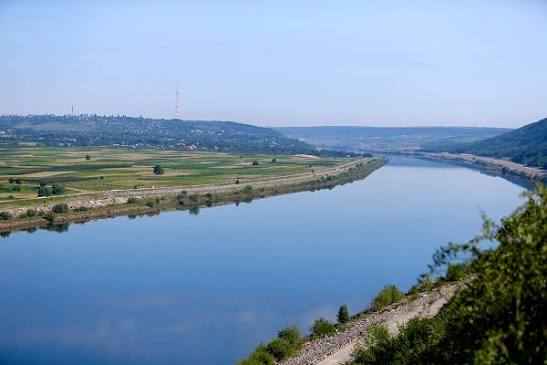
And most importantly. The Odessa Film Studio continues to make films! For example, this summer, as part of the Odesa International Film Festival, held in Chernivtsi, the Ukrainian-Bulgarian film “Krai Reki” (On the Riverbank) premiered. Before the war, significant events in the domestic film industry were the historical adventure film “Fortetsya Hadzhibey” – about the life of Odessa before it became Odessa; and the nationwide premiere of the film “Chomu ya zhyvyi” (Why I am Alive), which tells about the terrible trials that befell the residents of Mariupol during World War II. Who knew that the city would soon be captured by fascists again – now of Russian origin…

And soon the Odessa Film Studio will begin production of a new film. We will not reveal secrets before the official project presentation, which will take place soon. We will only say that the film will be dedicated to the life of the remarkable Ukrainian film director Alexander Dovzhenko. Next year, the film studio is preparing to properly celebrate the 90th anniversary of Kira Muratova, the main symbol of cinematic Odessa.
Elena Palashek left for Latvia at the beginning of the war and lived in Riga. But she soon returned.
— I realized that I couldn’t live without Odessa, I couldn’t leave it in trouble, so I returned to personally witness how these bastards bomb my beloved city,” admits Elena Palashek. — During the shelling, I go out onto my balcony, which faces the sea, and try to interfere with the missiles with my energy. You know, sometimes it works!
During the war, Elena Palashek wrote a wonderful children’s book “Michel and Dominique,” which critics are already calling the Ukrainian Harry Potter. The writer donated two copies to “Vechernaya Odessa” – one for the editorial museum, and the second as a gift to some child, at our choice. We were very pleased with this gift, and told them about the poetry contest-festival “New Odyssey.”
The newspaper has written extensively about the exhibition of caricatures “Russian warship, go f*** yourself.” Alexander Fedorov, who is also a member of the Rotary Club “Odessa-Richelieu,” recalled which countries the caricaturists’ works have visited. He noted that a diaspora of our compatriots has already formed abroad, many of whom, having settled in a foreign land for almost two years of war, are unlikely to return home. Therefore, one of the tasks of culture, in his opinion, is to establish stable ties with Odessa’s sister cities so that Odesans can remain united. As for the caricature exhibition, it will soon be seen by residents of New York.
We asked our guests about the newspaper. Do they see “Vechernaya Odessa,” which is also living and working during the war, among their helpers, partners, and like-minded people? The answer was unanimous. It was summarized by Irina Sidoruk:
— “Vechernaya Odessa” is the quintessence and conductor of the Odesan spirit, which we must not lose.
And the recipe for how to live during wartime was formulated by Andrey Osipov. Do not live with illusions that everything will end quickly. Do not live in fear that this nightmare will never end. Do what you love. And enjoy every minute lived, every day of life that is given to us.
By the way, the day we hosted representatives of Odesan culture in the “Vechernaya Odessa Living Room” was a wonderful day.