

A group of 15 hamsters has just settled in the Tarutino Steppe. This is a continuation of the species reintroduction program in the region, which is being implemented by the “Evening Odessa” “People of Action” award-winning Rewilding Ukraine team in cooperation with the Kyiv Zoo and the Tarutino Steppe Nature and Ethnographic Park. The animals will help restore local food chains, increase biodiversity, and also contribute to the development of ecotourism.
Compared to the pets of many Ukrainians, wild hamsters are quite large: they can reach 30 cm in length and weigh over 500 g. Once, the hamster inhabited steppes and forest-steppes throughout Europe, and it also lived in most of Ukraine. But today, the wild hamster has almost disappeared from the wild due to the destruction of its habitats, environmental pollution, and persecution as an agricultural pest. In 2009, the species was listed in the Red Book of Ukraine.
— The burrowing animals, primarily rodents, play a significant role in the Tarutino Steppe by enriching the soil and vegetation cover, — explains Oleg Dyakov, a Rewilding Ukraine rewilding specialist. — Hamsters will help disperse seeds, and their burrows will create habitats for many other animal species and improve soil fertility. The rodents themselves are important prey for birds and mammals.
At the end of last year, the first trial release of a family of three hamsters took place, which was reported by “Evening Odessa.” The animals overwintered well and adapted. The hamster reintroduction program will continue, with more releases planned for next year, while the goal is to create several colonies of the species in different parts of the Tarutino Steppe.
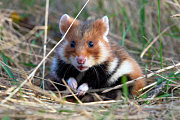
— The Kyiv Zoo has been breeding and returning the common hamster to the wild for several years as part of a program to restore populations of rare and endangered species throughout Ukraine, — says Mykhailo Rusin, a specialist at the Kyiv Zoo’s Center for Restoration and Reintroduction. — Now we have arrived in the Tarutino Steppe and brought another 15 hamsters, which will lay the foundation for a stable population of the species in the region.
The hamsters will initially be kept in a special enclosure of 600 square meters, which will allow them to acclimatize and form a colony in complete safety. Once this happens, the enclosure will be removed.
— We have created a reliable adaptation enclosure for the temporary housing of the rodents, — explains Oleksiy Pudovkin, Rewilding Ukraine. — The design of its walls allows animals to be kept inside and prevents terrestrial predators from entering from the outside. To protect the hamsters from birds of prey, the enclosure is covered with a dense net.
The Rewilding Ukraine team has been working for many years to restore and improve the health of the Tarutino Steppe, which is one of the last remnants of wild steppe in Europe. The hamsters will join other herbivores returning to the steppe through the team’s efforts. These include kulans, European fallow deer, and steppe marmots – they have been thriving here for several years. The combined impact of these species will improve the health and resilience of the steppe landscape.
How the hamsters were released into the Tarutino Steppe – you can now see this in the newspaper using augmented reality technology.











