

It is spacious, beautiful, and bright. This is the youngest educational institution in the city, where they successfully withstand the challenges of our time and make plans for the future. Where, imagine, the generally accepted dress code has been abolished, students and teachers come to school in jeans, “because it’s comfortable.” We are visiting the “European” Lyceum.
“I learned to read from ‘Evening Odessa'”
Yes, friends, generations have grown up who preferred our newspaper to primers. And the director of the lyceum, Yulia Barduk, is no exception:
— My grandparents subscribed to “Evening Odessa,” and even before school, I learned to read from newspaper texts. Later, I fell in love with the “White Sail” page, intended for schoolchildren. I remember there was a section called “Correspondence.” So, all my youthful friends, thanks to the newspaper, met, communicated, and became friends.
We listen to Yulia with pleasure and immediately plan: next year the newspaper will turn 50, let readers tell us what “Evening Odessa” means to them.
“I dreamed of becoming a school principal”
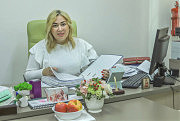
Over a cup of coffee, we get to know Yulia Barduk better. She was an elementary school teacher at School No. 13, the largest in Ukraine. She spent 16 years at one educational institution. And in 2019, she received an offer to participate in the competition for the position of director of “European.”
— There were probably many applicants?
— I was the only one.
— ?!
— You see, any educational institution has its problem areas that a leader inevitably faces — staffing, both pedagogical and technical, forming a completely new team, increasing the number of students. The lyceum will be only five years old on September 1st next year. It’s still a baby that needs to be put on its feet. So, others were afraid to come here.
— Because you had to roll up your sleeves and work, and that’s why there weren’t many applicants, — notes our expert on pedagogical publications, Sergey Penyaev, who insisted on the journalists’ visit to “European.”
— And you, Yulia, where did the desire come from?
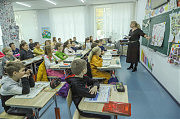
— I always admired the director of School No. 13, Natalia Anatolyevna Romanenko. I tried to adopt all the best from her management work; I was impressed by her love for her work, her dedication, and her respect for the team. I came to this school at 19, after pedagogical college, and became who I became — a teacher, a deputy director, having an example, an ideal before me. And I often thought about how I would build the work in “my” school. I dreamed of becoming a director and didn’t hide it. Therefore, I did not refuse the offer to participate in the competition. I remember when I first came to this beautiful, modern lyceum. I thought then: it’s a Cinderella story… And then the harsh reality began. A young director has little experience, little knowledge, because you don’t learn to be a director. I am grateful to the director corps of the Primorsky district, the head of the city council’s department of education and science, Elena Valeryevna Buinevich, and my mentor Natalia Anatolyevna Romanenko, who are always there.
Code Word
A few months in office, and the challenges began one after another. First, COVID and the need to master a completely new form of learning — distance learning. And now, the war.
Yulia Barduk recounts how, the day before, she gathered the lyceum administration and proposed holding drills in the form of a quest.
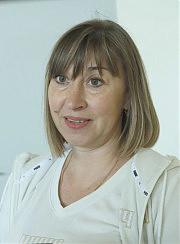
— The task was as follows: each student must know where to run in the shelter in case of danger, but under no circumstances during the drill should a child hear the words “explosion,” “bomb,” “shot.” Children’s psyches must not be harmed! We came up with our own code word, which I will not tell you. From 1st to 11th grade, they ran until the skill became automatic. I warned everyone that the shelter doors were open to everyone — children from our lyceum, other schools, parents. And on February 24th, we woke up to explosions, and the first person to call me was the security guard: “Yulia Vitalievna, the shelter is full of people!” It was our children who took their parents by the hand and brought them to their classroom’s location.
“European Palianytsias”
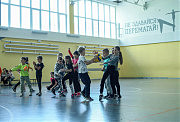
As early as February 25th, the director said, a volunteer movement began in the lyceum, joined by 300 people. They called the support center, where humanitarian aid was brought from all schools, “European Palianytsias.” They started working early in the morning, immediately after the curfew ended and until it began in the evening. They collected, sorted, unloaded-loaded, delivered… And so it continues to this day.
— The fathers of our students, who went to the front from day one, reported what they needed, and we looked for headlamps, batteries, plastic wrap, and stoves. In the Viber chat, it was enough to say what help was needed, and everyone responded immediately. And when a bullet-riddled minivan from Kharkiv drove into the schoolyard, and 12 people got out, wearing what they had on, volunteers brought everything necessary, from pots to preserves.
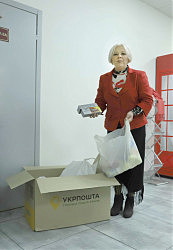
“European” hired seven displaced teachers during the war. From Kharkiv, Kherson, Mariupol, Mykolaiv. The director says about them: “Professionals! Now we are family.”
We met Natalia Gulak, a physical education teacher from Mariupol, in the gymnasium. Since April, she and her fifth-grade daughter have been in Odesa; the school building in her hometown is destroyed but, they say, is repairable. She was well received at the lyceum, helped to cope with stress, but Natalia dreams of returning home: “Everything will be fine, I have no doubt about it.”
Songs in the Shelter
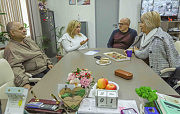
In the first days of the war, the director issued documents in stacks every day — 70 percent of the students left Ukraine. Now, the lyceum offers both online and offline learning.
— All schoolchildren in the district who want to attend classes study at the lyceum, — says Yulia Barduk. — This is 15 classes, 460 students, lessons in two shifts. Gratitude to the city authorities for providing a shelter in the building, equipped according to all regulations. There is a supply of water, food, and blankets. There is also an aquarium, cozy poufs, easels, and games. The sounds of war are not heard here. And we, the adults, try to occupy the children with something interesting — the boys do push-ups, someone draws. And when one day, to calm their anxiety, one of the teachers started singing “Chervona Kalyna” and the children enthusiastically joined in, we realized — we need to sing during air raids, it helps!
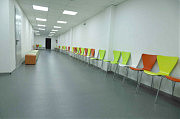
Yulia Barduk admitted that she, who previously only went to church on holidays, has started her mornings with prayer every day since the beginning of the war. She sees her task as providing students with a quality education and, at the end of the school day, “returning children to their parents whole and unharmed, with healthy psyches.” And the plans that exist and are aimed at realizing the lyceum’s greatest ambition — to live up to its name “European” — are currently postponed until the day of victory.











