

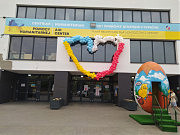
Over 7 million residents of Ukraine, fleeing the horrors of war, have been forced to seek refuge in Europe and other countries around the world. The people of Poland have provided shelter to a great many refugees, especially in the first weeks of the enemy’s attack. In just six months of war, Centrum Pomocy Humanitarnej, one of many centers for helping Ukrainian refugees, has received about 500,000 displaced persons.
Help is Still Needed
It might have seemed that with the start of the counteroffensive by the Armed Forces of Ukraine, the mass departure of our citizens would decrease. Perhaps. But on the platform of the Odesa railway station, judging by the crowd of people before the departure of the train to Przemysl, Poland, this was not felt. Already on the road, it became clear that all the seats in the carriages were occupied.
The tense situation of evacuation was especially felt in Przemysl. Trains from Kyiv and Odesa arrived almost simultaneously, and the queue for document checks stretched for over a hundred meters. A kind of anxious, silent anticipation hung in the air: how would we be met by a friendly, yet different, country?
The border guards checked passports quite quickly, and soon we all faced a dilemma: what transport to use next? By electric train or bus? But this problem was also solved quickly: at the exit from the station, the displaced travelers were met by volunteers in bright yellow vests, who explained the transport options of Polish roads.
Our delegation chose a bus. The ticket to Warsaw cost 180 zlotys, which translates to about 1500 hryvnias. Seven and a half hours on the road, and we were at the largest European refugee aid center, Centrum Pomocy Humanitarnej. It was difficult to assess its size in the dark. It was already past midnight, but the registration center was still open. A charming young woman filled out our questionnaires, and after the official procedure, we were given canvas bracelets, a food package, sleeping and hygiene supplies, and we went to choose a place in the “dormitory.”
Perhaps such a place for an overnight stay would enter the “Guinness Book of Records.” This exhibition space covers about 17,000 square meters. In one of the halls, along its entire length, stood hundreds of folding beds with sleeping people. Only a few dim light bulbs burned overhead near the ceiling, so the end of this dark hall was lost somewhere in infinity, taking consciousness beyond reality…
The first impression in the morning was the sterile cleanliness in the “dormitories,” lobby, shower stalls, and toilets. Shampoo and paper towels were available at the snow-white sinks. But perhaps the biggest surprise, or rather, delight, was the center’s dining room. The array of various salads, meat, fish, and dairy dishes, pastries, and fruits reminded me of the abundance of a 5-star hotel somewhere on the Turkish coast. It is worth adding that between main meals, you can have tea or coffee at the counter.
Further exploration of the center reminded me of a tour of a sanatorium, where guests are offered a significant number of opportunities for fruitful leisure: in the information department and on other stands, there were announcements calling to learn Polish, English, and French, practice African dances, and do yoga…
There was also information from Polish employers on several stands. Nearby was a job offer from Germany, France, Great Britain, the Netherlands, Finland, Norway, and even Japan. In the lobby, I also noticed several shelves with various clothes and shoes: in case someone was worn out or dressed inappropriately for the season. And here you could come and choose… Two signs on the doors also caught my eye – “Medical Point” and “Psychotherapist.”
Special attention is given to children. Almost the entire second floor, with a gym, playrooms, and computer classes, is at their disposal… For them, Polish volunteers organize excursions around Warsaw and invite them to the swimming pool. As I was told by the volunteer educators, recently the children were taken to a Nike sports store, and each of them received a set of branded sneakers as a gift.
March was a very difficult month
The “Global Expo” complex on the outskirts of Warsaw is one of the centers of exhibition and cultural life of the Polish capital. Before the war in Ukraine, various international exhibitions, concerts, and theatrical performances, and art exhibitions were regularly held here. But in the first days after the start of Russian aggression, the owner of the complex, businessman Zbigniew Bogush, decided to dedicate this huge space to a center for helping Ukrainian refugees.
As early as March 3rd, hundreds of folding beds and bedding began to be delivered to the complex. The first three hundred refugees arrived immediately. And then, from three hundred to five hundred people arrived every day. On some days, up to 5,000 people lived here simultaneously. Alina and Vadim Onishchuk led the center’s work from the Ukrainian side.
“The first month was particularly difficult,” says Alina Onishchuk, deputy coordinator of the center for refugee affairs. “We had to organize the reception of hundreds of people, provide them with warmth, clothing, food, and medical care. After all, many of them fled from the front lines and from under bombings, almost barefoot, with children in their arms, and sometimes without documents. I cannot recall without tears the encounters with people whose lives were broken by the war, who lost many relatives and loved ones. In these circumstances, volunteers had to work practically without sleep or rest.”
“I can’t imagine how we could have received, accommodated, fed, and warmed hundreds of thousands of people during this time without the help of volunteers from all over the world,” Alina continues. “In total, over three thousand volunteers assisted us in this extremely difficult work during the first two months. Poles were the first to respond: they brought and donated everything possible to Centrum Pomocy Humanitarnej that could be useful to a person in extreme conditions far from their homeland: food, clothing, shoes, medicine, bedding, hygiene products, baby food, cosmetics, and even pet food.”
Every day, seven to ten buses departed from the center’s building, taking refugees further west, to other countries willing to support Ukraine and its people.
The Roads They Choose
Now, almost half a year after the center began its work, the refugee situation has more or less stabilized. But even today, people from Ukraine arrive here almost every day seeking protection. There are significantly fewer volunteers; most of the work to ensure the center’s operation, thanks to funding from sponsors, is carried out by hired staff.
Unfortunately, we must admit that the hope of having the center serviced by the refugees themselves has not yielded results. For example, today there was an urgent need to help warehouse workers assemble food packages. The announcement was made over the loudspeaker several times. Only one person showed up…
“I can add that people with a heightened sense of responsibility, both for themselves and for those around them, who take the misfortunes and tragedies of others to heart, become volunteers,” Alina reflects. “Therefore, many of my colleagues, and I myself, experience a sense of nervous exhaustion, a kind of burnout, when you don’t want anything and have no strength for anything. The biggest blow in this regard, I admit, comes from the refugees themselves. Some of them harshly demand special conditions for themselves and at the same time repeat: ‘We are refugees, you owe us…’, forgetting about the gratuitous help that Poles provide us, and in specific cases, volunteers from among the refugees themselves.”
In connection with these and other situations, I often have to think about the role of refugees in the future development of Ukraine after our victory. Looking at the help and sympathy of the Polish people, and indeed of other European countries, I am confident that a united Europe, along with other nations, will certainly overcome the enemy invasion of the Russians.
But what will happen then? Is the nation that conquered the greatest evil of the 21st century ready to join the family of European nations? I think my more than ten years of living and working in Poland with my family give me the right to express my thoughts on this topic. And the last six months of activity at the center, when thousands of human destinies have been imprinted in my mind and hundreds of thousands of refugees have passed before my eyes, allow me to draw some conclusions.
I would divide all refugees into several categories. The first, which is about a third of the people, is quite passive and satisfied with the living and dining conditions in the aid centers. They, as a rule, do not want to learn Polish and are not interested in employment opportunities. They sleep during the day and go to the dining room a few times a day to eat. After the war ends, and donor countries ask Ukrainians to return to their homeland, these people will be forced to return to their ordinary lives in Ukraine.
The second group consists of active individuals, mainly IT specialists and professionals in various fields, usually with knowledge of English. They are learning Polish or English and exploring employment opportunities with the aim of eventually finding work. As a rule, according to them, they will try to start a new life in one of the economically prosperous countries.
The third group consists of those who are undecided. On the one hand, they would like to try themselves in the West. But they do not make any special efforts to do so. Most likely, they will return to Ukraine.
Approximately half of the refugees cannot imagine their lives outside of Ukraine. These are people who draw energy from their homeland, who cannot imagine themselves outside of Ukrainian culture and society. Personally, I place the greatest hopes on these people for the future revival of Ukraine.
But at the same time, I want to emphasize that the shock experienced from the war and forced evacuation has affected all refugees, without exception. In addition, the detachment from information sources, except for news on the internet, is also a factor. But this, in my opinion, is very little. True, a couple of times, exhibitions of artists with anti-war paintings and an exposition of the International Competition of Cartoonists “Russian Warship, Go F*** Yourself” visited us.
I think that specialists from the Ukrainian Embassy in Poland can help fill this peculiar information gap about the situation in Ukraine and the prospects for its revival. We eagerly await them at the center to give relevant lectures. The participation of diplomats in the center’s activities would demonstrate support for refugees, that their homeland, represented by the embassy, despite all the hardships of the bloody war, constantly cares for its sons and daughters who have been forced to be far from their native land.
Such support is especially important for us now, given that the sponsors’ resources are practically exhausted. They are doing everything they can to continue the center’s operations. And I think a solution to the current situation will be found. Poland will not abandon the Ukrainian people in need.
Poland Welcomed Refugees
Perhaps it can be said that the life of the owner of Centrum Pomocy Humanitarnej, the prosperous businessman Zbigniew Bogush, is divided into two stages: before the Russian aggression in Ukraine and after.
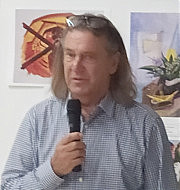
“I met the first train with Ukrainian refugees,” says Mr. Zbigniew. “You cannot convey the emotions when I saw women, children, and the elderly with the pain in their eyes from the shocks they had experienced, the sights of death and tragedy. I had to say a few words of welcome to them, but I couldn’t. I, an adult man with considerable life experience, could not hold back tears. At that moment, I decided to use my business capabilities and my business to help Ukrainian refugees. In the first hours after their arrival, I, along with my colleagues, approached the management of local bars and restaurants with a request to feed the arriving Ukrainians. The response from all restaurateurs was the same: they immediately provided all their resources to solve this task. On the same day, we began equipping GlobalExpo as a refugee aid center.”
Today, the Ukrainian refugee aid center is considered one of the best in Europe. Currently, about one and a half thousand people live here, provided with housing, food, medical services, employment opportunities, and personal development. These are all huge expenses. For example, the electricity bill alone is over 5,000 zlotys per day, and the total daily expenses for maintaining refugees exceed 150,000 zlotys, which is 1,230,000 hryvnias.
A significant portion of this financial assistance was provided by the Polish government and the Warsaw voivodeship, as well as sponsors led by Mr. Bogush. However, many contracts expired on September 1st, and Centrum Pomocy Humanitarnej found itself in a rather difficult situation.
“In any case, the center will not be closed,” assures Mr. Zbigniew. “Today, every Pole understands well that Ukraine is fighting not only for its country but also for ours. We are aware of the real aspirations of Putin’s Russia, which is ready to enslave independent Poland and its freedom-loving people after Ukraine.”











