

In October last year, it was 70 years since the founding of the scientific organization in the field of special casting methods, the “Research Institute of Special Casting Methods.”
The origins of casting production in Odesa date back more than 200 years and began with the Admiralty workshops of the Black Sea rowing fleet, which were the precursor to Odesa’s largest city-forming enterprise, the Odesa Ship Repair Plant “Ukraina,” which was renowned for its casting production throughout its existence.
What are the unique products of the plant’s casting production worth, such as the frames of arches and galleries, supports for balconies and stairs, including the Potemkin Stairs, bronze monuments and street lamps, exquisitely ornamented massive gates and light wickets, wall bas-reliefs, etc., which adorn the unique architectural monuments of Odesa.
The first scientific achievements were made by the scientists of the RII SCM in the distant past, when talented scientist-inventors, the first director of the institute E.G. Nikolaenko and Prof. A.V. Ulitovsky, introduced the technology of continuous casting of cast iron sheets using water-cooled crystallizer rolls. For the introduction of this invention, relevant in the post-war years, engineer E.G. Nikolaenko, Professor A.V. Ulitovsky, and molder K.T. Getman were awarded the State Prize of the USSR. In a short time, machines for producing sheets with widths of 300, 500, 1000, and 1420 mm were developed. In the early years of RII SCM’s establishment, a corresponding work style was formed: the research stage was completed by the design and manufacture of experimental samples of casting machines and lines, testing, debugging, and commissioning them by teams of specialists, and transferring them to casting equipment plants with technical documentation.
RII SCM actively cooperated with the SKBTL of the Tiraspol Plant “Litماش,” where I repeatedly went on business trips and even met two of my classmates from the Odesa Polytechnic Institute there. Subsequently, industrial production of rolled cast iron sheets was established at other enterprises of the former USSR.
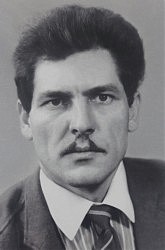
Scientists D.I. Yassky, V.V. Barsukov, A.N. Stepanov, V.G. Zhuk, G.A. Yarovinsky, S.L. Burakov, E.G. Mikotin, M.Y. Zinkevich, and other specialists made a significant contribution to the implementation of this important task.
In 1954, the I All-Union meeting on summarizing the experience of production and use of cast iron sheets was held. Further development of RII SCM was associated with obtaining castings from cast iron in cooled molds, and in 1958, the All-Union Scientific and Technical Conference on this issue was held at RII SCM. The team of scientists and designers (G.A. Yarovinsky, A.V. Mironenko, A.A. Samarin, E.B. Shitsman, and others) developed the design of autoclave chambers of various capacities for introducing magnesium into liquid cast iron under atmospheric pressure.
The institute’s scientists carried out extensive work on the creation of molds and increasing their durability (A.A. Ptitsyn, M.Ya. Raibshtein, I.L. Vayner, V.S. Serebro). RII SCM’s work in the field of casting technology in lined molds is widely known; in 1976, the State Prize of the USSR was awarded for the creation of a highly effective technology and a complex of automated equipment for obtaining precise casting blanks in lined molds and organizing mass production of crankshafts for tractor engines on a new basis.
State Prize of the USSR laureates included RII SCM employees R.L. Snezhna, L.Ya. Netes, A.D. Teplinsky, A.F. Yurchenko, A.F. Shevchenko. A “Diploma of the USSR Exhibition of Economic Achievements” was received for demonstrating a series of institute developments at the All-Union exhibition. I also had to present the institute’s developments personally in 1980, during the “Olympics-80.” RII SCM collaborated with many plants in Ukraine and the former USSR, including: Odesa “ZOR,” ship repair plants “Ukraina,” “Tsentrolit,” Odesa Radial Machines, Tiraspol “Litماش,” Bezhitsa Steel Plant, Tallinn “Volta,” Dzhankoy Machine-Building Plant, Rustavi “Tsentrolit,” Kurgan Agricultural Machinery Plant, etc.
For the last 15 years, the research institute, as the author of the publication rightly notes, has existed nominally. At one time, “Vechernyaya Odesa” told in numerous publications why this happened.
The fact is that in 2006, RII SCM became a victim of a raider attack. At that time, the research institute had been operating in the form of an open joint-stock company for over 10 years. In May 2005, a controlling stake was acquired by the Kyiv firm “Vinsо-Tissen.” A year later, the raiders appeared… The first publication was titled “When the Owner is Superfluous” (issue of the newspaper dated May 18, 2006), the last one – “And the authorities say: ‘Die!'” (issue dated March 27, 2010).
Fortunately, RII SCM did not die and still exists, although the owner of the joint-stock company has not managed to restore his rights. Perhaps, indeed, the Ministry of Strategic Industries, established on July 22, 2020, will be interested in the fate of the Odesa Research Institute of Special Casting Methods?
Oleg Suslov
Based on the scientific research conducted by RII SCM, two doctoral and over 20 candidate dissertations were defended. Approximately 1000 printed works were published.
Personally, I started working at RII SCM on August 7, 1972, in the Scientific and Design Department No. 11 (SKO-11) as a design engineer. The institute had research departments and design departments, a powerful patent department, an information department, a chemical laboratory, an experimental production facility, etc.
My department was involved in the design of automatic lines, and soon I began to develop components for automatic lines, in particular, line A96. For this line, I developed a “Chamber for cleaning lined molds,” which was protected by “Author’s Certificate of the USSR No. 988453.”
In addition, our department designed a continuous casting line for blanks, for which I developed a cooling chamber. I had good creative relationships with the employees of the research department: its head, Candidate of Technical Sciences Yuri Semenovich Lerner, and leading specialist Yuri Ivanovich Senkevich. Many of my personal experiences at RII SCM were passed on to me, as a junior specialist, by the head of SKO-11, Grigory Abramovich Yarovinsky, a talented designer, a very friendly person with an excellent sense of humor; head of sector Vladimir Vissarionovich Grebennikov, chief project designer Anatoly Davidovich Teplitsky, leading designers Valentin Prokopyevich Muntyan, Leonid Ivanovich Bogachuk, Alexander Filipyevich Yurchenko, Boris Arsenyevich Guzanov, Alexander Shlemovich Goldbirt, Alexander Yankelevich Kuperman, and other department employees.
Throughout its existence, the Research Institute of Special Casting Methods has been a training ground for scientific and industrial organizations not only in Odesa and Ukraine but also in far abroad.
For example, leading specialist of RII SCM Anatoly Andreevich Yavorsky was the chief metallurgist of the Odesa Ship Repair Plant “Ukraina” for about 30 years. The author of this essay initially worked as a designer, and then as the head of “BRIZ” at the same plant, and after the reorganization, he headed the patent department of SE “OMTP.” Head of the laboratory, Ph.D. Semyon Borisovich Kantor became the director of the Odesa Museum of Modern Art. Doctor of Technical Sciences Vladimir Semenovich Serebro wrote several books in the USA that were published in Ukraine.
Leading specialists of RII SCM Semyon Isaakovich Sorokotyazh, Anatoly Davidovich Teplitsky, and Alexander Isaakovich Brenner held senior positions in firms and government structures in the USA.
Doctor of Technical Sciences Alexander Leonidovich Stanovsky became the head of the Department of Chemical Engineering at Odesa National Polytechnic University, and Doctor of Technical Sciences Vladimir Tonkonogiy became the director of the institute at the same university.
Unfortunately, the scientific and production potential of RII SCM has been squandered, and instead of benefiting the state and society, the institute effectively exists nominally.
As early as 1979, the prominent scientist, President of the Academy of Sciences of the Ukrainian SSR, Academician Boris Evgenievich Paton, noted in his article “Ode to Metal” the importance of combating metal waste, which can be achieved by using advanced methods of precision casting, which the scientists of RII SCM were engaged in.
In addition, special casting methods contribute to energy saving and environmental safety of production. High-precision casting methods are the basis of the industry of a modern civilized state, creating products with high added value, therefore, their revival is an urgent task for the recently established Ministry of Strategic Industries.











