

Until September 29, the Odessa Museum of Modern Art (Leontovicha, 5) is hosting the large-scale exhibition project “Yesterday, Today, and Always. Odessa in the Vadim Morokhovsky Collection.”
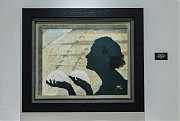
A few days before his 50th birthday, the founder of the OMMA, Vadim Morokhovsky, presented his personal collection, divided into ten thematic sections. What was relevant “yesterday” can be seen on the first floor of the museum building – this is fine art and artifacts of Odessa’s history from the late 18th to the first half of the 20th century. This includes canvases and graphics by Boris Anisfeld, Sonia Delaunay, Kyriak Kostandi, Amshey Nirenberg, Sandro Fazzini, Paul Schwarz, Raisa Nudelman, and other famous masters. There is a payment token for box collection (intra-community tax) used by the first Odessa residents of Jewish faith, samples of banknotes and bonds, as well as coins, water ration cards, and sugar coupons that were in circulation in the nineties. A separate hall is dedicated to the work of Mykhailo Zhuk; one of the exhibits is an extremely poetic silhouette portrait of actress Natalia Uzhvy, made in 1926, inspired by her performance in the Ukrainian theater in Odessa.
— When Russian troops captured Khadjibey, it turned out that a certain number of Jewish families lived there and remained on this land. Since the territory was a border area, there was strict control over the population entering the new city. We managed to find a book in terrible condition. It recorded the first Odessa residents who underwent border registration as residents of Odessa of Jewish nationality. We are showing printouts of the pages of this book and three original pages in a separate display case; here are listed the members of the first five families who received residence permits in 1793, — said Vadim Morokhovsky.
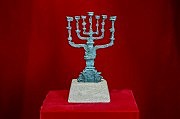
— This hall features works by artists who perished during the Holocaust, — the collection owner continues the tour. — Here is Viktor Baranov-Rossiné, who died in Auschwitz, and Adolf Feder, who died in France. Here is a small work by Solomon Kishinevsky, who did not leave Odessa; during the occupation, he was a very old man, not evacuated, and he died here. The only exhibit not related to Odessa is the menorah by Salvador Dalí.
The second floor presents contemporary art from the second half of the 20th – early 21st century; alongside video art, there are also “living” projections of paintings. The curator of the OMMA, Andriy Siguntsov, explained that the exhibits from the OMMA are presented in a new digital format of NFT tokens. The Odessa Museum of Modern Art becomes the first museum in the country whose collection is placed on the blockchain and may become interesting for a new type of collector in the future, ready to pay for a particular digital file.
— We no longer live in the industrial era, but in the digital one, when digital art is bought with digital money, — explains curator Andriy Siguntsov. — After us, not many paper documents and letters will remain, but a large number of media files will remain. The second floor of the museum is about what is happening now.











