

In the distant year of 1950, city hospital № 8 opened at the 15th station of Bolshoy Fontan. Nature created a unique corner here for recovery from the most severe ailments — lots of greenery, the sea nearby, no tiring city bustle. And it would be a sin not to take advantage of this. Next to the hospital, Gorky Sanatorium and a hospital for war invalids also operate.
In 2015, the Odessa City Council decided to create a rehabilitation department at the hospital. Major repairs were carried out, and the necessary equipment and inventory began to be acquired. Today, the department has 30 beds (20 round-the-clock, 10 day-stay).
— Due to the epidemic, the department was closed from March to September, — says Maria Bobkova, director of the Public Non-Profit Enterprise “City Hospital № 8” of the Odessa City Council. — Unfortunately, those who needed help during this period, who needed early rehabilitation, could not receive it.
The hospital has signed a contract with the National Health Service of Ukraine (NHSU) for providing assistance to patients in this department under two packages: “Medical rehabilitation of adults and children over three years old with nervous system damage” and “Medical rehabilitation of adults and children over three years old with musculoskeletal system damage.”
In the first case, it is about the recovery of patients who have had a stroke, and in the second, about recovery after various injuries. The city greatly assisted in organizing an intensive care unit, without which contracting under the specified packages would have been impossible.
The department has truly unique capabilities. For example, a seemingly simple board with various household items — a telephone, a switch — allows for successful restoration of what is called fine motor skills, which at home turns out to be one of the most difficult barriers on the path to normal recovery after a stroke. “Urban environment” platforms allow modeling of being outdoors and help people in wheelchairs and those who have become disoriented in space to restore these skills. Various simulators and experienced specialists help restore normal motor activity after severe, combined injuries, as well as after hip replacement surgery. For example, there is currently a young man among the patients who suffered a very serious injury at work. Hospital staff hope to help him regain at least the ability to walk.
The problem today is the lack of middle medical personnel to work in the rehabilitation department. Low salaries and the complexity of the work do not attract people. But without them, a normal working process is impossible.
Maria Evgenievna Bobkova is considering expanding the capabilities of the rehabilitation department:
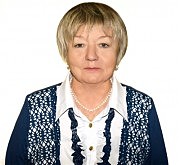
— The neurotoxicity of coronavirus is now proven. Many who have recovered suffer from insomnia, or are plagued by terrible nightmares, and cases of attention deficit and hallucinations are not uncommon. Cytokine storm is a reaction of the immune system that causes destruction of inflamed tissues, simultaneously spreads to adjacent tissues, and as it develops, becomes systemic, affecting the entire body. And a person feels the consequences of this condition for a long time. We have doctors of all necessary specialties. We have traditions and experience. And unlike sanatoriums and private firms, which have also started offering rehabilitation services, in City Hospital № 8 this assistance is provided free of charge (at the expense of the NHSU and the city budget).
If the NHSU develops a corresponding package, we will try to establish rehabilitation for patients who have had COVID-19 at our department. The NHSU has a package on the readiness of a medical institution to receive patients with infectious pathology. Since, due to necessity, the therapeutic department was repurposed for intestinal infections from August 1, 2020, we can also conclude an agreement for the admission of patients with infectious pathology. Work has begun on installing equipment to supply the hospital’s departments with oxygen.
It is already clear today that the elimination of the sanitary service was a big mistake. People with invaluable experience in combating epidemics worked there. Their absence only increased the already complete confusion in the face of the epidemic of a new virus. Experience has to be gained at a high cost. The ventilators, bought in a panic by wealthy people and installed somewhere in their dachas, turned out to be useless. The purchase of oxygen concentrators would have been much more useful. Specialists believe that testing on the first day of illness is useless. They give results approximately on the fifth day, when the person has already managed to infect many. Perhaps therapy with immunoglobulins, which strengthen the immune system, should be prescribed. In general, there are still far more questions than answers.
Maria Evgenievna believes that the time has come to seriously focus on the rehabilitation of healthy people. Appropriate physical exercise complexes and psychological stabilization are needed. It is essential to find your family doctor, who will always answer, always find time to think about what prescriptions to make, based on your health status and specific needs. There are few such specialists, but they do exist.
The hospital has become a participant in a project of the International Crisis Bank, which has allocated funds for the major renovation of the polyclinic department. This will allow us to establish a round-the-clock trauma center for residents of the Kievsky district on the basis of the department, equipped with a new X-ray machine and a leased CT scanner. The microdistrict is actively being built up, traffic intensity is increasing, and there is still no trauma center in the Kievsky district. And therefore, especially in the summer, at the height of the holiday season, the number of visits to hospital specialists — traumatologist, ENT doctor — sharply increases. The creation of a trauma center was planned since 2012, but a real opportunity to implement the plans appeared only now. True, the International Crisis Bank allocates funds only for major repairs, and the new unit will have to be equipped at the expense of either the NHSU or the city budget.
After the closure of tuberculosis dispensaries, the load on the hospital’s pulmonology department has sharply increased — patients queue up at the city consultation office from early morning — from 6 am. The department’s doctors have to work under colossal strain.
Plans also include the creation of a mobile palliative care team and a city medical and social rehabilitation center for people with special needs, which would operate on a “one-stop shop” principle. This means that on certain days, a lawyer, a social worker, an MSEK employee, and medical professionals would visit the center’s wards. Or the wards would have the opportunity to resolve all their issues in one institution. Maria Evgenievna intends to submit this project for the public budget next year. Perhaps it will be supported by the NHSU and Gorky Sanatorium, where balneotherapy is available — a very effective method of recovery for most ailments. Knowing the character of the hospital staff and its director, one can be sure: City Hospital № 8 will surprise more than once with new forms of work and the implementation of modern bold projects.











