

From October 3 to 5, the Odessa National Academy of Food Technologies (ONAFT) hosted the twelfth All-Ukrainian Scientific and Practical Conference of Young Scientists and Students titled “Problems of Forming a Healthy Lifestyle Among Youth.”
The large-scale event (organized by the committee chairman, academy vice-rector Olena Kononykhina) included participants not only from ONAFT students and faculty but also representatives from the Kyiv National University of Trade and Economics, V. N. Karazin Kharkiv National University, Poltava University of Economics and Trade, A. Honchar Dnipro National University, as well as foreign scientists.
The three-day program of the scientific and practical conference included sectional meetings held at the venues of almost all departments and faculties of the academy, during which various aspects of the problem of forming a healthy human lifestyle were discussed, as well as a plenary session held at the premises of the Industrial and Trade Company “Shabo,” a long-standing partner of ONAFT. The scientific forum had a slogan: “The Academy Teaches Beauty.”
We, the journalists of “Vechernaya Odessa,” were invited to participate in the field format of the scientific and practical conference. Honestly, it was very interesting, even though we didn’t understand everything we heard. After all, scientific reports are not popular lectures. Nevertheless, we understood, for example, that for the production of cosmetic products, particularly women’s face and hand creams, it is possible and necessary to use not only grape seed oil but also to identify which grape varieties are best suited for this purpose.
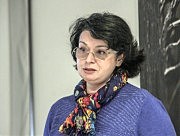
The most interesting part of the plenary session, however, were the reports by the head of the Department of Wine Technology, Oksana Tkachenko, and the associate professor of the same department, Olga Titlova, dedicated to sensory analysis as a tool in the production of high-quality wines.
First, a few words about the theory. Sensory analysis helps the human body to obtain information about a food product through sight, hearing, smell, taste, and touch. This includes information about its quality. For example, real dark chocolate with a high cocoa content should crunch when broken.
One could, of course, say that sensory analysis is subjective, and tastes vary. However, it turns out that there are already about forty normative documents in the world describing generally accepted standards in this field. Sensory analysis is actively taught. For instance, Germany is the leader in training relevant specialists. France is in second place. However, the French have more master’s programs.
In Ukraine, the Odessa National Academy of Food Technologies is a pioneer in this field of education. Two years ago, a sensory analysis laboratory was opened at the university. And then, the academy became the first in Ukraine to enroll students in a master’s program, which was created in close collaboration with producers, including PTC “Shabo.”
Oksana Tkachenko spoke in more detail about the scientific and practical cooperation with Shabo winemakers. This company is actively developing product segments with price points that winemakers worldwide operate with. These are wines priced at “$10 plus” and “$100 plus.” These products are not only excellent in their taste qualities but are also an excellent investment tool. For example, wine as an investment object is currently in second place, while gold, for instance, is only in sixth place…
However, to produce such wine, it is necessary to implement the most thorough sensory analysis of the resulting product. The head of ONAFT’s winemaking department shared a “terrible” story about how not long ago, one of the producers from Bordeaux destroyed an entire batch of wine because its taste slightly differed from what the consumer was accustomed to, even though it was technologically made flawlessly. A true winemaker always values their reputation. PTC “Shabo” also values its reputation. Therefore, it pays great attention to implementing a sensory analysis system for its products, which then results in victories at the most prestigious international winemaking competitions.
The All-Ukrainian Scientific and Practical Conference of Young Scientists and Students concluded with the traditional tourist walk along the Health Route, from the academy to “Chkalovsky” beach.











