

It is recovering, and this is stated by the head of the expert group of the EMBLAS-Plus project, Yaroslav Slobodnik, who is concerned with the problems of Black Sea pollution. Encouraging information was announced at a press conference on Monday, the day of the start of another expedition of Joint Black Sea Research within the EU/UNDP project “Improving Environmental Monitoring of the Black Sea: Selected Measures.”
Our newspaper has reported in detail on the previous two phases of the project, which took place from 2014. The current project is a continuation, aimed at supporting Ukraine and other Black Sea countries in preserving the sea. Its duration is 2019-2020, with a budget of 1.6 million euros.
The Romanian vessel “Mare Nigrum” was ready to sail in the port of Odesa – a real floating research institute with a range of European methodologies and the ability to conduct research directly on board, and on Primorsky Boulevard, expedition participants informed about new sea monitoring data.

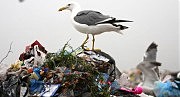
The most depressing fact is that the amount of marine debris in the Black Sea is twice as much as in the Mediterranean, and the concentrations of some pollutants exceed safe levels. Scientists can now identify 40,000 pollutants. As Yaroslav Slobodnik explained, in the open sea, hundreds of kilometers from the coast, samples reveal pharmaceuticals, pesticides long banned in the EU, mercury, and chemicals used to make furniture and textiles fire-resistant. These substances were found in samples of fish and dead dolphins on beaches! 124 chemical compounds harmful to the marine ecosystem and health have been identified.
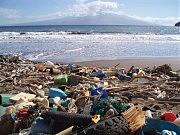
— 83 percent of the marine debris found is plastic, — said Yaroslav Slobodnik. — Large rivers (in Ukraine, research was conducted on the Danube and Dniester) carry 6 to 50 units of debris per hour into the sea. Microplastics (less than 5 mm) have been found in Black Sea sediments, both on the shelf and at depths of over 2,000 meters, and they are particularly dangerous as they can penetrate cell membranes.
Odesa participants of the Joint Black Sea Research, the Ukrainian Center for Marine Ecology and the Institute of Marine Biology of the National Academy of Sciences of Ukraine, have prepared visual materials, which we invite our readers to examine. The top 5 types of marine debris identified by scientists should be alarming and make you think. On beaches, these are plastic cups, cigarette butts, chip and candy wrappers, plastic bottles, straws, and cotton swabs. Rivers carry plastic bottles, containers, bags, packaging, and simply pieces of plastic into the sea. Directly in the sea, plastic pieces account for 68%, plastic containers for 9%, plastic bags for 8%, and plastic bottles and styrofoam for 3% each.
Financial assistance from European partners and the development of a Marine Strategy are global goals, but each of us can and must contribute to the sea’s recovery. How? It’s simple: avoid single-use plastic cups (there are paper and natural material ones), buy or sew a fabric eco-bag, buy drinks in glass bottles. And, of course, don’t leave your trash in nature.
At the press conference, scientists from the UkrNCM, Pavlo Holdin and Karina Vishnyakova, spoke about the situation with dolphins in the Black Sea. To get an idea of their numbers, an aerial survey was conducted this time – two planes surveyed the waters of five Black Sea basin countries, and it was found that in June this year, approximately one thousand of each dolphin subspecies were recorded in Ukrainian territorial waters in the northwestern Black Sea, from the Danube Delta to the Tendra Spit. The largest number of dolphins are in the waters of Bulgaria and Turkey; in Ukraine, they are near the Danube Delta and Zmiinyi Island. According to scientists, the Black Sea porpoise and bottlenose dolphin are under threat of extinction, while the common dolphin has a “vulnerable species” status. Threats to dolphins include fishing nets, marine debris, noise pollution, and illegal fishing for dolphinariums.
The press conference also noted the growing pressure from invasive species – non-native to this ecosystem, actively reproducing, and capable of harming the environment and local species. Using the new e-DNA method – analyzing the remnants of DNA from living organisms in seawater, scientists have established the presence of such Mediterranean species in the Black Sea as, for example, the surgeonfish, red barracuda, and burrowing goby.
— A pleasant surprise was the discovery of the DNA of the European sturgeon, which was considered almost extinct, — said Maria Pavlovskaya from UkrNCM. — In the current voyage, we will clarify whether this is a coincidence. The situation is similar with the beluga whale – another species under threat of extinction.
The world’s largest colony of red algae – Zernov’s Phyllophora Field – is definitely recovering. This was assured to me by Halyna Minicheva, deputy director of the Institute of Marine Biology – “in the infographic characterizing the state of Zernov’s Field, the alarming yellow color has been replaced by an encouraging orange – an improvement of one category.”
The research path continues. Discovering problems, studying them, and then planning steps to improve the state of the Black Sea, developing a unified strategy for all countries of the basin – this is the goal of a large group of scientists who have embarked on another expedition. We will be the first to learn about its results.











