As part of the “Odessa Fights Stroke” program, initiated in our city, the first session took place last Friday. Topic: “How to Reduce the Risk of Stroke”. The session was led by Candidate of Medical Sciences, Chief Freelance Neurologist of the City Council Health Department, Head of the Invasive Diagnostics and Treatment Department of the Regional Clinical Medical Center, laureate of the “Evening Odessa” competition in memory of Boris Derevyanko “People of Action” L. A. Zvyagina.
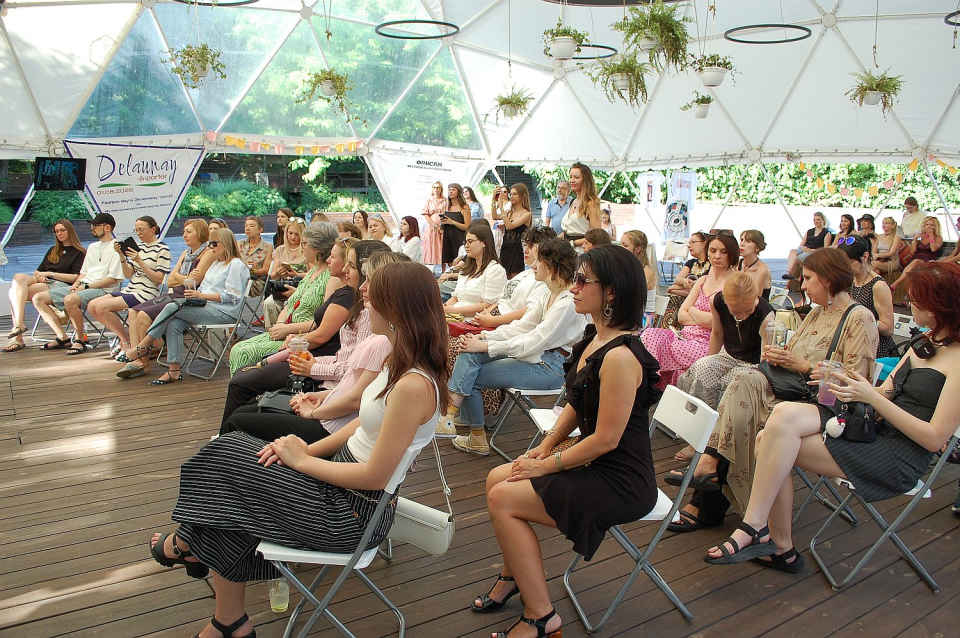
“Evening Odessa” announced this session in advance. But the most active “students” turned out to be the wards of the territorial center of the Primorsky district. They, as it turned out, readily and with pleasure participate in ten different projects, one of which is “The ABC of Social Health”. These people will definitely not be “caught by old age at home”.
They listened attentively to the specialist’s story, supported by a video, about the risks that can lead to a stroke, about its symptoms and clinical manifestations, about quick tests that can indicate what happened to a person, in order to call an ambulance in time, and before its arrival, take measures without causing further harm to the patient with excessive care.
For example, if you suspect a stroke based on all signs, you should not give the person anything to drink: they may choke. The ambulance crew will determine which hospital with a neurology department is closest at that moment, so as not to waste time transporting the patient within the first three “golden” hours. The faster, the better.
It is thought that it is not superfluous to remind once again that such patients are hospitalized in city hospitals №№ 1, 5, 10, 11 and the regional clinical hospital. CT and MRI are free for hospitalized patients. Also, medication is free for the first three days.
Interestingly, the first description of a stroke (apoplexy) was given by Hippocrates. The current World Stroke Organization is headed by a native of Ukraine, whose parents emigrated to Canada long ago in search of a better life, Vladimir Kashinsky. But how many people know that a stroke can be caused not only by untreated hypertension (high blood pressure), but also by hypotension – low blood pressure: it also needs to be controlled, and medication taken on time. Irregular heart rhythm, when a rapid rhythm is replaced by a slow one and vice versa – and so on for some time – is also dangerous.
Stroke is more common in old age – blood vessels, as a rule, are “no longer the same”, not as elastic, but it is very important how blood moves through the vessels, how the brain and heart are supplied with it. Blood vessel cleanliness should be taken care of from youth. Strokes, unfortunately, also occur at a young age, this is the price for neglecting one’s health, for thoughtlessly wasting it.
The problem of strokes is relevant all over the world: it is one of the main causes of disability and high mortality. Does everyone realize this? How do states care about creating normal living conditions? A few figures: in Israel, there are 13 cases of stroke per 100,000 population, in Canada – 22, in the USA – 25, in Ukraine – 125. On the map shown by L. A. Zvyagina, where countries are colored according to the prevalence of strokes, former Soviet Union countries, including Ukraine, are colored the “most dangerous” red. The East of our country and the Odessa region are in a sad “priority”. For example, in Odessa alone last year, about 2500 cases of stroke were registered; in city hospital №1 alone, 900 stroke patients were hospitalized.
Don’t blame the state, but don’t slack off yourself. A person, emphasizes the chief neurologist, must be socially responsible for their own health. Alcohol abuse, smoking, overeating, fatty, fried, smoked foods, a sedentary lifestyle, stress, excess weight – a set of risk factors that seemingly everyone knows about, and everyone can counteract them by using willpower. The main risk factor is hypertension. And it can also be “tamed” – for this, the city program “Health” works, under which patients receive medication for free or with a discount. In short, to Lilia Arkadyevna’s question about what topic they would like to discuss at the next session, all the “students” unanimously stated: “Everything about hypertension.”
Participants of the current session received a booklet from the “Patient’s Library” (about the library “Evening Odessa” wrote in the issue of July 10) – “How to Reduce the Risk of Stroke”. Well, for those who have not yet received such a guide, we offer a “short literacy course” on stroke prevention.
Stroke (from Latin insultare – to leap upon, to attack) is a disease that develops as a result of the acute cessation of blood flow through one of the arteries supplying blood to the brain.
The main signs of a stroke (quick test) by which one can judge that it has occurred. It is important to pay attention to the face, arms, and speech.
If you find yourself near a person who has suffered, try to make them smile and observe: can they smile; is one side of their face drooping.
Ask them to raise both arms and hold them in that position. Can they do it?
Can the person speak clearly or do they speak confusedly, incoherently, incomprehensibly? Can they understand what you are saying?
If at least one of these symptoms appears, do not waste time: lay the patient on their side so that their head is slightly raised (in this position, vomit will not enter the respiratory tract), and immediately call an ambulance.
L. A. Zvyagina also drew the listeners’ attention to the fact that such symptoms should be taken seriously: sudden weakness or numbness on one side of the body, including the legs, arms, or feet; difficulty finding words or difficulty, unclear pronunciation of simple clear sentences; blurred vision or loss of vision in one or both eyes; sudden memory loss or confusion, disarray; dizziness or sudden fall; sudden severe headache.
Every second counts. When certain symptoms appear, there is no time to think whether it is a classic stroke or a transient ischemic attack (TIA), you need to react immediately, call an ambulance. Only a medical specialist can determine the true cause of such symptoms.
However, it should be known that TIA, like a stroke, is caused by a blockage that interrupts blood flow to some part of the brain. Only such a blockage is temporary, and normal blood supply is restored, the symptoms disappear. But if you suspect a TIA, contact a neurologist immediately. In most cases, you have 24 hours for this. It is better not to delay at all. Every person who has ever had a transient ischemic attack (also called a mini-stroke) is at high risk – a classic stroke can also occur. Practice shows that four out of five strokes can be prevented if clear examinations and appropriate procedures are carried out in a timely manner.