

Review of the January Issue of “Universe. Space. Time” Magazine
Last year, five crewed spacecraft were launched. Four launches took place from the Baikonur Cosmodrome, from where crews launched to the International Space Station (ISS). China joined the flights, launching its Shenzhou-11 spacecraft with two taikonauts on board to the Tiangong-2 orbital space station.
In total, over 55 years of human spaceflight, 306 successful crewed spacecraft launches have been carried out: 163 in the USA, 137 in the USSR/RF, and 6 in China. In total, from the first flight of Yu. A. Gagarin in 1961 to January 2017, 549 people from 37 countries participated in orbital space flights (489 men and 60 women).
The beginning of 2017 was marked by successful rocket launches by private companies. On February 19, 2017, the Falcon 9 launch vehicle with the Dragon cargo spacecraft successfully headed to the ISS. The rocket launch was carried out from the Cape Canaveral launch site.
On Interplanetary Trajectories
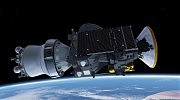
In 2016, the Russian-European ExoMars-2016 spacecraft began its work in orbit around Mars. In addition to it, a whole flotilla of spacecraft is orbiting Mars: the American Mars Odyssey, MRO, MAVEN, the European Mars Express probe, and the Indian Mangalyaan. The Opportunity and Curiosity rovers are operating on the surface of the red planet. In 2016, the Chinese lunar rover “Yutu” and its service module completed their missions on the Moon’s surface. At the same time, the study of the Moon by American spacecraft LRO (Lunar Reconnaissance Orbiter), ARTEMIS P1, and ARTEMIS P2 continues.
The Japanese Akatsuki spacecraft has been operating in orbit around Venus since April 2016, managing to stay in orbit around the “morning star” only on the second attempt after an additional 5 years of flight.
The Cassini spacecraft is completing its magnificent mission in orbit around Saturn. Thanks to it, scientists have seen the diverse world of Saturn with its rings, giant atmospheric vortices at the poles, and erupting water geysers on the moon Enceladus.
At the greatest distance from Earth, in a flight of over 40 years, are the Voyager 1 and Voyager 2 spacecraft. Currently, Voyager 1 is 138 astronomical units (about 21 billion kilometers) from Earth. Light takes a little over 19 hours to cover this distance. The second probe is approaching the records of the first: Voyager 2 is more than 114 astronomical units (approximately 17 billion kilometers) from Earth. The missions differ in their flight trajectories: the second probe flew past Jupiter, Saturn, Uranus, and Neptune for the first time, while the first probe visited only Jupiter and Saturn. Communication with these probes will be maintained for about another 10 years.
Elon Musk’s Martian Plans
One of the main events of the 67th International Astronautical Congress 2016 was the speech by Elon Musk, head of Tesla and SpaceX, outlining his Mars colonization program. According to the entrepreneur, humans should become an “interplanetary species” in the future. Creating a settlement on Mars will allow humanity to survive a catastrophe on Earth in the near or distant future. Mars is the most suitable place for this, as large reserves of water ice have been discovered there.
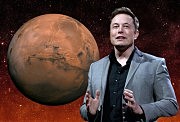
Musk’s planned reusable transport system will be able to deliver 100 people to Mars in 80 days. In total, about a million people can be transported in 10,000 flights. With such a population, the Earth colony will be self-sustaining. The entire settlement process could take from 40 to 100 years.
The first launch of a ship to Mars is planned for 2022. The main goal of the Earth colony on Mars will be the terraforming of Mars – creating conditions on its surface as close as possible to Earth’s. Musk’s plans seem fantastic and are viewed with skepticism by various state space agencies.
110th Anniversary of Sergei Korolev’s Birth
However, technology is developing rapidly, and who, besides S.P. Korolev and other space technology designers, believed in such a close human flight into space. This year marks the 60th anniversary of the launch of the first artificial Earth satellite. Could anyone have imagined that just four years after that, Yuri Gagarin would fly into space! Sergei Korolev’s name is associated with all the pioneering stages of space exploration, including the flight of the first satellite, the flight of the first human, the first spacewalk, and the first launches of spacecraft to the Moon, Mars, and Venus.
In the year of the 110th anniversary of S. P. Korolev’s birth, a series of celebratory events dedicated to the significant date were held in Kyiv and Zhytomyr. Traditionally, on the occasion of anniversaries, Korolev’s daughter, Doctor of Medical Sciences Natalia Sergeevna Koroleva, visits Ukraine. This time, she came with her son Sergey and Russian cosmonaut Alexander Alexandrov. The guests visited Zhytomyr to attend the unveiling of a memorial plaque at the city’s airport, which was named after Korolev this year, and were received by the President of the National Academy of Sciences, B. E. Paton.
Finally, the January issue of the magazine contains a report by Canadian science fiction writer Robert Sawyer, which he read at the STARMUS astro-music festival on the Canary Islands, where giant telescopes are located. In an engaging style, he spoke about the role of science fiction, which has managed to predict not only outstanding achievements of modern technology but also the problems arising from them. The merit of science fiction lies in its ability to warn against incorrect and dangerous paths of development and the dead ends of technological progress.
Among the amazing predictions, the author includes Mark Twain with his telectroscope in a 1898 story, where he predicted the creation of the internet: “An improved version of ‘wireless’ telephony was developed, and thus everyone could see all the daily activities of the world, including sound communication between participants separated by any distance became possible.”
There are many examples of predictions of the World Wide Web and tablets. For instance, Arthur C. Clarke’s “Space Odyssey” describes a cosmonaut who “connected his book-sized NewPad to the ship’s information system and read messages from Earth. Within milliseconds, he could see the headlines of any newspaper he wanted. One could spend a lifetime just absorbing the ever-changing stream of information.” Today, many of us are immersed in this stream of information, and it is not easy to navigate it.
In conclusion, the author of the article makes a wonderful observation: “In my opinion, the most important prediction made by science fiction is that the future will definitely happen!”











