

From an outside perspective, the organizing committee and jury of the “Ukrainian Language – Language of Unity” competition have a long vacation after August following the announcement of the results.
However, with the growing number of participants in the language marathon (there were over three hundred in 2016), they do not close the “window” of contacts with both previous years’ nominees and those who wish to be nominated in the near future. For the second year, the head of the competition’s organizing committee, Yuriy Rabotin, along with his most active assistants, visits Poltava in the autumn.
The homeland of Ivan Kotlyarevsky, Nikolai Gogol, Panas Myrny, and, in fact, a mighty council of chroniclers, writers, linguists, and servants of all muses, is still rich in talents. Therefore, Poltava residents, like representatives of the Odesa region, are among the leaders in our competition. Out of almost fifty awardees in August, a quarter of the “team” managed to come to Odesa. With diplomas, book, and commemorative prizes, we traveled to Poltava last week. The first meeting was with the deputy head of the regional council, Anatoliy Khan’ko. He is a participant of the Maidan of Dignity, from where he volunteered to defend Donbas: he liberated Mariupol, was concussed near Ilovaisk. In the photo accompanying the interview in the summer issue of the newspaper “Zolotosliv,” Anatoliy is wearing a lacy Poltava vyshyvanka. And now, before us stands this handsome man with a short beard, in jeans and a sweater of clearly non-factory knit. His brothers-in-arms insisted that a representative of the Khanko family, known beyond the Poltava region, take part in the competition for a significant official position – to defend the cultural front, the interests of his compatriots fighting in the east.
Anatoliy Mykolayovych briefly answers our questions. He thanks us for the award in the form of a commemorative medal from the competition’s organizing committee, on the obverse of which is engraved “25 Years of Ukraine’s Independence,” and on the reverse – the motto “Ukrainian Language – Language of Unity.” Yuriy Rabotin accepts a stately gift – a two-volume (A4 format) art encyclopedia of the Poltava region. These two folios, generously illustrated and with a comprehensive reference apparatus (there are even synchronistic tables, which for some reason the compilers of current reference books do not get around to), are the next 8th and 9th volumes of the “Poltava Encyclopedia” (12 volumes are planned).
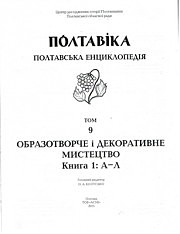
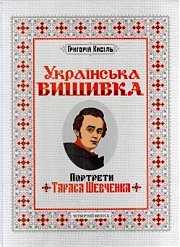
Flipping through the weighty volumes, you experience a cultural shock! Is the intelligent stratum of Poltava – scientists, local historians, archivists, collectors, museum workers – “molded” from a different dough than the Odesa residents?! Or perhaps, it is precisely those who live on the banks of the Vorskla and Psel rivers who possess the gene of self-organization, historical responsibility, active and inspiring patriotism, which gives them the right to consider themselves among the cohort of humanitarians, whose first detachments were formed by French encyclopedists and the first creators of the renowned “Britannica.”
Similar thoughts arose when we visited the spacious regional center for aesthetic education of student youth, the local history museum with its more than 20 large halls filled with unique relics, and its exterior – a standard of Ukrainian architecture. In the museums of Ivan Kotlyarevsky and Panas Myrny, the knowledge of young guides and their readiness to engage in dialogue with visitors are captivating. In each estate, considerable land plots have been preserved – adjacent to the river itself or with an authentic pond, so to speak. Everything is well-maintained, everything is preserved. And such 6 or 7 hectares of protected land within the city have not been “bought out” by anyone…
In one of the Cossack capitals of Ukraine – the town of Hadiach – the 155-year-old library hospitably welcomes not only locals but also numerous displaced persons. They can use five computers, a reading room (the authorities allocate 30 thousand hryvnias for subscriptions!), here they will make free photocopies of documents, and provide addresses of local and regional institutions. And how many emotions and impressions we gained from the art college in Hadiach! The entire Poltava region should be called one of the cultural capitals of Ukraine: because it includes Myrhorod, Dykan’ka, Sorochyntsi, Opishnia, Lubny, and Pyriatyn.
The winners of the competition from all over the Poltava region were presented with well-deserved awards and diplomas. At the same time, we could not refuse several dozen creatively active people and accepted their works for the 2017 competition. Thus, the “Ukrainian Language – Language of Unity” marathon has already started in Poltava!











