

Leading foreign, Kyiv and Odesa experts and scientists, teachers and students of Odesa universities, public activists and journalists tried to find the answer to this question on November 14 at the Bristol Hotel on Pushkinskaya Street as part of a strategic discussion club meeting on the topic: “The EU and NATO… What will strengthen Ukraine’s security?”. The discussion was held as part of a project by the Institute of World Policy (IWP) with the support of the Norwegian government. Representatives of several foreign consulates accredited in Odesa also took part in the event.
Opening the discussion, IWP Director Alyona Getmanchuk noted that the goal of this project is to hear the opinions of representatives of the public and the expert community in the regions in order to develop proposals for the leadership of Ukraine on ways to overcome the problems and challenges that, as a result of the aggression of Putin’s Russia, face not only our state but also the whole of Europe. Prior to this, similar discussions were held in Kharkiv and Zaporizhzhia, and last year 6 discussions were held in various regional centers of Ukraine.
Serhiy Solodky, First Deputy Director of IWP, acted as moderator of the discussion.
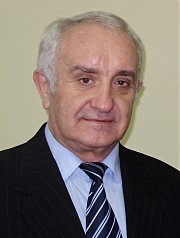
At the beginning, political scientists and experts gave short reports. The first to speak was Marcin Koziell, Director of the NATO Liaison Office in Ukraine. He recalled that in the final declaration of the NATO summit on September 4-5 this year in Wales, the allies strongly condemned Russia’s military intervention against Ukraine and supported the EU sanctions against Moscow. 28 NATO countries demand that Russia cease the occupation of Crimea, withdraw its troops from the territory of Ukraine, and block the flow of weapons, military equipment, and terrorists across the Ukrainian borders. M. Koziell reported that the North Atlantic Alliance has ceased all cooperation with Russia, which not long ago, in terms of its scale, far surpassed NATO’s cooperation with Ukraine. M. Koziell also noted that NATO is providing all possible assistance to Ukraine in reforming its security sector in accordance with NATO standards. At the same time, the speaker noted, the law on non-aligned status has not yet been repealed in Ukraine, which significantly hinders Ukraine’s Euro-Atlantic integration.
Some NATO countries have agreed to receive wounded Ukrainian soldiers for treatment and rehabilitation, and have also pledged to supply Ukraine with medical equipment and medicines.
In his speech, political commentator for the weekly “Newsweek Polska” Michał Kacewicz said that over the past year he has been mainly in Ukraine, visited Maidan in Kyiv and repeatedly visited the ATO zone in Donbas. Comparing the domestic political situation in Poland and Ukraine, the Polish journalist noted that, unlike Ukraine, there has always been consensus and unity in Polish society between political elites and society regarding joining the European Union and NATO.
Today, Ukraine faces a great tragedy – war with Russia. The main task is to resolve the conflict in Donbas, preferably through peaceful diplomatic means. In conditions of war, Ukraine’s European integration process is severely hampered. For example, how can Ukraine establish a visa-free regime with the Schengen zone if the Ukrainian-Russian border is essentially open and all sorts of riff-raff penetrate Ukraine through it?
Ukrainians are disappointed with the West’s policy, and primarily with the fact that the US and Great Britain have failed to fulfill their commitments to guarantee Ukraine’s sovereignty and territorial integrity in accordance with the Budapest Memorandum of 1994.
Well-known Ukrainian political scientist, director of the Institute for Global Strategies Vadym Karasev believes that the security problem is, first and foremost, a problem of national and state building. In essence, Ukraine has not yet been an independent state. Ukraine emerged from the USSR, but did not part ways with Russia, which took the place of the USSR. The results of the recent parliamentary elections showed that without Crimea and Donbas, the Ukrainian nation became more consolidated. The territory became smaller, and the nation more cohesive. According to the political scientist, Russia may compromise: return the occupied territories in exchange for Ukraine’s non-aligned status.
Leonid Litra, a Moldovan expert from the Institute for Development and Social Initiatives “Viitorul” (IDIS) in Chisinau, believes that the formula of exchanging territorial integrity for security does not work. This is clearly demonstrated by the Transnistrian conflict. In one of his speeches, Russian Foreign Minister S. Lavrov said that the self-determination of PMR would depend on whether Moldova was neutral or not. Moldova’s neutral status is enshrined in its constitution, but this was not enough to preserve the country’s unity. Neutrality did not solve Moldova’s territorial problems. According to L. Litra, poor and small countries like Moldova cannot be neutral.
Volodymyr Dubovyk, Director of the Center for International Studies at O. Honchar Odesa National University, presented several possible scenarios for Ukraine’s exit from the crisis in his speech: maintaining the status quo; militarization of Ukraine and its transformation into a military camp; return to nuclear status, which is highly problematic and unrealistic; the optimal option is joining NATO, but this is unlikely in the near future; Ukraine’s status as a major US ally outside NATO, which would allow for large-scale supplies of weapons and military equipment to Ukraine.

After short reports, a rather lively and very emotional discussion took place, in which at least 15 participants from among political scientists, experts, university scholars, public organization activists, and journalists took part. Opinions were varied, sometimes unexpected and unconventional, but all participants were united by one aspiration: what each of us can and must do to help our Motherland in a time of severe trials. (Details of the discussion can be found on the IWP website – http://iwp.org.ua/ukr/public/1298.html).
“Vechernaya Odessa” asked political scientist Oleksiy Volovych, a researcher at the Institute for Strategic Studies and Forecasts of Transatlantic Processes, to comment on the discussion.
— One way or another, most of the speakers within the framework of the discussion touched upon the issue of NATO’s role in assisting Ukraine in its confrontation with Russia. Frankly speaking, I have never been a staunch supporter of NATO. The unlawful actions of some NATO countries in Serbia, Iraq, and Libya, where I had to serve as a military translator and UN observer at one time, caused rejection. By the way, even when he was a senator from Illinois, Barack Obama consistently opposed the war in Iraq and very harshly condemned the administration of G.W. Bush for its adventurism.
However, nothing is ideal in this world. Like any organization that brings together a mass of people and countries, NATO has its strengths and weaknesses, positive and negative aspects. But the most important thing is what trends in the alliance’s development prevail, and whether it is capable of developing while correcting its mistakes and getting rid of its shortcomings? In my opinion, in recent years NATO has demonstrated the ability to self-improve, as its activities are based on the democratic values that are part of it, as well as the primacy of international law and UN principles ensuring peaceful coexistence of states.
Today, the whole world is watching how the Ukrainian people are fighting for their freedom and dignity, for their place in the family of European peoples. Today, Ukraine, at the cost of the lives and injuries of thousands of its best sons, is defending not only itself but also all of Europe from invasion from the East. Given the overwhelming superiority of Russian military power over Ukrainian, I think many of our compatriots are coming to understand that the Ukrainian people can defend Ukraine’s sovereignty and territorial integrity only with the support of the world community and, above all, the most powerful military bloc in the world – the North Atlantic Alliance, which unites 28 member states and up to 30 partner countries.
In my deep conviction, only joining NATO can protect Ukraine from Russian aggression. To this end, the new Verkhovna Rada must as soon as possible adopt the government’s draft law on repealing the non-aligned status of our state and resuming the course towards joining NATO. Then, a nationwide referendum on Ukraine’s accession to NATO should be held. But before that, it is necessary to adopt a new version of the law on a nationwide referendum that meets the requirements of the Venice Commission.
According to many experts, Ukraine’s chances of joining NATO are quite high today. Firstly, Ukraine has fulfilled almost all the main requirements of the Alliance. Secondly, the vast majority of NATO countries are not against Ukraine being among their allies. Thirdly, today the majority of Ukrainians want Ukraine to join NATO as soon as possible.
Thus, according to sociological data from the Razumkov Center, as early as June this year, “over 40% of Ukrainians expressed themselves in favor of joining NATO.” In 2012, there were just over 10%. If such a study were conducted today, then no less than 50-60% of Ukrainian citizens would express themselves in favor of Ukraine joining NATO.
Joining NATO is a forced step. If we had at least normal relations with Russia, if not friendly ones, then, I believe, we could do without NATO membership. However, in the current conditions, we are forced to join NATO to protect ourselves.
And finally. Now many are talking about the fact that we urgently need Western weapons and military equipment. Yes, this is indeed the case, but for the short term – a year or two, until we ourselves establish production of everything necessary for our army. Even today, the domestic defense industry complex (DIC) is capable of meeting 70-80% of the needs of our Armed Forces. Therefore, in the long term, we must focus on our own DIC, which must be preserved and developed. By the way, even in the current conditions, the Ukrainian DIC holds one of the leading positions in the world. As of 1991, more than 18% of the allied military-industrial complex was concentrated in Ukraine, enterprises of which produced 17% of the total defense products of the Soviet Union. In 1991, there were about 700 purely military enterprises in Ukraine, employing about one and a half million people. As of today, the number of defense enterprises has decreased by almost 5 times, but even what remains, with state support and foreign investment, could provide 90% of the needs of the Armed Forces of Ukraine in armaments and military equipment.











