

According to the Central Election Commission, voter turnout in the Odesa region was 46.01%.
The most active district was the 135th (Kyivskyi district of Odesa), where 49% of citizens voted.
The 138th district (Suvorovskyi district) lagged behind the leader by only 0.14 percent and took second place.
The lowest turnout was in the 144th district, centered in Artsyz (covering Artsyz, Bolhrad, Reni, and Tarutino districts) – 39.1%.

About Queues and List Manipulation
More than 200 activists from the Odesa Regional Organization of the Committee of Voters of Ukraine observed the voting and vote counting process at polling stations on election day. Members of the Odesa self-defense offered their assistance – ensuring security.
On May 25, the regional organization of the CVU reported to journalists twice on the results of its monitoring. At the first press conference, at noon, the head of the organization, Anatoliy Boyko, reported on a number of polling stations that opened late. But in the end, they all opened and operated. By 1:00 PM, large queues had formed at almost all polling stations. Anatoliy Boyko explained this phenomenon by both “unprecedentedly high turnout” and the small size of precinct commissions: “There is a quorum, but there are not enough people on the commissions.”
These elections were not without problems with voter lists. At a number of polling stations in Malinovskyi, Kyivskyi, and Prymorskyi districts, the number of voters on the lists for the Odesa mayor election exceeded the number of voters on the lists for the President of Ukraine election. As Anatoliy Boyko explained, it could be the other way around, as the list for the presidential election might include temporary residents. But the list for the mayor election should exclusively include citizens registered in Odesa. The regional organization of the CVU characterizes this phenomenon as a systemic violation with signs of a criminal offense, and the blame lies with the employees of the voter registry office.
On “SILENCE DAY,” the day before the elections, when all campaign materials should have been removed from the entire region, this was not done everywhere. CVU observers found external campaigning by several candidates for the posts of President and mayor in Odesa, Reni, Artsyz, and in the Saratskyi district.
Among other violations recorded by CVU activists are: at a polling station in the village of Usatove (district No. 142, Belyaevka), commission members began signing blank vote counting protocols during voting; at a polling station in the village of Novokholmetske (district No. 144, Artsyz), voters were issued ballots with an incorrectly placed stamp (the stamp was only on the control coupon); commission leaders at a polling station in Chornomorka (district No. 135, Kyivskyi district) were “in a state of intoxication.”
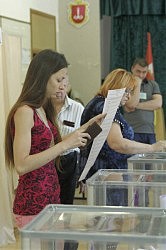
The question from “VECHIRNIA ODESSA” to the head of the regional organization of the CVU was why posters with information about candidates for mayor were absent at polling stations, while presidential candidates were fully represented. As Anatoliy Boyko explained, the central election commission ensures the representation of presidential candidates at polling stations, but those running for mayor had to take care of their own presentation to voters independently. Apparently, they saved money. At polling station No. 511092, as reported by the chairman of the precinct commission, Serhiy Kaminskyi, only one out of two dozen candidates delivered his poster with a portrait, biography, and election program: “Well, we can’t just hang up only one…”
After election day comes the night of vote counting at polling stations and the journey with protocols to district and territorial election commissions. Queues of sleepy people with bags are a familiar sight at every election. Is it possible to somehow streamline the delivery and acceptance of protocols?
According to the law, Anatoliy Boyko explained, the district commission has no right to accept, for example, four protocols simultaneously – only one at a time. This means queues are inevitable. This problem needs to be solved legally, by establishing an order of priority. Precinct commissions in rural areas experience particular difficulties in submitting protocols – the distances there are incomparable to those in the city.











