

Odessa, Sevastopol — these were just the first granite barriers of resistance, against which the teeth of the Hitlerite invaders began to break. Then came Stalingrad — already the beginning of the collapse of their invasion into the Soviet Union. And it was precisely when the Red Army drove the fascist hordes back that the partisan movement and the actions of the patriotic underground in the enemy’s rear in fully occupied Ukraine truly flourished. The ground burned under the feet of the enslavers here in the Odessa region as well, waiting for the approaching native liberators.
February 1943 turned out to be snowy in Berezovka. After many days of blizzard, the rays of the cold sun were especially welcome. I came out of our mud hut into the yard and saw a scattering of my pigeon flock on the snow, and among them… a carrier pigeon! The Romanians had forbidden keeping this breed. Where did it come from? Only at night, the carrier pigeon, having flown in with the whole flock into the dovecote, revealed its secret: under its wing, I found a rolled-up piece of cigarette paper: “They’ve arrived. You are also expected, be sure to wear sheepskin coats and felt boots.” There was no doubt, the pigeon had flown from the Savran forests, where some of the underground fighters from the villages of the Berezovsky district had gone.
Rumors of partisan actions in those places had reached us, but the message brought by the bird warmed my soul much more. Vladimir Fedorovich Dyachenko, the head of our underground organization, after reading the note, said: “We won’t give the vermin any peace!” Soon, on his orders, we managed to disable the water pipeline that supplied locomotives at the railway stations for the whole day — from Voznesensk to Odessa-Sortirovochnaya. But we didn’t have long to rejoice — in the same February, the Romanian Siguranta tracked down many Berezovka underground groups. Several dozen patriots were arrested and shot. We were saved by the secrecy and discipline established by Vladimir Fedorovich. And later, in the summer, we disrupted the construction of a railway siding beyond the Berezovka forest — just at the time when the Hitlerites were preparing for the offensive at the Kursk salient. With the help of the underground, people in the villages were able to hide a lot of bread and fruit from the plundering occupiers. We did what we could in our local conditions.
After the war, I learned many moving stories about the combat exploits of partisans and underground fighters during that same distant time in the Savran and other forests of northern Odessa region. The partisan detachments “Yuzhny,” “Pribuzhye,” “Burevestnik” attacked gendarme posts in villages, recaptured convoys with looted goods from the occupiers, and derailed trains carrying troops and military equipment being sent to the front.
A report from the prefect of the Balta district has been preserved in the archives, in which he wrote: “I have the honor to inform you that terrorist acts and sabotage, as evidenced by previously submitted reports, have increased to such an extent that they completely demoralize the administration and employees… In this regard, I request that the guard of the Bug be strengthened and the forests where partisan gangs hide and carry out terrorist acts be cleared. Gendarme detachments are unable to gain control of the situation.”
Then, in 1943, having recovered from the losses inflicted by the enraged enemy, there were 4 partisan detachments, 4 partisan groups, 23 underground organizations, and 56 underground groups operating in the Odessa region. But the liberation front was approaching, and the command of the Red Army decided to drop a number of organizational parachute-landing groups into the enemy’s rear, which were to establish contact with underground organizations and intensify their struggle against the enemy and coordinate with the advancing troops.
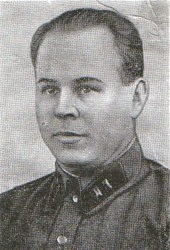
One of these groups, led by an experienced participant in the partisan struggle, Vasily Dmitrievich Avdeev, was destined to play an outstanding role. The group consisted of ten people and landed by plane near the village of Osipovka, Frunzovsky district, on the morning of January 16, 1944. After studying the situation with the help of local peasant patriots, Avdeev assigned each paratrooper a task, in particular, Vladimir Ilyich Deshko was sent to the Berezovsky district to establish contact with the underground and direct them to intensify the fight against the occupiers. Vladimir Ilyich, a pre-war miner, had already operated in occupied territory several times — in the Rostov region, in Donbas, and now he had to adapt to the steppes of the Black Sea region.
Dressed as a peasant, like all the local steppe dwellers, Deshko got into a sleigh harnessed to a humble horse and, having a permit, took a sack of barley to the khutor Gladky, to the mill. In the straw on the sleigh lay a bottle of moonshine — just like all the peasants from the surrounding villages who were traveling, Romanian patrols were accustomed to finding the desired drink during checks on the road and did not miss opportunities to take a sip of the cloudy liquid to cheer themselves up in the boredom of steppe patrolling.
This is exactly what happened on the hill before descending into the ravine near the village of Krinichki. Vladimir Deshko was stopped by two frozen Romanian soldiers with carbines. The sack of barley did not interest them; they only became animated when they felt the bottle in the straw. Taking it, they let the peasant go.
At the mill in Gladky, Deshko, without much effort, gained the miller’s sympathy, having heard that the people in the khutor were happy to have found leaflets dropped by our plane a few days earlier. Then he spoke frankly.
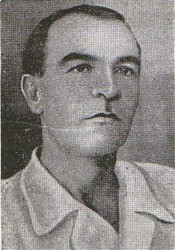
From the mill, on the miller’s recommendation, he went to the mechanic Pavel Malonoga. And from him — to Berezovka, to Nikolai Dubrovo, the senior mechanic of the machine and tractor station.
Nikolai Porfiryevich, my second cousin, introduced Deshko to the head of the underground in Meshchanka, Vladimir Fedorovich Dyachenko. Deshko spoke with him at night in the basement of a house under reeds. He explained that he was from the parachute-landing group that had landed near Osipovka, and listened to Dyachenko’s account of our sabotage actions and the appearance of fighters over Berezovka.
“It would be good now to direct our bombers at the railway trains,” Deshko remarked.
“We are ready,” replied Vladimir Fedorovich. “Since you have a radio operator, let her transmit that it is convenient to carry out such attacks beyond the forest near Berezovka: there is an incline, and the locomotives are crawling…”
“We need a sign!” exclaimed Deshko.
“We’ll have it!” assured Dyachenko. “My boys will cover the letter ‘T’ with sand on the slope. Inform the front line about this.”
At dawn, Avdeev’s messenger left V. F. Dyachenko’s yard, and my friend Nikolai, Vladimir Fedorovich’s brother, and I hurried beyond the forest to cover the sign ‘T’ on the mountainside. We learned a few days later that Deshko had safely returned to Osipovka and the radio operator had transmitted the coded signal for the bombers to the front line. In the morning, from the direction of the rising sun, two bombers appeared over the Berezovka forest. They turned precisely over the fresh, bright yellow ‘T’ sign we had covered and headed towards Viktorovka, and when a train loaded with troops sped out of the station and, diving behind the forest, slowed down as usual, the bombers reappeared and dropped bombs on the train. Precisely, accurately!
Now I know that in those days, Deshko, having returned to Osipovka, did not find the group leader there anymore; Vladimir Dmitrievich Avdeev, with part of the paratroopers, was advancing towards Odessa — the main destination, only the radio operator secretly remained in the village. It was she who transmitted our coordinates for the bombers to the partisan movement headquarters of the front.
Avdeev, having made his way to Odessa, demonstrating extraordinary courage, managed with his comrades to establish contact with almost all Odessa underground fighters. In five districts of the city, partisan headquarters were created with the task of forming a partisan detachment in each. Anti-fascist servicemen from the surrounding Slovak units were drawn into the joint struggle, and a partisan formation was born, with D. S. Gavshin, one of the most well-trained paratroopers, becoming the chief of staff.
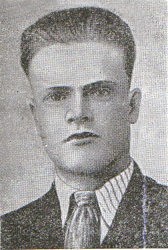
But in the first half of February 1944, Romanian counterintelligence uncovered a number of poorly concealed underground groups. That’s how it started. Arrests, arrests… Mortal danger loomed over V. D. Avdeev and his comrades. He urged the district headquarters to prepare catacombs for the partisans and underground fighters to retreat underground, and intended to go there himself. He didn’t make it.
On March 2, an agent of the Romanian counterintelligence, led by a traitor, attacked Avdeev as he was walking down Zaslavsky Street. He couldn’t knock him down. A shootout ensued. Bleeding, Avdeev tried to escape. However, Romanian and German officers and soldiers were all around. The encirclement could not be broken… The partisan leader had only one bullet left in his pistol; he shot himself in the temple…
The bullet knocked out his right eye, but Avdeev did not die, and the Romanian counterintelligence immediately sent him to a surgical clinic: a partisan of such rank was needed alive.
Upon regaining consciousness, Avdeev saw a man in a white coat before him, but with a clear military bearing. This was no doctor! Gathering his last strength, Vasily Dmitrievich jumped up, tore off the bandage from his head, and with the full weight of his body, struck his right temple against the protruding edge of the iron bed frame. He died a hero…
The partisans and underground fighters who emerged from the catacombs and struck the enemy from the rear when the Red Army liberated Odessa fought for Vasily Dmitrievich Avdeev, and for all the fighters of the partisan front who laid down their lives in battles with the fascist invaders.
I bow with special feeling to the feat of V. D. Avdeev’s organizational parachute-landing group: after all, the Berezovka underground fighters also felt its combat assistance in 1944!











