

Geisha Dance, Katana Swing, and Samurai Armor
From June 15, the interactive exhibition project “Samurai. Art of War” is open at the Odessa Museum of Western and Eastern Art (Pushkinskaya, 9). Art lovers in Russia and Kyiv have already seen it, and from Odesa it will proceed to Lviv.
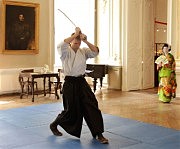
The project curator, Vitaliy Tsvetkov, gave the first visitors a detailed and very interesting tour of the exhibition, which is spread over two museum floors. The event began with a traditional theatrical dance with a fan by Japanese geishas, “Flight of the Moth,” and the audience was also demonstrated the art of wielding a samurai sword. The exhibition exhibits are provided by private collectors, and some of them (engravings and paired statues – Buddha Dogs, mystical Gate Guardians Shi Zi) are from the funds of the Museum of Western and Eastern Art.
The exhibition includes wedding kimonos, geisha kimonos, including the famous white kimono from the film “Memoirs of a Geisha,” men’s kimonos, including the traditional attire for the seppuku ceremony. A significant part of the exhibition is represented by samurai armor, swords, katanas, helmets, and cuirasses. There are also scrolls, engravings depicting characters of Japanese demonology, jewelry, dishes, and other items of culture and daily life – fans, hairpins, combs, purses, inkstones…
The exquisite world of mysterious Japanese women contrasted with the harsh life of brave samurai, for whom the conviction was the law: “He dies with honor who does not wish to tolerate dishonor.” However, even beautiful ladies showed remarkable fearlessness in extreme conditions, and formidable samurai knew a thing or two about poetry.
— This exhibition is a product of the changing meaning of culture that has occurred before our eyes. There has been a keen interest from people of different countries in the culture and daily life of other, sometimes completely distant peoples. And Japanese culture is particularly noteworthy in this regard, — noted the museum director Lyudmila Saulenko.
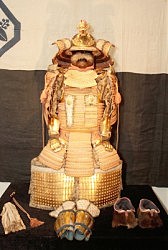
As part of the exhibition, origami, sumi-e (ink painting), ikebana, and martial arts masterclasses will be held on weekends, as well as theatrical performances. But the main interest, of course, is in samurai armor and weapons. The exhibition shows sets of horse equipment – saddles and stirrups, as well as rare surviving examples of jimbari – “surcoats” worn over armor. An important section of the exhibition is dedicated to the culture of the military nobility, which was largely influenced by Zen Buddhism. The first horses were brought to Japan from the mainland, and only a noble warrior (bushi) could become a rider (on the compositions of figures on the left and right – foot soldiers with o-yumi bows, the main weapon of the samurai).
The Edo period Noh theater costumes embroidered with gold are admirable, including the karagori – the most magnificent attire of all Noh theater costumes with a pattern of peony flowers, young pine branches, and peacock feathers. Samurai daughters married in three kimonos decorated with images of pine branches, flowers, and cranes; these garments are on display and are striking in their sophistication and solemnity.
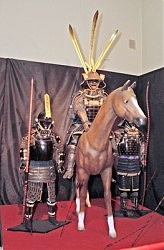
And again, weapons – exquisite taste ivory kashira (scabbards) for the tanto short sword (tanto, wakizashi, and katana – a list of samurai swords in increasing order of size), from the OMZVI collection. Another masterpiece is the parade scabbard for a katana – stingray leather, silk cord, wood, maki-e lacquer. The image of ancient Japanese warriors is reproduced by old ukiyo-e style prints from the series “Forty-one Ronin” (ronin – a samurai who lost his lord). And here is an exact replica of the full combat armor (domaru gusoku) of Tokugawa Ieyasu, Prince Minamoto (1543-1616), who completed the creation of a centralized feudal state in Japan. The horns on the helmet indicated the noble origin of the warrior and also served as a guide during battle. The minimal combat attire of a samurai consisted of yoroi (armor) and kabuto (helmet), and the helmets themselves were divided into bulky parade ones and more modest ones used as a marching option.
And visitors will also be pleased by the souvenir shop, which has no museum value, but can be purchased as a memento. Along with old-fashioned fans, T-shirts with Japanese anime prints are sold here, as well as many beautiful women’s jewelry, including stingray leather. So, it is worth visiting the exhibition with the whole family; everyone will find something to their liking, from children making origami to fathers who can watch documentaries about the harsh and fearless samurai path on plasma screens…











