On August 12, the XXX Olympic Games went down in history. London hosted the largest modern competitions for the third time (previously in 1908 and 1948). The Olympic statistics today are, naturally, astounding – comparisons are incorrect. More than ten and a half thousand athletes from 204 countries participated in the jubilee Games. The main competition unfolded between athletes from the USA and China. The hosts performed powerfully, as expected. Russians moved up to 4th place thanks to a powerful finishing spurt. Ukrainians also managed to save face in the final days of the Olympics.
Here’s how the top twenty of the medal table looks.
| Place | Country | Gold | Silver | Bronze | Total |
| 1 | USA | 46 | 29 | 29 | 104 |
| 2 | China | 38 | 27 | 23 | 88 |
| 3 | Great Britain | 29 | 17 | 19 | 65 |
| 4 | Russia | 24 | 26 | 32 | 82 |
| 5 | South Korea | 13 | 8 | 7 | 28 |
| 6 | Germany | 11 | 19 | 14 | 44 |
| 7 | France | 11 | 11 | 12 | 34 |
| 8 | Italy | 8 | 9 | 11 | 28 |
| 9 | Hungary | 8 | 4 | 5 | 17 |
| 10 | Australia | 7 | 16 | 12 | 35 |
| 11 | Japan | 7 | 14 | 17 | 38 |
| 12 | Kazakhstan | 7 | 1 | 5 | 13 |
| 13 | Netherlands | 6 | 6 | 8 | 20 |
| 14 | Ukraine | 6 | 5 | 9 | 20 |
| 15 | New Zealand | 6 | 2 | 5 | 13 |
| 16 | Cuba | 5 | 3 | 6 | 14 |
| 17 | Iran | 4 | 5 | 3 | 12 |
| 18 | Jamaica | 4 | 4 | 4 | 12 |
| 19 | Czech Republic | 4 | 3 | 3 | 10 |
| 20 | DPRK | 4 | 0 | 2 | 6 |
For Ukraine, this was the fifth Olympics. During this time, 116 Olympic medals have been won. Of these, 34 gold, 27 silver, and 55 bronze.
| Olympics | Gold | Silver | Bronze | Total |
| Atlanta-1996 | 9 | 2 | 12 | 23 |
| Sydney-2000 | 3 | 10 | 10 | 23 |
| Athens-2004 | 9 | 5 | 9 | 23 |
| Beijing-2008 | 7 | 5 | 15 | 27 |
| London-2012 | 6 | 5 | 9 | 20 |
So, how to assess the performance of the Ukrainians in the capital of England? On the one hand, such sports powers as Cuba, the Czech Republic, Spain, Brazil, South Africa, Sweden, Switzerland, and so on were left behind. On the other hand, the number of medals (including the highest ones) decreased. It was good for the poet who undertook to answer his own already classic question. Everything seemed clear and understandable to him. If “the son is blacker than night” or “he tore the book and the ball in a row,” then “the Octobrists say: a bad boy.” If “the boy loves soap” or “argues with a formidable bird,” then there is no doubt: a worthy member of communist society is growing up.
Everything is much more complicated for us, but let’s try to figure it out.
The President of the National Olympic Committee of Ukraine, the renowned Sergey Bubka, believes that his team performed достойно at the Olympics. And he has reasons for that. At the first three Games, we “lived on” the inheritance received from the deceased USSR. A failure was predicted in China, but unexpectedly, the shooters “shot” (literally and figuratively). Bubka himself admitted that 27 medals (a record achievement), of which 7 were gold, were a pleasant surprise, but they did not fully reflect the true state of Ukrainian sports. So, today’s 20 prize-winning places cannot be called a failure.
However, one cannot ignore the fact that according to the results of the Games, our country lost its second position in the ranking of former Soviet Union powers.
| Place | Country | Gold | Silver | Bronze | Total |
| 1 | Russia | 24 | 26 | 32 | 82 |
| 2 | Kazakhstan | 7 | 1 | 5 | 13 |
| 3 | Ukraine | 6 | 5 | 9 | 20 |
| 4 | Belarus | 2 | 5 | 2 | 12 |
| 5 | Azerbaijan | 2 | 2 | 6 | 10 |
| 6 | Lithuania | 2 | 1 | 2 | 5 |
| 7 | Georgia | 1 | 3 | 3 | 7 |
| 8 | Uzbekistan | 1 | 0 | 3 | 4 |
| 9 | Latvia | 1 | 0 | 1 | 2 |
| 10 | Armenia | 0 | 1 | 3 | 4 |
| 11 | Estonia | 0 | 1 | 1 | 2 |
| 12 | Moldova | 0 | 0 | 2 | 2 |
| 13 | Tajikistan | 0 | 0 | 1 | 1 |
Questions may arise regarding Kazakhstan, however. It is said that several naturalized “Kazakhs” performed for this Eurasian country. Indeed, Olympic weightlifting champions Zulfiya Chinshanlo and Maiya Maneza were brought from China. Both are Dungans by nationality. This nomadic people lives on the border of Kazakhstan and China. Their colleague in sports, Svetlana Podobedova from Irkutsk, was once dropped from the Russian national team (now they are biting their elbows after her triumph in Beijing). Well, in my opinion, such an approach to team formation is quite justified and legal. No one “stole” anyone. On the contrary, they found promising but undervalued athletes and trained Olympic champions. Ukraine, on the other hand, bought horses abroad and put foreigners on them, who not only failed to reach the podium but didn’t even make it into the top ten. It seems to me that if one resorts to “help” from abroad, it should be with a certain guarantee of achieving a high result. Otherwise, it is much more reasonable to spend funds on children’s and youth sports. (I doubt that the foreign horse riders are concerned with creating a riding school in Ukraine).
Issues of sports citizenship after the collapse of several countries will long be a subject of dispute among officials, and there’s no escaping it. For example, the Lithuanian pentathlete Donata Rimšaitė, who received a Russian passport, was not allowed by the Lithuanian NOC to compete for the Russian team at the Olympics.
In this regard, it is probably interesting to compare the results of athletes from countries that broke up into separate states (USSR, Yugoslavia, Czechoslovakia). To save newspaper space, I will omit the “Soviet” republics whose achievements are published above.
| Country | Gold | Silver | Bronze | Total |
| Czech Republic | 4 | 3 | 3 | 10 |
| Croatia | 3 | 1 | 2 | 6 |
| Slovenia | 1 | 1 | 2 | 4 |
| Serbia | 1 | 1 | 2 | 4 |
| Slovakia | 0 | 1 | 3 | 4 |
| Montenegro | 0 | 1 | 0 | 1 |
So, even against this background, Ukraine looks quite decent. So who brought the country to such a high place? And who prevented it from rising higher?
Ukrainians participated in competitions in almost thirty sports, which can be conditionally divided into several groups.
Let’s start with disciplines where we initially had no chance. These are badminton, equestrian sports, table tennis. Well, no surprises here, and they could only have been pleasant.
Minimal chances existed in mountain biking, road cycling, tennis, triathlon, taekwondo WTF, sailing. And Olga Maslyvets, competing in the “RS:X” class, almost created a sensation by taking 4th place. Mountain bikers and taekwondo practitioners also showed themselves well, but couldn’t jump higher than their abilities.
Based on the results of the previous Olympics, we expected more from trampoline gymnasts, shooters, divers, modern pentathletes, track cyclists, archers, and synchronized swimmers. Alas, the reliance on the old guard in several disciplines did not pay off. And if the rifle shooters, thanks to the heroic performance of Olena Kostevych, somehow saved face, then the others have nothing to boast about.
After the victory of weightlifter Oleksiy Torokhtiy, Atlanta bronze medalist Denys Gотфрид shouted live, “Lesha, you saved weightlifting from disgrace!” The same words can be applied to the women’s quadruple sculls and wrestler Valeriy Andreytsev, who managed to “stand up” for academic rowing and freestyle wrestling with honor. Weightlifters, however, fulfilled their plan more or less (“gold” plus “bronze”), but the wrestlers completely failed the Olympics. The freestyle wrestling team was shaken by internal scandals; instead of preparing for the main event of the four years, the athletes wrote and signed various letters and appeals. As a result, a deafening failure. In Greco-Roman wrestling, the crisis began even earlier. The judokas, on whom many hopes were pinned, looked catastrophic – their results are generally inexplicable.
Gymnasts, track and field athletes, and… swimmers performed at their level. 3 medals in track and field in conditions of incredible competition look quite successful (it’s a pity, of course, that due to injury, triple jumper Olha Saladuha couldn’t show her full potential; her “bronze” is worth its weight in gold). There is an optimistic prospect in gymnastics – both artistic and rhythmic (for the first time in recent years, there have been no derogatory remarks about judging and competitors from the coaching staff of Ukrainian “rhythmic gymnasts”). But swimming is a real problem. Only two – Andriy Hovorov and Daryna Zevina – managed to reach the semifinals; the rest “dropped out of the race” after the first heats.
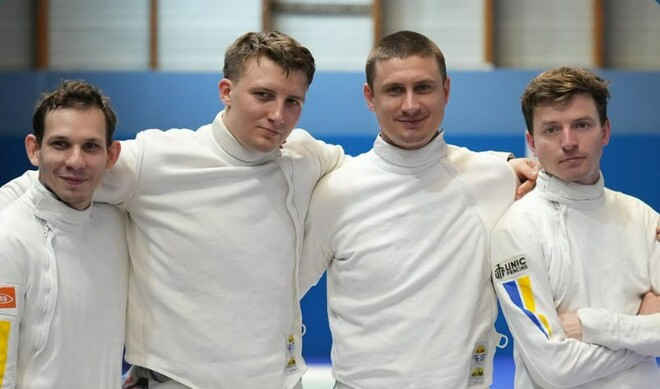
Fencers confirmed their high reputation.
And in the vanguard are canoeists and boxers. A friendly team of two, Yuriy Cheban and Inna Osipenko-Radomska, brought Ukraine one gold and two silver medals. Boxers, in general, looked the best at the Olympics – 2 golds, 1 silver, and 2 bronzes. No comments needed.
I cannot deny myself the pleasure of listing our laureates.
The championship title was won by: the academic rowing quadruple sculls crew consisting of Kateryna Tarasenko, Nataliya Dovhodko, Anastasiya Kozhenkova, and Yana Dementieva (all from Dnipropetrovsk region), fencer Yana Shemyakina (Lviv region), weightlifter Oleksiy Torokhtiy (Kharkiv region – Khmelnytskyi region), canoeist Yuriy Cheban (Odesa region), boxers Vasyl Lomachenko (Kyiv) and Oleksandr Usyk (Crimea – Lviv region).
Silver medals were awarded to javelin thrower Oleksandr Pyatnytsia (Dnipropetrovsk region), boxer Denys Berinchyk (Kyiv), Inna Osipenko-Radomska – twice (Vinnytsia – Kyiv region), Valeriy Andreytsev (Zhytomyr region – Kyiv region).
Bronze medals were awarded to the track and field 4x100m relay team consisting of Olesya Povkh (Zaporizhzhia region), Nataliya Pohrebnjak (Ivano-Frankivsk region), Mariya Rehmyen (Zaporizhzhia region – Donetsk region), and Elizaveta Bryzhina (Luhansk region – Kyiv region), triple jumper Olha Saladuha (Donetsk region), boxers Taras Shelestyuk (Sumy region), Oleksandr Gvozdyk (Kharkiv region – Khmelnytskyi region), fencer Olha Kharlan (Mykolaiv region), gymnast Ihor Radivilov (Donetsk region), pistol shooter Olena Kostevych – twice (Chernihiv region), weightlifter Yuliya Kalina (Donetsk region). The data on the athletes’ “registration” is given in accordance with the official application of the national team. So, let no one be surprised by the fact that V. Lomachenko from Bilhorod-Dnistrovskyi represents Kyiv (in fact, there are no athletes from Kyiv’s sports schools in this list), and A. Torokhtiy, a native of Donbas, represents Kharkiv and Khmelnytskyi. These are the realities of modern elite sports.
So, the intra-Ukrainian Olympic medal ranking looks like this:
| Place | Region | Gold | Silver | Bronze |
| 1 | Lviv region | 1.5 | 1 | 0 |
| 2 | Kyiv city | 1 | 1.5 | 0.125 |
| 3 | Dnipropetrovsk region | 1 | 1 | 0 |
| 4 | Odesa region | 1 | 0 | 0 |
| 5 | Kharkiv region | 0.5 | 0 | 0.5 |
| 6 | Khmelnytskyi region | 0.5 | 0 | 0.5 |
| 7 | Autonomous Republic of Crimea | 0.5 | 0 | 0 |
| 8 | Vinnytsia region | 0 | 1 | 0 |
| 9 | Kyiv region | 0 | 1 | 0 |
| 10 | Zhytomyr region | 0 | 0.5 | 0 |
| 11 | Donetsk region | 0 | 0 | 3.125 |
| 12 | Chernihiv region | 0 | 0 | 2 |
| 13 | Mykolaiv region | 0 | 0 | 1 |
| 14 | Sumy region | 0 | 0 | 1 |
| 15 | Zaporizhzhia region | 0 | 0 | 0.375 |
| 16 | Ivano-Frankivsk region | 0 | 0 | 0.375 |
| 17 | Luhansk region | 0 | 0 | 0.125 |
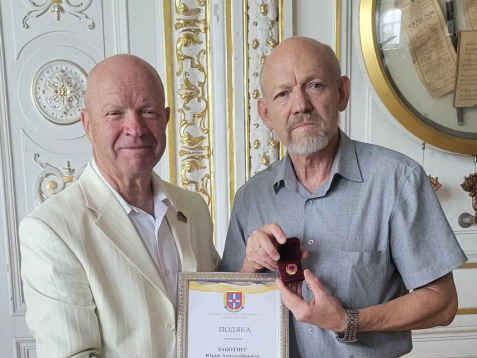
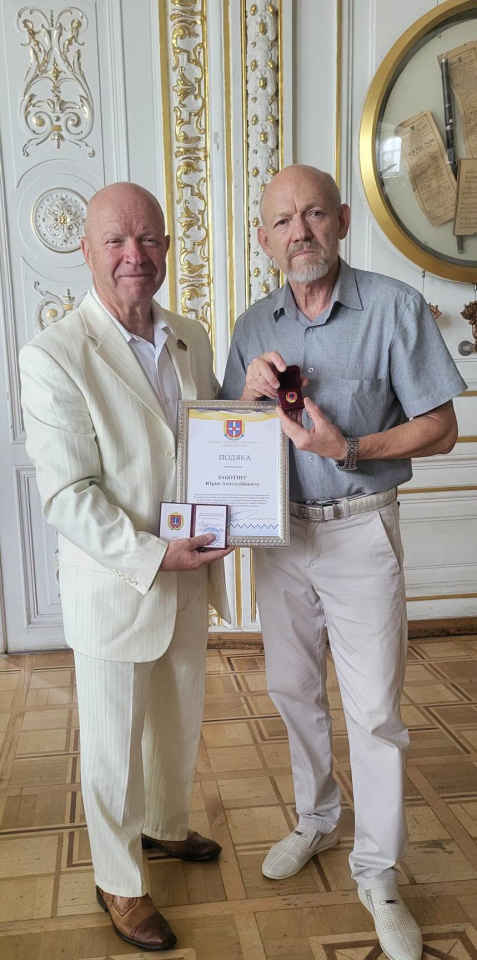
The achievements of the athletes have been duly recognized by the state. The President of Ukraine, Viktor Yanukovych, at a meeting with the Olympic heroes in London, which took place at the Livadia Palace in Yalta, congratulated the athletes on their excellent performance: “For your courage, for your dedication to sports and the Motherland – immense gratitude and respect,” said V. Yanukovych, greeting the guests. There, members of the Olympic team who won medals during the XXX Summer Olympic Games were presented with state awards (the corresponding decree is posted on the official website of the President).
In particular, Olympic boxing champion Vasyl Lomachenko was awarded the Order of Merit, I degree. Inna Osipenko-Radomska, Oleksandr Usyk, Olha Kharlan, and Taras Shelestyuk were awarded the Order of Merit, II degree. The Order of Merit, III degree, the Order of Princess Olga, II degree, and the Order of Princess Olga, III degree, were awarded to the remaining Olympic medalists. In addition, coaches of the Olympians were recognized with state awards.
But the main achievement of our outstanding athletes is not the medals, nor even the prestige of the country, but the example that, we hope, will be followed by thousands of young men and women who witnessed the triumph of their compatriots. It is time to recall the motto of the XXX Olympic Games: “Inspire a Generation.” Our best athletes have coped with this task.