

The Moscow Theater “School of Modern Play” is holding guest performances at the Odessa Youth Theater, constantly experimenting with the stage space. Among the performances brought by the Moscow artists are Andrey Zholdak’s drive-party “Moscow. Psycho”, the improvisational performance “Overheard, Overlooked, Unrecorded”, created jointly by Evgeny Grishkovets and Iosif Raikhelgauz, and the children’s performance “Harmful Advice” based on Grigory Oster.
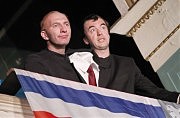
The tour opened with the most originally designed political pamphlet by Dmitry Bykov, “The Bear” (directed by Iosif Raikhelgauz, set design by Alexey Tregubov), for which a platform was installed in the hall with some of the seats removed. The performers sat around the platform: from time to time they delivered lines, went onto the “stage”, which represented a city apartment where a symbol of statehood, a brown bear, unexpectedly “spontaneously appeared”. From the balcony, the family, which had experienced such a miracle (a wild animal had settled in the bathroom with all the ensuing consequences), was greeted by the ruler Binom – Siamese twins in the images of Vladimir Putin and Dmitry Medvedev.
In the finale, an inflatable double-headed bear appeared, and its excessiveness eliminated the need for a clear ending. The set design of the play, as it turned out, held danger for the performers. One of the young actresses, Julietta Gering, fell from the platform in the dim lighting, greatly frightening the audience. But everything turned out fine. Especially compared to what happened the next day.
For Chekhov’s “The Seagull” (directed by Iosif Raikhelgauz, set design by Boris Lysikov), the Moscow artists installed an inclined ramp, which the actors were forced to run across from the platform (where the house, sofa, table, and chairs were located) to the stage of the manor theater, where important scenes of explanation between the characters take place. In the “native” hall of the “School of Modern Play”, the scale is different, the ramp there is more gentle, but in our Youth Theater, they installed some kind of slide, a trap for actors. It was on this slide that Irina Alferova, playing the role of Arcadina, fell, unable to keep her balance in high heels. With a face pale from pain, she got up, leaned on the stage, and, not according to the play’s text, answered the worried questions of her partners: “I twisted my leg.” Twisted it, my foot! It later turned out that the actress’s left ankle was broken in two places and surgery was unavoidable. During the intermission, ambulance doctors gave her painkillers and applied a tight bandage. Irina Ivanovna finished the performance, hopping on her good leg or moving in a wheelchair, but, as you understand, it’s impossible to talk about the play in such cases.
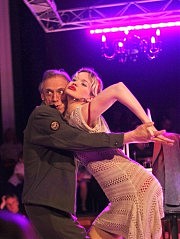
The work of costume designer Victoria Sevryukova is beyond praise; the heroines’ outfits in the “patchwork” style, using scraps of embroidery, lace, satin, velvet, and guipure, are independent works of art that contribute to the creation of the image. Nina Zarechnaya (Tatyana Tsyrenina) in the first act seems to have stepped out of an old photograph in her white and cream lace attire; in the finale, a black and blue dress and jacket transform her from a seagull (or a beautiful white crow, which is usually pecked at) into a gloomy jackdaw, burned, poisoned, and hounded. Alas, in Chekhov’s time, only a rich heiress or a very talented actress, musician, or writer could be truly independent. But Nina lacks talent (as, incidentally, do the other characters in “The Seagull”); this is the tragedy, not her love for Trigorin, who, it must be said, is brilliantly played by Alexander Gordon, playing himself, a smart, cynical, and jovial fellow…
The only classical play in the repertoire of the “School of Modern Play” theater, Chekhov’s “The Seagull”, even in such a force majeure presentation, makes an impression. Due to Irina Alferova’s injury, the next performance was replaced by an evening of theatrical anecdotes. Alexander Gordon, Albert Filozov, Yuri Chernov, and other actors of the theater, as well as Iosif Raikhelgauz himself, showed scenes from performances, told funny tour stories, which were perceived quite normally.











