

To the 40th anniversary of the flight of the spacecraft “Soyuz-11” with the crew commander, Odessa native Georgy Dobrovolsky
A few years ago, I became acquainted with the working notes of the “commander’s ship’s log,” which my father, Georgy Timofeyevich Dobrovolsky, kept during his space flight (June 6-30, 1971). On one of the pages, it says: “June 6 – Launch.” Next to it is another text, written quickly for television broadcast on June 7, from board the world’s first scientific space station “Salyut”: “Hello, dear viewers. We are reporting from the manned orbital station “Salyut.” First of all, on behalf of our entire crew, I want to thank everyone who sent warm congratulations to us. Our crew will do everything possible to justify the trust of our people and successfully complete the tasks set.”
The “Ship’s Log” already included greeting texts to the world community: “From board the orbital scientific station, we greet the peoples of Europe. May Europe be a continent of strong peace and peaceful cooperation of states. We send our good wishes to the peoples of North and South America.” Greetings were sent to “The Peoples of the Soviet Union,” “The Peoples of Indochina,” “The Peoples of Asia,” and “The Peoples of Africa.”
Correspondent Yaroslav Golovanov reported from the Baikonur Cosmodrome: “It is so pleasant to congratulate Odessa, this wonderful city, a hero city, a city of courageous and kind people, on the launch of their countryman, Zhora from Blizhniye Melnitsy, who has today become the commander of the spacecraft “Soyuz-11.” Tanned, with hair bleached by the sun to the color of ripe rye, with a sly and cheerful squint of his brown eyes, laughing unexpectedly and loudly, with a melodious speech in which not a word, but an untranslatable intonation, a sigh, a pause, flashes through – all this makes Georgy Dobrovolsky a typical representative of the tribe of cheerful people who assert that an Odessan is a nationality. He said: “For me, the highest praise is ‘Odessa will not forget you.’ Before the launch, we escorted Georgy to the hotel door; he turned around and answered the last question from journalists about the meaning of life: ‘The meaning of life is in life… in life itself,’ said the cosmonaut.”
In his autobiography, my father wrote that he was born in Odessa on June 1, 1928, attended School No. 99 before the occupation of Odessa, and after the city’s liberation, he entered a special flight school.
Anatoly Yakovlevich Vaysfeld, former company commander and flight theory instructor at the Odessa Air Force Special School (1944-1946), gave me a thin notebook – “Memories of my student, Georgy Dobrovolsky,” written by hand in 1977. During the war, pilot A. Ya. Vaysfeld was severely wounded in the spine at the Southwestern Front. After treatment in a military hospital, he returned to his native Odessa and was assigned to the Air Force Special School as a company commander with the right to teach flight theory. In his notes, he wrote: “Zhora, like many boys who found themselves in occupied Odessa, had no opportunity to study normally. But Zhora managed to prepare and pass exams externally for 8th grade. He was admitted to the special school in the second company (9th grade), not the third (8th grade). This was in 1944. He absorbed the special subjects with eagerness. He showed enviable perseverance. I remember his neat notes on flight theory. Later, many years later, I learned from his service record that pilot Georgy Dobrovolsky flies competently and has excellent piloting skills. To me, his first commander-mentor, his educator, it is pleasant to realize that the foundations of this mastery were laid in our special school, that there is a part of my work in this. During practical classes on familiarization with the aircraft cockpit (there were UT-2 and U-2 aircraft in the schoolyard, and later IL-2), Zhora reluctantly got out of the cockpit, giving way to the next person. But during self-study hours, in his free time, Zhora would sit in the cockpit for a long time and “fiddle” with the controls and pedals, mentally performing aerobatics. I was pleased with such cadets, and I was pleased with Zhora. I felt who was drawn to the sky. Conversations often turned to the fact that “the war is ending, and we are still undergoing initial training – let’s start flying sooner.”
Observing Zhora Dobrovolsky in those years, I, of course, could not know that we had a future cosmonaut before us,” A. Ya. Vaysfeld continues. “He became a 1st class fighter pilot, a Soviet ace, capable of flying in any difficult conditions. By the way, Zhora never spoke about being arrested by the occupiers and sentenced to 25 years of hard labor. Fortunately, Odessa was liberated from the invaders.
…Still, he stood out among his comrades with his bearing, smartness, neatness, and, above all, his determination, high willpower, and organizational skills. He felt like a commander, demanding of himself and others. All these qualities were combined with a cheerful, friendly character. These qualities led him to the position of deputy company sergeant major. I did not regret this appointment. Company sergeant major Viktor Ivashchenko and his deputy Georgy Dobrovolsky were good assistants to me. It is no coincidence that the graduating 1st company was the leading one in all indicators.
Zhora was an active participant in school amateur performances and engaged in physical training. He was an initiator, an inventor, and a lover of friendly pranks. He did not smoke. He did not drink. As far as I know, he remained that way until the end of his life. He also had a passion: he loved the sea, fishing, and… fried Black Sea gobies. He read a lot. I inquired at the school library about what the cadets of my company were reading and which books they were taking. Zhora often kept textbooks on flight theory, aerodynamics, aviation meteorology, and combat use of air forces for a long time. He also managed to read fiction and loved books about travel.
In 1944-1945, the cadets worked on the restoration of the railway station. Zhora not only organized this work but also worked diligently himself. Everyone wanted to restore the building destroyed by the war as quickly as possible. They worked cheerfully, joking. And a not-so-substantial lunch awaited them at the school… Times were still difficult. The school received thanks from the railway station administration and the city executive committee for their good work.
Barges from the Danube River carrying property of the 5th Air Army arrived at the piers of the Odessa Sea Port. The cadets of the special school were entrusted with unloading them and delivering the property by car to their destination. Zhora proved himself to be an excellent organizer here as well. And again, thanks came from the command of the 5th Air Army.
The school building itself was partially destroyed. The window openings were boarded up with stones. It was cold and dark. They also worked hard here. This is how our cadets, future officers, pilots, specialists, future cosmonauts, studied and worked.”
In peacetime, the Odessa Air Force Special School became Specialized School No. 10. In 1971, the school was named after G. T. Dobrovolsky. I fondly recall my first meeting with the school’s director at that time, Irina Borisovna Maeva. Under her sensitive guidance, a school museum of cosmonautics was created. I am also grateful to Vladimir Ilyich Shalakin, the director of School No. 10, where interesting and educational events are held on the anniversary birthdays of my father with the participation of schoolchildren and teachers.
There are many kind and responsive people in Odessa. Dmitry Maksimovich Belilovsky, a graduate of the Odessa Special School (1948), worked at the Baikonur Cosmodrome for over twenty years and later created a unique museum “Odessa Pages of Cosmonautics History.” I recall how my sister and I flew to Odessa on May 30, 1998, for events dedicated to my father’s 70th birthday. We were met at the airport by Dmitry Maksimovich Belilovsky with flowers and a car provided by the director of the Regional Center for Extracurricular Education. On June 1, a rally was organized at the monument on Dobrovolsky Avenue. In my speech, I thanked the people of Odessa for their warm and sincere words addressed to Georgy Timofeyevich and read out words from his speech before the launch:
“Dear comrades, friends!
Only a few minutes remain until launch. All thoughts, the entire soul are rushing into flight, and it is difficult now to talk about anything that does not directly relate to the mission’s execution. Moreover, the entire crew is purely humanly nervous before the launch, thinking over their actions at the flight stages once again.
At the same time, we, along with Vladislav Volkov – flight engineer, and Viktor Patsayev – test engineer, my friends and comrades in training and the upcoming flight, cannot fail to say the following.
We have been entrusted with a great honor by all our Soviet people, represented by those who built and equipped the spacecraft and the launch vehicle, by those who trained us and are sending us into flight. We thank you from the bottom of our hearts for this trust.
We will apply all our strength, all our skill to justify this trust, to fully and with high quality complete the flight mission.
We would like to tell you more about the upcoming space flight, its goals and objectives, about the work of each crew member, but only a few minutes remain until launch, and we will part with you until the next report from Earth orbit. The crew wishes you all great earthly happiness and great success in your work. See you soon, dear friends!”
After the rally, the director of the “Zvezdny” cinema, Tatyana Fyodorovna Tetenko, invited those gathered for lunch. I fondly recall the warm meetings in this cozy cinema on Dobrovolsky Avenue.
For many years, Leonid Vasilyevich Subbotin, a well-known Odessa philatelist, has been preparing envelopes and postcards with stamps on space themes for release. For the 40th anniversary of the flight of the world’s first orbital station, Leonid Vasilyevich has already prepared a new series of stamps. What amazing and creative people live in Odessa!
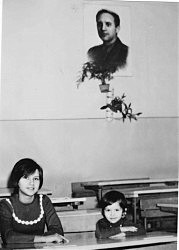
Journalists often ask me: “What was your father like?” I always answer that he was a very close and dear person to me. I know that he loved people, always helped those in need. He gave people his heartfelt attitude towards them.
In this flight, spacesuits were not provided, but it was spacesuits that could have saved their lives. But after them, for 40 years now, cosmonauts and astronauts have not been sent into space without spacesuits… The valve that caused the cabin depressurization was also no longer installed in the ship’s design. There were also many technical malfunctions that the cosmonauts heroically fixed. The crew completed all planned tasks. The “Salyut” station successfully continued its flight.
Our family received letters from all over the world: from Odessa, from America and Europe, Asia and Africa. The U.S. Embassy in Moscow conveyed to me a letter from American President Richard Nixon, written in his own hand on July 2, 1971: “Dear Marina, when I saw your photograph in an American newspaper, I realized that a courageous man had left behind a courageous daughter. You should be proud of your father. When your sister Natasha grows up, tell her what a strong personality your father was…”
After the publication of my letter in the newspaper “Vechernyaya Odessa” on April 9, 2011, I also received letters from Odessa, Australia, and the USA asking to continue publishing memories of my father.
Marina Dobrovolskaya. Candidate of Pedagogical Sciences
Star City. Russia











