

Five graduates of the Odesa State Academy of Construction and Architecture are winners of the All-Ukrainian review-competition of diploma projects in the specialty “Urban Construction and Economy”, which took place last year.
Viktoria Gerasimova, Alena Nemchenko, Natalia Potapova, Tatyana Akrish, and Elena Gizhko, who completed specialist and master’s level projects, brought back not only diplomas, which, in particular, bear the signature of the Ambassador of the Republic of Finland to Ukraine, Christer Michelson, but also gained even greater confidence that they are on the right track. In their unconventional approach to transforming urban space, they are enthusiastically supported by their supervisor, Associate Professor of the Department of Urban Construction and Economy T. A. Yenina. Thus, the goal of the project “Landscape organization of the Belgorod-Dnestrovsky fortress territories with the development of the ‘Slavic courtyard'” is to determine a strategic long-term plan for the preservation and use of this historical monument as a modern cultural and tourist center in southern Ukraine.
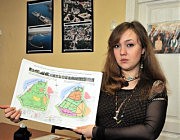
— This idea was born thanks to Tamara Anatolyevna, — admits one of the project authors, Elena Gizhko. — She is a tireless generator of interesting ideas, and she has a gift for infecting others with them, especially young proponents of everything unconventional. Archaeologist Tatyana Lvovna Samoilova is also such an enthusiastic person. So it happened that I worked all summer, and I am still working at the Akkerman fortress with archaeologists as a cartographer — drawing, surveying. I learned so much, I can even give tours. The fortress in Belgorod-Dnestrovsky is a wonderful object for tourism development, but it is impossible to do without a comprehensive approach to the improvement of this territory. Of course, people come to see the fortress even today, but they are met by bare, and moreover, crumbling walls, which is unsafe.
The project developers (paired with Elena is Tatyana Akrish) see inexhaustible possibilities of the fortress in the “reunification” of history with ethnography.

— The educational part of the fortress is interesting, — states Tamara Anatolyevna. — The Middle Ages, antiquity, the nineteenth century… There are no modern additions here, everything is preserved: thanks to the specific masonry, the fortress itself has been protected from global destruction. There have been various proposals for its “use,” but the improvement of the fortress territory was not discussed. However, its functional division can not only satisfy all tourist demands but also serve as good support for the fortress itself. Just imagine: interesting educational routes, a recreation area with fountains and benches stylized to past eras, similar souvenir shops, small workshops demonstrating various crafts — wood, metal, ceramics… And how wonderful the landscaping can be, based on local flora! I am sure visitors would gladly take home, as they do in Crimea, sets of dried Bessarabian wines. Let’s not forget that near the fortress there are beaches of the Dniester Estuary, the life-giving spring of Ivan Sochavsky… Where else can you find such a combination?
The ideas of young like-minded people of T. A. Yenina for the preservation, ordering, and development of Odesa’s beach zone are also interesting: the arrangement of esplanades, the widespread use of wood and light structures, the rational use of groundwater, an effective drainage system — all together would make our beautiful but landslide-prone shores not only resistant to destruction but also modernly attractive, a zone of active recreation for citizens and tourists.
No less interesting are the works of young civil engineers on vertical greening of city streets and squares. Their implementation, in addition to aesthetic pleasure, would improve the urban environment’s ecology — reduce gas pollution, allow the city to breathe, and even get rid of… leaky roofs of five-story buildings.
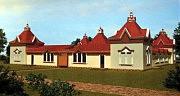
There are many more fresh, talented, and promising plans from the academy’s students, young civil engineers, and persistent followers of T. A. Yenina. Whether they will find practical application depends on the understanding of the authorities and, of course, on the financial generosity of the budget, on the desire of investors to invest in a living cause for the common good. The enthusiasm of young civil engineers does not wane: they want to see their beloved city truly European.
In the current year, 2010, an international scientific and practical conference and a review-competition of coursework, diploma projects, and master’s theses in the specialty “Urban Construction and Economy” are planned, as well as olympiads in the disciplines “Urban Planning and Development” and “Urban Transport, Streets, and Roads.” Odesa residents are actively preparing for them.
Let’s wish them luck and new victories!











