

Our country has acquired two research vessels at once and is returning to the expanses of the World Ocean
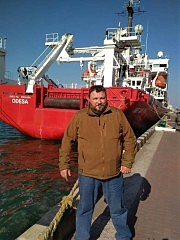
The icebreaker James Clark Ross arrived in Odesa, its new permanent home port, under the national Ukrainian flag. The vessel, still bearing its former name, was purchased from Great Britain for 5 million dollars.
According to experts, this sum is symbolic. New vessels of this class cost around 260 million euros. This unusual icebreaker, the first to be added to the “arsenal” of domestic polar explorers in all years of independence, will become the flagship of Antarctic expeditions, and not only. From now on, practically all corners of the World Ocean will be available for research by our scientists.
For a long time, no one was allowed on board the vessel due to quarantine. All festive events on the occasion of its arrival and commissioning have been postponed to the end of the month. It is quite possible that President Volodymyr Zelensky will participate in them as early as tomorrow, October 29.
In general, as they say, the ice has broken. But for some reason, not without a bitter and sad aftertaste…
“It’s destiny!”
On its way from the Danish port of Frederikshavn (where this icebreaker was based until recently and where its official handover ceremony took place) to Ukraine, it covered about two thousand miles. It passed through three seas – the North Sea, the Mediterranean Sea, and the Black Sea. However, for the legendary ship, this is practically nothing. Its maritime biography includes dozens of complex ice expeditions as part of the British Antarctic Mission.
It is enough to say that at the time of its construction, the James Clark Ross (named after the naval officer and explorer, Rear Admiral Sir James Clark Ross, who led the most extensive expedition to Antarctica at the time in the mid-19th century) was among the top 3 best research vessels in the world. The ship’s “godmother,” built and launched at the renowned Wallsend shipyard, was Her Majesty Queen Elizabeth II. This hundred-meter, seven-deck icebreaker “red dragon” can accommodate 50 expedition members and 29 sailors. It can calmly break through ice up to four meters thick. Its design features and excellent equipment made it a global platform for various comprehensive research, including biological, oceanographic, and geophysical studies.
“Everyone who worked on this vessel admired it. This icebreaker enabled scientists to make many discoveries to better understand our rapidly changing world. We will miss this vessel, but I am glad that our fellow researchers will use it to conduct important scientific research,” noted Professor Dame Jane Francis, Director of the British Antarctic Survey.
The achievements of the James Clark Ross, bearing the inscription RRS – Royal Research Ship – are universally recognized. It was aboard this floating research institute that the map of the deep-sea South Sandwich Trench in the Southern Ocean was created. It also launched the underwater drone-submarine Boaty McBoatface, which thoroughly investigated the link between increasing Antarctic winds and rising ocean water temperatures. The icebreaker participated in the first international study to assess krill stocks in the Atlantic sector of the Southern Ocean. In Antarctica, the vessel capably supported the staff of two stations – “Ruser” and “Halley-4,” and during the polar winter, it operated at the other pole of the planet – in the Arctic…
“The British did not sell it due to alleged wear and tear of mechanisms or unsuitability for further operation,” says Yevhen Dykyi, Director of the Ukrainian National Antarctic Scientific Center (NASC) and a candidate of biological sciences and participant in Arctic expeditions. “Simply, a new icebreaker, the Sir David Attenborough, has taken the place of the flagship of the English Antarctic service. Its parameters significantly exceed its predecessor, and consequently, it is much more expensive to operate. Maintaining several vessels was deemed unprofitable. We are not the only ones who wanted to acquire it. The British received offers to convert this vessel into a polar tourist cruise liner. There was an American company that sought to obtain it for geological exploration, but… We were the only ones where the buyer was the state and without changing its profile – for scientific research. I think this was the decisive factor, and it also influenced the final price.”
— Did the British once again prefer Ukrainians?
“One hundred percent! If we talk about British-Ukrainian ‘Antarctic’ cooperation in general, we should not forget that the first Ukrainian to set foot on Antarctic soil was Anton Omelchenko, originally from the Poltava region. He participated in Robert Scott’s legendary expedition to the South Pole in 1910-1913, survived, and returned. He received a medal from the hands of the British Queen and a lifelong British pension. However, it later cost him his life: the NKVD disliked people who had British pensions…”
The interlocutor emphasizes that this is the second time Great Britain has transferred its research assets to Ukrainian colleagues. A quarter of a century ago, on February 6, 1996, the British “Faraday” became the Ukrainian station “Akademik Vernadsky,” and James Clark Ross was the one who delivered our first polar explorers there. According to Yevhen Dykyi, the privileges in acquiring the vessel are directly related to the history of the named station.
“We did not disgrace ourselves with it before the British,” my interlocutor states. “In this regard, we have a good reputation: we managed to continue all the directions they were pursuing there at a quite decent level. Moreover, we brought our own contribution; we have a good ‘station’ success story. The vessel is not a coincidence. It’s destiny! Now the icebreaker wants to reunite with the station, only this time in Ukrainian hands. Unlike ‘Vernadsky,’ it wasn’t given to us, or rather, not transferred for a symbolic one pound sterling, but they still yielded, selling it significantly below market price.”
Regarding the question of whether it is right to take “old junk.” In parallel with us, the Italians made a similar deal. In connection with the commissioning of a new powerful vessel, the British sold them a similar icebreaker, the RRS Ernest Shackleton. It is now the flagship of the Italian Antarctic fleet.
“Our crisis management is better than Italian”
According to specialists, the James Clark Ross can be operated in its usual mode for another quarter of a century. The smooth functioning of all ship systems and mechanisms was confirmed, in particular, by the current transit. It was carried out by a British crew under the leadership of two captains at once – Englishman Simon Welles and Ukrainian Oleg Novosilny.
They say they “tested what speeds it could ‘run’ at.” In cold waves, the vessel travels up to 14 knots. The engines are cooled by seawater: the colder it is, the better they cool, and the faster they can be accelerated. In the warm waters of the Mediterranean, the speed dropped to 10 knots, which is also a good indicator.
More about the features of the research icebreaker. It has an automatic positioning system. When the vessel stops and “holds its position” to collect something, it naturally drifts. At depths of several kilometers, you cannot drop anchor, and during hours of research, the vessel can be carried several kilometers by currents. However, sometimes perfect experimental purity is required, precisely at a specific point. This vessel has a special system connected to a satellite. Thrusters operate automatically: if it drifts, say, tens of meters, the system automatically returns it to the set point. This means all necessary operations are performed with centimeter accuracy.
If you look at the main deck from above, you won’t see any huge “spools of wound ropes.” However, there are several winches with cables up to 8 kilometers long; they are all located below, behind the engine room. They are extended by crane beams and controlled by computer.
During the transit, the icebreaker did not enter any ports, thus proving its good autonomy – uninterrupted for up to two months. Upon arrival in Odesa, it continues to maintain this: nothing has been acquired here yet; all necessary supplies for normal life are available. And yet, it has covered a distance equivalent to a voyage around Europe! But that was in temperate waters. It’s another matter for “trips to the far south” and Arctic voyages.
Before heading there, the vessel will undoubtedly need a full technical inspection. Docking is also not ruled out.
“We are not talking about a major overhaul, but only about an inspection of all main units, the hull, and the steering gear,” Dykyi clarifies. “As for docking, it’s still unknown; this will be decided in the next two months. Naturally, taking into account the funding: we will see the estimate (calculations), then a decision will be made – whether to dock right now or go on a voyage, and the rest will be done upon return, in the summer of next year.”
Among other things, the vessel needs to be equipped with additional instruments and refit eight unique laboratories. This will require approximately one million dollars, by the most conservative estimates. Plus time, including for selecting qualified sailors with experience working “in the ice.” This is not an easy task.
“I won’t hide it, we really hope that several British marine officers will agree to work with us in the first year of operation,” Yevhen Dykyi continues. “Although our state salary scales cannot attract any qualified foreigner. According to these ‘calculations,’ even a captain with a sufficiently high rank earns up to 20,000 hryvnias per month. For work in Antarctica, a foreign navigator receives approximately the same amount, but in dollars…”
As practice has shown, the new shipowners are successfully overcoming difficulties. For example, on the eve of the icebreaker’s purchase process, there was a failure in the domestic administrative system. The government decree to allocate funds was supposed to be issued on June 2. But something went wrong, and the decision was made only on July 7.
“This greatly affected our joint plans with our British partners,” Yevhen Oleksandrovych barely contains his emotions. “We had to complete the purchase and transfer the vessel with all its existing Lloyd’s certificates. Then, in Odesa, we would undergo all the necessary registration procedures, reclassification of the vessel, and so on for the next five years.”
The validity of the Lloyd’s documents expired on August 14. The funds for the vessel’s purchase were allocated a month later than planned. We were only able to pay on August 19. It turned out like in “Cinderella”: at midnight, as the clock strikes, the carriage turns into a pumpkin. As a result, due to a seemingly small delay, we received the vessel with all expired classification documents, insurance, and so on. Consequently, to go to sea, we had to urgently arrange temporary permits in Denmark just for the transit. This incurred additional costs, and as they say in Odesa, it was quite a hassle. And for us, it was all new. Nevertheless, we managed very quickly: the vessel set sail on September 18. Given the entire situation, this is uniquely fast. It is enough to say that the same Italians took three months to prepare their acquired icebreaker for transit. We, without documents, did it in one month. After all, Ukrainian crisis management is better than Italian!
“The economy of the World Ocean is the path to irreversible transformations”
Indeed, with the acquisition of the icebreaker, our country has the opportunity to return to the ranks of advanced nations. Despite the fact that Ukraine has been part of a select group of Antarctic states for a quarter of a century, whose permanent representatives are stationed on the ice continent, there are a number of serious problems.
It is no secret that many aspire to master the polar region of the globe and utilize its results to the fullest. In addition to the 30 countries with year-round operating stations (including Ukraine), almost as many aspire to conquer the Arctic. Specifically, 24 contenders have only summer bases there, or their vessels regularly call at these waters.
This region is very promising and represents a powerful investment. For example, the Turks went from their first expedition to building their station in three years, which is currently being erected 300 km south of “Akademik Vernadsky.” It is natural that a market has emerged: countries that have a station and their own fleet, and those that have their own Antarctic base but lack a fleet.
“For the last 20 years, we have been completely dependent on chartering foreign vessels,” Yevhen Dykyi clarifies. “Every year we concluded charter contracts. Until 2014, mainly with Russian vessels. Then – with Chilean or Argentine ships… The fact is that the logistics market in Antarctica is still extremely limited; demand far exceeds supply. Consequently, the pricing policy of those who charter vessels. And the region, I repeat, attracts like a magnet. Many understand that the economy of the World Ocean will lead to irreversible revolutionary transformations.”
In addition, each time it was necessary to fit into a very narrow time window – only three months when the ice conditions around the station are normal, and it can be reached. The appearance of a vessel of this class solves these problems and will fundamentally change the logistics of the “Akademik Vernadsky” station, making it accessible almost year-round. Now there will be a different operating regime there, similar to the American “Palmer” station, which is adjacent to the Ukrainian one. Their icebreaker calls there exactly every two months. Now we will have a completely different planning than a vessel call once a year and the impossibility of delivering everyone and everything at once. Moreover, in case of any emergency with one of the polar explorers, evacuating a person was simply impossible…
Now, Ukrainian polar explorers are ceasing to be dependent. As for the specialization of the new old icebreaker, my interlocutor jokes:
“It’s like in a well-known anecdote: ‘What are you doing tonight? Everything…’ Since the country has only one such ship, we naturally cannot afford to specialize it. It will need to be used for environmental needs, marine biology, climatology, and hydrophysics. That is, it is practically ‘omnivorous’.”
How you name your yacht…
A new name for the vessel is currently being actively discussed. The NASC has announced a kind of competition – accepting applications with suggestions. Many have been submitted. One of the proposed names is “Roland Franco,” in honor of the grandson of the great Ukrainian writer. A scientist, candidate of technical sciences, he was an advisor on science at the Embassy of Ukraine in Great Britain and actively facilitated the transfer of “Faraday” to Ukraine. Other suggestions include “Polar Seagull,” “Anton Omelchenko,” “Ukraine,” “Chervona Ruta,” “Polar Trident.”
The scientists themselves propose “Noosphere.” They say they would like the name to be somehow connected with the activities of the first president of the National Academy of Sciences of Ukraine, Academician Volodymyr Vernadsky.
The NASC reported that “all sufficiently serious proposals have been sent to the Office of the President of Ukraine.” After all, it was the head of state who made the key political decision that such a vessel was necessary, from which the revival of the domestic scientific fleet would begin.
“The name is undoubtedly important,” Yevhen Dykyi comments. “However, something else is much more significant. We now have a tool for conducting various research, including resource research, for Ukrainian companies. Now it will be possible to use this icebreaker to pave the way to the so-called blue economy, that is, to the economy of the World Ocean, which is one of the key trends of the 21st century.”
According to the scientist, the three main markers of the world’s leading countries have long been defined: space research, maritime, and polar. Unfortunately, space development has been neglected in our country recently. We hope it will be revived. The ocean has also been excluded from our sphere of activity for the last 20 years. We relied only on polar explorers and the “Vernadsky” station. Our specialists somehow managed, despite everything, to break into international consortia, onto foreign vessels.
My interlocutor gives an interesting example. According to him, little is known about this to the general public yet. Already in 2022, a revolution will occur in the global gadget market. This is because the production of these devices requires a certain amount of rare-earth metals. There are very few of them on the planet, about 80 percent are concentrated in a few geographical locations completely controlled by the People’s Republic of China. This means China currently effectively “holds the market” for rare earths and, consequently, regulates the entire global gadget market.
The Japanese have broken this system. They discovered a sufficient quantity of rare-earth metals in clay deposits on the ocean floor, at depths of 4 km and more. Scientific research has been conducted, and it has been determined that the development will be commercially viable. Already next year, their first floating plant for processing these seabed sediments will begin operation. The obtained raw materials will allow the Japanese to successfully regain control, in particular, over the gadget market.
“And they started by having vessels like our current icebreaker conduct exploration and material studies,” the interlocutor concludes. “Therefore, it’s not just about Antarctic research, but about oceanic research in general. We haven’t worked in the ocean for decades. Twenty years ago was the last voyage of a Ukrainian research vessel beyond the Black Sea. This is how long we have been out of a key direction of modern world science…”
For now, the new shipowners are preparing the icebreaker for its first working voyage. This Antarctic summer (which is winter for us), it will be deployed in the vicinity of our “Akademik Vernadsky” station and the Antarctic Peninsula. They will not risk venturing into the Weddell Sea or Ross Sea for now. There will be plenty to do in more familiar waters.
When exactly the vessel will set sail depends on the repairs: if it is possible to manage with navigational repairs at the berth, without docking, the actual date is early December. If docking is required, then mid-January 2022.
…and Belgica as a bonus
Meanwhile, the research diesel-electric ship Belgica has docked at the berth of the passenger complex of the Odesa Sea Port. It was transferred free of charge to the Ukrainian Research Center for Marine Ecology (Odesa) by the Kingdom of Belgium for environmental monitoring of the Black Sea and other seas. This became possible thanks to a memorandum signed in July this year between the Belgian Federal Office of Science Policy, the Royal Belgian Institute of Natural Sciences, and the Ministry of Environmental Protection and Natural Resources of Ukraine.
“The protection of marine ecosystems is included in the environmental block of the EU-Ukraine Association Agreement, under which our state must conduct regular marine monitoring according to European standards,” commented the domestic ministry. “Ukraine is currently implementing the provisions of the EU Marine Strategy Framework Directive to gradually achieve a good environmental status of the marine environment.”
It is noted that the Belgica, built in 1984, is in good technical condition and has unique equipment, including high-precision echo sounders. The vessel’s hull length is 51.12 meters, width is 10 meters, draft is 4.6 meters, and displacement is 1200 tons. Its autonomous range is 20,000 nautical miles (37,000 km) at a speed of 12 knots (22 km/h). The maximum speed is 13.5 knots (25 km/h). Onboard are five scientific laboratories (fisheries, hydrological, chemical, biochemical, and microbiological). The crew consists of 15 people, and the scientific staff comprises 16 specialists.
On its way from the Belgian port of Zeebrugge to its new permanent home port, the vessel traveled around Europe for about five thousand nautical miles. During this transit, scientists collected samples of seawater and bottom sediments to screen for the presence of tens of thousands of pollutants and microplastics. They also extracted environmental DNA to assess biodiversity and analyze the spread of antibiotic resistance genes in marine microorganisms.
The memorandum provides for strengthening cooperation between Ukrainian and Belgian scientists in the joint study of the Black Sea, particularly the issue of rising hydrogen sulfide levels. The Belgian side also invites Ukrainian specialists to participate in research work in the North Sea. In the near future, the vessel is also scheduled for renaming, its participation in independent scientific monitoring of fish stocks, fundamental scientific research in the open sea, geological exploration of the seabed, and so on.
Afterword
These are the “gifts from the royal hand” – British and Belgian – that Ukraine has received. One would think we should rejoice, but for some reason, it’s sad… After all, at the pier of the Odesa Sea Terminal, where the aforementioned vessels are currently docked, relatively recently, ocean liners docked almost daily (and sometimes several times a day). Both domestic and foreign. Each of these beauties had parameters and technical specifications far more solid and impressive than those of the “gifts” described above.
Here, domestic “science ships” and “weather ships” often “rested” after long ocean voyages and regained strength. For example, “Ernst Krenkel” (which, by the way, also made Arctic voyages), “Georgiy Ushakov,” “Breeze,” “Monsoon,” “Viktor Bugayev,” and others. In 1991, upon gaining independence, Ukraine inherited 36 research vessels, 12 of which were ocean-going, ice-class.
Not to mention the globally recognized floating research institutes – “Kosmonavt Yuri Gagarin,” “Akademik Sergey Korolev,” “Kosmonavt Vladimir Komarov”…
Then, for years, they were kept idle, subjected to a “rotting procedure.” “Alive,” if that is appropriate in relation to ships. And they were gradually transferred to warm countries – India, Turkey, Pakistan, Bangladesh, where they were sent “under the knife,” dismantled “for scrap.”
It is sad because those who actively contributed to the complete sale (for pennies!) and plunder of Ukraine’s state fleet (including the largest “white” squadron of cruise passenger ships in Europe of the Black Sea Shipping Company) are now, for some reason, called moral authorities and the pride of the nation. Although, in reality, they were authorities in a completely different sphere and environment…
Now, in a “fishless” situation, even used vessels are almost a luxury. They say, “Be thankful for this too, forget about ‘that distant past,’ which was.” That is, about a whole flotilla of the most modern multi-purpose vessels. In short, they stretch their legs according to their means. Despite the fact that in worn-out, torn “clothes” it is very inconvenient. But no one cares, except, perhaps, the specialists themselves. Deprived of the opportunity to work for decades, they are, naturally, happy even with this little bit.
As for the country’s return to studying and potentially utilizing the resources of the World Ocean, this is undoubtedly progress. At least, at this stage. The main thing is where and from what to start counting, what to consider as a criterion for evaluation.
Meanwhile, on the eve of Black Sea Day (October 31), celebrations are planned in Odesa to mark the arrival of two research vessels in Ukraine.











