

As soon as the newspaper announced its intention to open a section for the 30th anniversary of Ukraine’s Independence and, as usual, invited readers to participate, Sergey Pavlovich Karatayev, a resident of Odessa and now a pensioner, whose fate is inextricably linked with the Odessa Port Plant, responded. He wanted to share his memories — not many enterprises have withstood and benefit the country, and their leaders are worthy of gratitude and remembrance. We in the editorial office, of course, approved this idea. And here is the story of our reader. About himself, about the plant, about the people.
To begin with, I will note some life details. After graduating from the Odessa Polytechnic Institute in 1959, as a successful student, I was given the right to choose an enterprise for my future work.
There were several offers in different republics of the former USSR. I had to sit down with geographical directories, other specialized literature, and familiarize myself with the history of certain enterprises and the characteristics of the area.
And I chose Bashkiria, the city of Sterlitamak! The Soda-Cement Plant is the world’s largest producer of calcined, food-grade, and caustic soda, barium salts, white carbon black, cement, and slate. The plant’s products were used for both domestic consumption and export. The number of employees was over 10,000.
The natural features of this territory played an important role in my choice: the Ural Mountains, forests — almost taiga, rivers. The climate — winter is winter, summer is summer!
There was a period when the winter temperature reached -48 degrees Celsius, and in the summer sometimes — +35-39 degrees. Heavy snow, rain, absence of natural disasters. Upon arrival at the plant in early September 1959, the chief engineer spoke with me and offered me the position of shift engineer at the thermal power plant. After special training for 4-5 months, passing exams, and completing an internship, I began practical work.
Then, in 1962, I was appointed Deputy Chief Power Engineer of the plant, and in 1974 — Chief Power Engineer. I was trusted, and I truly felt the support of the enterprise’s management. The director of the plant was Vitaly Efimovich Korneev — an unsurpassed leader. My attitude towards work was highly valued, and therefore I was provided with a good apartment and a solid salary. May the memory of the leader and my mentor be bright…

In 1974, when the decision was made to build the Odessa Port Plant (OPP), friends from “SOYUZ SODA” called me and, as if joking, asked if I wanted to return to Odessa, to the plant under construction? The approval from the director of this plant is already there!
I had a dilemma. In Sterlitamak, things were going very well for me: an excellent enterprise, a position, a salary, an apartment, a family, the respect of employees and colleagues. On the other hand, it was so tempting to return to my parents’ homeland. By the way, all my relatives (grandfather, grandmother, mother, father) were born and lived in Ukraine. My father, Pavel Stepanovich Karatayev, died at the front in August 1941.
After serious consideration, I decided to go to Odessa in advance and meet with the director of OPP, A.V. Skorichenko.
The meeting took place in April 1975. And he, I must say, persuaded me to move to Odessa, to the plant under construction, to the position of Chief Power Engineer. And I decided to move to Odessa.
1993 — “Golden Star of Europe” — an award from the International Association of Entrepreneurs for quality and entrepreneurial trust.
2005 — OPP was awarded the “World Quality Commitment International Star Awards Paris” prize for entrepreneurial prestige and product quality.
2011 — OPP was recognized as the best enterprise in the “chemical industry” nomination in the “Best Enterprises of Ukraine” rating.
2012 — International quality certificate “SIQS”, issued by the Swiss Institute for Quality Standards (Zurich).
2013 — International award “European award for best practices” — for high work results.
2014-2017 — annual diplomas of the leader in environmental activities “Dovkillia Ukrainy”.
I arrived on August 25, 1975, on my birthday, and immediately plunged into work at the new place, in some ways violating the life principle: “from good, one does not seek better.” Overall, after years, I became convinced that the choice was correct, although very painful for me.
The basis for the construction of the plant was the order of the Ministry of the Chemical Industry of the USSR No. 155 of 1974 “On the Creation of the Odessa Port Plant.”
The choice of the construction site on the shore of the Adzhaliksky estuary was not accidental. Free territory, the possibility of building sea berths for the planned shipment of a significant part of the main chemical products for export, as well as the comparative remoteness of the future plant from large settlements, close sources of electricity, water, and gas supply for the future plant — the main raw materials for production.
Many contracting and subcontracting construction and installation organizations from Ukraine (mainly) and the republics of the former USSR participated in the construction of the plant.
Given the deadlines and the importance of constructing the facilities of the future plant, serious levers were used at the local level in the Odessa region to ensure their implementation. The “construction headquarters” was headed by the secretary of the Odessa Regional Committee of the Party, E.G. Borshch. Daily and weekly operational meetings were a “whip” for those who missed deadlines for certain tasks.
The enthusiasm was very high.
Thanks to all these measures and the coordinated work of the construction participants, production and technological facilities, as well as other social and cultural facilities, were commissioned, including ahead of schedule. The first director of the plant under construction, as I have already said, was Anatoly Vasilyevich Skorichenko — a purposeful, “pushy” in a good sense of the word, leader. For the construction period, in my opinion, no better first leader was needed.
He brilliantly fulfilled a difficult and responsible task.
Oh, how difficult it was for him then!
But he never panicked. He boldly and successfully solved difficult problems.
The second and decisive director was V.S. Gorbatko. A competent leader, an honest and decent person, a skilled specialist, thinking on a large scale. Thanks to him, during the turbulent years of privatization, OPP not only was preserved but also increased its achievements, and reached new technical and environmental frontiers.
V.S. Gorbatko is a skilled leader, and I worked well with him. At my initiative and with his support, a significant number of administrative, technical, and legal measures were implemented in the plant’s energy service, job functions were adjusted, and the structure of workshop services was changed, etc.
The plant is an elite enterprise of world level. Modern production technology, a high degree of operational reliability and safety, a skilled system for training and staffing workers, employees, and engineering specialists.
The elite status also lies in the fact that it is an unsurpassed complex of production and technological facilities and divisions that ensure the overall reliability of the plant.
Today, the port plant is not only the production and shipment of industrial products but also a socially oriented enterprise — a “garden” with a high culture of landscaping and maintenance of the territory, a greenhouse and vegetable complex, canteens, buffets, and shops, medical and sanitary complexes, cultural, sports, and recreation facilities.
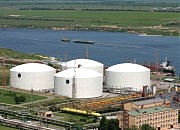
I recall that after the early and successful commissioning of the first phase of the plant, due to the lack of professional and reliable information about such chemical enterprises, including large tanks for storing and subsequent shipment of liquid ammonia, a campaign to “close the plant” was launched. There was an active debate, with statements that a potentially dangerous facility was being built near Odessa, and an accident there would lead to a man-made disaster in the region. And in December 1990, a referendum was even held on closing OPP. And then the multi-thousand collective stood up to defend the plant, going to the people to talk about the true state of affairs. They spoke about environmental safety and the modern technical equipment of the enterprise. The Verkhovna Rada did not approve the decision of the Odessa City Council session at that time. The plant continued to work for the benefit of Ukraine. And its many years of production activity have proven its safety both for the plant’s personnel and for the surrounding settlements, including the city of Odessa, as well as the entire country.
It should be added that before the construction of OPP, similar chemical industry enterprises were commissioned in Ukraine — “Rivneazot,” Cherkasy Chemical Plant “Azot,” “Severodonetskazot.” Due to the ill-considered “fashionable” privatization in those difficult years, and for other reasons, they have currently lost their positions and are practically barely surviving, but no one demanded their closure…
Along with the construction of plant facilities, housing was built for employees. In the first two apartment buildings in the Kotovsky residential area, the pioneers received apartments — those who were mainly hired in 1974-1975.
Simultaneously, the future city of Yuzhny was being built, essentially a satellite city of the plant with all the attributes of infrastructure: housing, schools with playgrounds, kindergartens, a hospital, shops, a market, a bus station. The pride of the plant and the city became the magnificent multifunctional Palace of Culture “Druzhba” and the Palace of Sports “Olimp.” In the city of Yuzhny, all other plant employees in need of housing received apartments, as well as residents of the villages of the sanitary zone Grigoryevka and Novye Belyary.
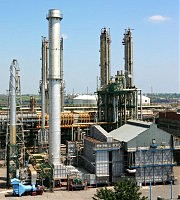
The Odessa Port Plant is a phenomenon in Ukraine. Due to my many years of production activity, I had to travel on business trips to several countries in Europe and Africa, to some industrial enterprises and facilities. I assert that I have never seen such a large-scale, complex enterprise as OPP anywhere else!
The other day, there was a message on the TV ticker that the President of Ukraine is establishing state awards in honor of the 30th anniversary of the proclamation of Ukraine’s independence. Citizens who have made a significant contribution to the establishment and development of Ukraine through their labor will be awarded.
I believe that the former director of OPP, Valery Stepanovich Gorbatko, for his labor, production achievements, and the plant’s success on the world stage, fully deserves such an award.











