

The open forum “OsvitaOdesa2021” was held in Odesa. Its work was organized in 2 stages: first, focus groups met in various educational institutions to discuss the most pressing issues of modern school existence, and then the results were summarized at a general meeting.
The main goal of the event was to discuss the changes needed for the modern school, as well as to share experiences in educating competitive students who will easily find their place in the conditions of modern information society and a European-oriented Ukraine.
At the base of UVK № 13, a focus group discussed the issue: “Quality education – a new generation standard: experience, implementation, prospects”. The director of gymnasium № 5, Irina Bolgarina, suggested reflecting on what is understood by the quality of education today by all participants of the educational process – students, teachers, parents? Yes, school ratings and how its students pass the External Independent Evaluation (EIE) are important, but gradually more attention is being paid to how graduates apply their knowledge and competencies after graduation. The indicator of success is gradually becoming synonymous with the quality of education.
Laureates of the “Evening Odesa” competition “People of Action”, director of lyceum № 9 Sergey Kopach and director of UVK № 90 named after A. S. Pushkin Sergey Ivanov, dedicated their speeches to the systems of assessing the quality of education. Sergey Kopach spoke about the external system. Gradually, public expertise is playing an increasingly important role in this issue – a very popular indicator of assessing the quality of an educational institution’s work abroad. Sergey Ivanov reminded that by the end of 2022, all educational institutions must develop their internal systems for assessing the quality of education – a kind of internal audit.
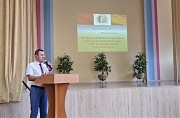
The “Primorsky” Lyceum became the venue for focus group № 2, which discussed the financial independence of educational institutions. This is a very important point from the perspective of optimizing the management process and implementing innovative technologies that allow each educational institution’s work style to be unique.
At the “European” Lyceum, focus group № 3 concentrated on discussing the components of school nutrition. The level of students’ intellectual activity, the reduced risk of developing stomach and duodenal ulcers, gastritis, pyelonephritis, and obesity largely depend on the quality of nutrition. Focus group participants analyzed the initial experience of organizing gluten-free nutrition in Odesa.
To provide students in grades 1-4 who require special nutrition, a procurement procedure for gluten-free and lactose-free food was carried out. It took place in the Kyiv and Malinovsky districts, but not in the Suvorovsky and Primorsky districts due to the absence of participants. Tenders will be re-held in these districts to find companies that will help provide gluten-free and lactose-free nutrition for students with special needs.
Focus group № 4 worked at lyceum № 81. “Act now! The city of Odesa’s high school parliament is an educational process management body.”
The director of the lyceum, Tatyana Zavtur, rightly emphasized that it is at school that an active life position of a maturing person should be formed, and their abilities in public life should be revealed.
Based on the norms of the new Law of Ukraine on complete general secondary education, self-governing bodies can be created by teachers, parents, and students. This is a completely new practice for domestic schools. And everyone will have to learn to work in new coordinate systems, where they will have to report, including to the school self-governing bodies – equal participants in the democratization of the educational process. Whether the school will be ready for this, time will tell.
In UVK “Gymnasium № 2”, the 5th focus group “Community-active school – quality education and a successful community” met. Representatives of the parent committee and the public of the city participated in its work. The discussion focused on the fact that democratic principles should be increasingly integrated into the educational process, making it as open as possible for discussion and evaluation.
The “OsvitaOdesa-2021” forum showed that the rapid changes occurring in the world have a colossal impact on schools as well. For example, teachers cannot yet definitively answer whether distance learning will lead to a deterioration or improvement in their students’ knowledge. But the need to master distance learning forms is a harsh reality from which, given the prospects of new pandemics, it is currently impossible to escape. This is a very important aspect of school existence in the 21st century, for which, let’s be honest, many teachers were not prepared. They also need help adapting to new conditions and forms of work. Without such successful adaptation, it will be difficult to talk about the effectiveness of the educational process.
During the forum, questions were repeatedly raised: “What knowledge and competencies are most important for students today? And which ones will be useful to them in adult life?”. The school is indeed in search of new meanings and guidelines for preparing students to better prepare them for adult life.
The topic of bullying is also one of the most frequently discussed recently. And there is something to think about here. On the one hand, the maximum openness of the modern school seems to help see the prospect of violent actions against a particular child at the very initial stage. But, on the other hand, a children’s collective is excellent at hiding the true relationships between groups of children and individual members of the collective. Therefore, the work of the school psychologist, who can see what teachers, parents, and students themselves will not notice, becomes especially important.
Paradoxically, everyone needs to learn today: students who are thinking about their future profession. Parents, gradually getting used to the role of experts in evaluating the work of the school their children attend. And teachers, who cannot even imagine what new challenges life will present them with. And that these challenges will appear and may be more complex than organizing distance learning – no one doubts this today. So, happy learning, dear teachers!











