

To the 90th Anniversary of the Odesa State Academy of Civil Engineering and Architecture
In 2020, our university celebrates two anniversaries — the 90th anniversary of the establishment of the Odesa State Academy of Civil Engineering and Architecture and the 90th anniversary of the academy’s scientific and technical library.
The Academy began its history in 1930 as the Odesa Civil Engineering Institute. At that time, educational and methodological offices were created and equipped — an office for the fundamentals of Marxism-Leninism with a library of 5.5 thousand books, and an architectural office with 5 thousand books and albums on architecture and art. At the same time, a university-wide library was created, numbering about 40 thousand books. S.D. Khaymsky was the head of the library in those years. Together with him, three more people worked in the library. Unfortunately, no other information about the library’s pre-war activities has been preserved.
In the very first days after the liberation of Odesa, the institute began to prepare for the admission of students. In December 1944, the front-line soldier Pyotr Lvovich Yeremenok was appointed director of the institute, who was tasked with the enormous work of restoring the institute. In the same year, Evgenia Mikhailovna Osmolovskaya, born in 1902, a graduate of the literary faculty of the Odesa Institute of Public Education with a degree in “Teacher of Russian Language and Literature,” took charge of the library fund. Thanks to her efforts and the help of enthusiastic teachers, staff, and students of the institute, the library fund was painstakingly assembled. Books were retrieved from basements, from destroyed premises. Thus, about 13 thousand books were collected, many of which were in terrible condition. This was a large and meticulous job under incredibly difficult post-war conditions. The selfless work of Evgenia Mikhailovna Osmolovskaya in saving books and creating the library fund can rightly be called heroic.
The library was replenished with great difficulty, as it was almost impossible to acquire books in Odesa at that time. About 5 thousand books were provided to the library by the State Literary Fund of the USSR. At the end of 1946, the Higher Education Department of the Council of Ministers of the Ukrainian SSR allocated an additional 15 thousand rubles to the library for the purchase of literature. The library widely used interlibrary loan (ILL) of university libraries to provide literature to students, faculty, and staff. Book circulation exceeded 5 thousand books per year. At the same time, a reading room was opened, with a collection of scarce literature and a mandatory copy. The reading room also operated in the evening. The library occupied a good, bright room, but due to the growth of the fund, it became a bit cramped…
The staff list provided for only one employee in the library. It is hard to imagine how E.M. Osmolovskaya managed to do all this work. In 1948, she became disabled and soon passed away. It is to such an extraordinary woman, in love with her work, who salvaged books for us from post-war rubble and carefully restored them, that we owe the existence of our library. Let us remember this!
In October 1947, Natalia Rafailovna Timofeeva became the head of the library, and she worked there for 10 years — until 1957. During this period, the library staff consisted of 14 people, true enthusiasts of their work: T.S. Pokovyryna, E.N. Kurbatova, V.V. Kondrashikhina, A.N. Verolyubova, R.I. Pavlyuk, M.F. Biryukova, M.G. Lishchenko, E.N. Kuksina, Z.A. Zakharova, and others. All of them actively participated in the creation and replenishment of the library’s collections and catalogs, and in the development and strengthening of its authority within the institute.
From February 1958 to 1959, Galina Fedorovna Sinyavskaya was the head of the library. During this time, N.I. Kruglova, T.P. Vishnevskaya, V.P. Prusaty, N.S. Surmach, M.L. Vasilenko began their careers.
From 1959 to 1978 (19 years), Irina Viktorovna Blinova, a graduate of the Leningrad Institute of Culture, was the head of the library. During this period, with the support and active assistance of the institute’s rectors P.L. Yeremenok and G.P. Vladychenko, and vice-rector N.K. Zakharov, many positive changes occurred in the library, and its complete transformation began. The library moved from its old premises, located where the current museum is, to the central building, where it received space for the book depository, a reading room, and a circulation desk on the 1st floor of the building. The collection was arranged by departments, a reading room for researchers was opened, and another reading room operated in dormitory No. 1. The book collection was significantly replenished, and by the end of 1978, the number of newspaper and magazine titles reached 350. The number of readers during that period was 7 thousand.
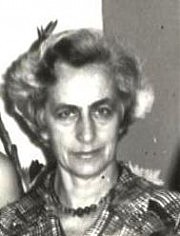
It can be confidently said that during the period when I.V. Blinova, a beautiful, extraordinary, and well-rounded woman, was the head of the library, the library began to flourish. New employees joined the library: L.I. Lyubetskaya, G.Ya. Sirotkina, A.T. Kolesnikova, S.P. Movchan, M.S. Pashkovskaya, A.L. Kharchenko, N.S. Trubach, L.T. Kotsyuk. Irina Viktorovna Blinova always found common ground and an approach to each employee and greatly loved students. Not a single review of the institute’s amateur talent show went by without her participation in the jury; she helped students select necessary literature, stage performances, choose costumes, etc. Under the leadership of I.V. Blinova, 27 departmental libraries and 3 offices in the social sciences departments were equipped with the necessary specialized literature. In 1975, a scientific and technical information service was created, which established connections with 60 scientific and technical information centers in the country. In 1976, due to the increase in the number of readers, the need arose to open another reading room in the main building.
Monthly, the library published a bulletin “New Books,” compiled newspaper selections on current topics, and maintained thematic card catalogs. “Information Days” — new book reviews held twice a month, and “Department Days” were very popular among the faculty. Conferences, literary and musical evenings, and various contests organized by the library generated great interest among readers.
In 1979, the wonderful library team was led by Galina Yakovlevna Sirotkina. Being an excellent organizer and possessing extensive professional experience, she was able to restructure the library’s work to make it even more creative, creating opportunities to actively use the most progressive forms and methods of reader service: specialized service departments were created, including one for students. The library’s collection grew, and the number of readers increased. In 1981, by order of the Ministry of Higher and Secondary Specialized Education of the Ukrainian SSR, our library was assigned to the 3rd group for employee wages. The staff increased to 46 people at that time.
The OISI rector Georgy Pavlovich Vladychenko provided great assistance to the library, always supporting its best initiatives, as well as its curators — vice-rectors F.N. Kolotilov, E.M. Heruntsev, I.P. Yeremenok, A.N. Nakhmarov, A.I. Dogadaylo.
In 1979, after renovation and reconstruction, two halls were opened in the main building’s reading room — one for scientific and technical literature and one for social and methodological literature — with a capacity of 150 seats. Additionally, reading rooms were opened in dormitories No. 1, 3, 4, and 6, and libraries were established in the institute’s branches in Nova Kakhovka and Mykolaiv. The art circulation department, managed by a specialist in his field, G.N. Rolevich, resumed its work in the building that also houses the OGASA Museum and the correspondence circulation department.
Galina Nikitichna Rolevich has immense respect for her readers, prepares requested literature for them in advance, recommends new acquisitions, and pays great attention to meetings with interesting people.
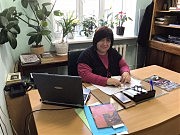
The scientific library premises also underwent major repairs. In this department, the head S.K. Arbieva and R.P. Bredeleva, professionals in their field, work. The scientific library collection numbers about 100 thousand books — textbooks and study guides, reference and encyclopedic literature, dictionaries, a section on painting (literature on the history of Russian and Western art, albums with reproductions of works by famous world artists). Doctoral and kandidat dissertations are also stored there.
The library regularly hosted creative evenings with the participation of Odesa writers — M. Veselovsky, I. Neverov, V. Khait (OGASA graduate), G. Golubenko, L. Sushchenko, and others. On Victory Day, tea parties were held, in which institute veterans participated: V.K. Mikhailik, P.S. Murashko, A.D. Exarev, A.N. Verolyubova (worked in a hospital), and others.
Galina Yakovlevna Sirotkina dedicated 35 years to her native library, 29 of which she served as its head. She recalls: “Fate brought me to OISI-OGASA in 1967, when the rector was a great organizer and scientist P.L. Yeremenok, and the head of the library was the intelligent, kind, and profession-loving I.V. Blinova. To be a servant of books is an honor and an interest. It is happiness. For a book is not only a material value, it is spiritual food… The institute was one of the leading construction universities in the country. Rector G.P. Vladychenko, whose distinguishing features were organizational talent, high demands on himself and his subordinates, and care for teachers, staff, and students, made a significant contribution to the development of its image.”
For many years of work, high professionalism, and significant contribution to the development of library services, many library employees were recognized with awards: N.K. Kovalchuk — for participation in the Inter-university review-competition of city libraries for the title “Best in Profession” (1st place); N.S. Surmach — with the OISI Honorary Badge; A.L. Kharchenko — with a commendation from the Ministry of Education of Ukraine; V.P. Prusaty — with an Honorary Diploma from the Ministry of Education of Ukraine.
In the 1990s, the library faced difficulties of the transition period due to a shortage of funds, power outages, heating system failures, salary payment delays, etc. But, despite all these difficulties, the library continued to operate. For example, the head of the SBO department E.A. Vorontsova, and employees L.A. Vigovskaya and L.D. Borisova maintained popular card catalogs: “Philosophy,” “Economics,” “Law,” “History of Ukraine,” and since 2000 — “Odesa and Odesa Region.” In 1995, a new reading room, the 6th in our library, with 40 seats, was opened in the architectural institute building. The mobile library continued to operate at the institute’s sports and recreation camp on Dacha Kovalevskogo.
Since 2002 and to the present time, the library has been headed by Svetlana Petrovna Movchan, who has been working in the library since 1983.
She began her career as a librarian, later becoming head of sector, chief librarian, and head of department. S. P. Movchan is a highly qualified specialist in library science, administrative management, and scientometric research. She professionally organizes the library’s work. She has repeatedly been awarded honorary diplomas of the academy. In 2008, she was awarded an honorary diploma from the Ministry of Education and Science, and in 2015 — an honorary badge of the academy.
In connection with the active development of computer technologies in 2002, the library began to use computers with an installed automated library and information system. Thanks to this system, many library processes have been automated, an electronic catalog has been created, and a full-text database of methodological guidelines has been developed.
Today, the library has 19 computers installed in reading rooms, circulation desks, and departments, which are connected to the Internet. There is a Wi-Fi zone. Students and staff of the academy have the opportunity to independently use the electronic catalog, the full-text textbook database, the database of methodological guidelines, and the Bud-Soft database of regulatory documents.
The library’s collection includes literature on construction, architecture, management and business, socio-economic, and scientific and technical publications. It corresponds to the profile of the academy.
Each year, the library serves about 5,000 users.
The pride of the library is the department of valuable and rare books, which numbers over 3,000 items. In the reading room of the scientific library, it is possible to familiarize oneself with them, as well as with over 200 copies of books reflecting information on domestic and world construction at the end of the 19th century.
The art literature circulation desk has about 30 thousand items — classical works by both foreign and domestic authors, historical novels, poetry, and works by contemporary authors. The reading room regularly hosts literary conferences dedicated to significant dates of academy scientists, writers, poets, holiday evenings, meetings, etc. For example, literary conferences “History and Traditions” for Ukrainian Cossack Day, “Outstanding Architects of the Renaissance,” “World Poetry Day.” Poetry readings and meetings with the master of artistic word E.Ya. Kuklova.
A library page has been created on the academy’s website, where readers can use the Virtual Bibliographic Service (VBS), Electronic Document Delivery (EDD), order literature through Interlibrary Loan, and obtain much other information. Since 2016, the university-wide Repository OCASEAeR has been operating.
In early 2017, a new direction appeared in the library’s work — scientometrics. Employees quarterly track citation metrics and Hirsch index in databases such as Scopus, Web of Science, Google Scholar, Research Gate, etc.
Currently, 32 highly qualified employees work in the library.
For many years, Zh.A. Mazepova has worked as deputy director, and department heads include T.M. Morozewich, A.S. Petruk, A.V. Snegovaya, N.M. Margina, I. Emelianenko, A.A. Solovyova.
Many years have been dedicated to library work by S.K. Arbieva, L.V. Shevtsova, R.P. Bredeleva, G.N. Rolevich, S.V. Dyakonova, V.P. Miroshnichenko, S.A. Gruzdeva, L.A. Sheremet, T.P. Borovina, T.E. Chuchupaka, L.V. Yarichuk.
Alongside them, young specialists such as V.V. Stamata-ki, V. Vasilchenko, S.M. Sobchenko, I.A. Mozhaeva, A.V. Derkach, A.A. Tagan, K.A. Efremova, A.A. Martynyuk, A.A. Mekhtieva are mastering library work, utilizing innovations in computer technology and software.
Today, the library fulfills a high humanistic mission — it contributes to the upbringing of a harmonious personality, the development of patriotism and national consciousness.
The world, society, and technologies are changing. Along with them, the library is also changing.











