

Working with materials containing information about the state and problems of our city’s development, I came across a large folder titled: “Issues of the catastrophic reduction of the sanatorium-resort network and mass misuse of health and recreational land in Odesa.” By the way, I have quite a few similar folders on various issues in my archive…
It contained photocopies of documents reflecting all aspects, issues, and problems indicated in the title. These were inspection reports on the legality and expediency of decisions made regarding the liquidation and privatization of sanatoriums, rest homes, boarding houses, recreation centers, as well as decisions and permits for the construction of new facilities on their territories, decisions of standing commissions of the Verkhovna Rada of Ukraine based on inspection results and their appeals to the Chairman of the Verkhovna Rada of Ukraine, the Prosecutor General’s Office of Ukraine, and the State Committee of Ukraine for Land Resources.
The materials also included “Information on the results of a comprehensive study of the implementation of anti-corruption and organized crime legislation by law enforcement agencies and executive authorities of the Odesa region” signed by the chairman of the coordination committee. These rather voluminous documents (about 25 pages) contained conclusions about the activities of the regional and city leadership regarding the problems of mass illegal use of health and recreational land.
Having studied all the above-mentioned documents, I could not find answers to a number of questions.
First of all, what guided the authorities in making illegal, unlawful decisions: the principle of collective or individual irresponsibility and impunity of each deputy, the mayor, and the regional governor? A lack of understanding of the essence and importance of this issue for the future development of the city, its real and paramount impact on the health of every resident and on comfortable living in it? Or is it simply greed?
To understand my doubts in formulating answers to the above questions, I will provide a few excerpts from the conclusions presented in the documents.
“The construction on the health and recreational territory of the city is essentially carried out without the approval of urban planning documentation. Decisions of the city council on construction are made based on the ‘Temporary Construction Rules in Odesa’ and the ‘Regulation on the Procedure for Allocating Land Plots for Use for Real Estate Objects and Formalizing Land Use Rights,’ which were approved by the city council decision of July 26, 2002. However, as the legal analysis shows, the above-mentioned decisions of the city council are unlawful. Thus, the decisions that were prepared and approved based on them are also unlawful.” And further: “only during the work of the current convocation of the council, about 900 such decisions were made.”
“An extremely negative trend with the sale of facilities and the embezzlement of lands of the resort and health complex of CJSC ‘Ukrprofzdravnitsa.’ In fact, there is a process of deliberate bankruptcy with the subsequent embezzlement of its property through the free (or for a symbolic fee) alienation of real estate and land plots for further construction…”
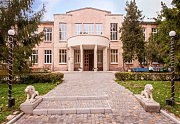
A similar process is occurring with the health resorts of the Ministry of Defense. “Over the last period, two sanatoriums have been liquidated, and their land and real estate have passed into private hands.”
I hope these excerpts from official documents will be sufficient for readers to understand the essence and tragedy of the problem of preserving the institutions and lands of the sanatorium-resort complex of our city. I could have cited many more specific examples and facts that speak of the systematic, predatory destruction of the city’s unique health and recreational potential. But, firstly, all the documents in question are dated July-October 2003, and probably have lost their relevance in the legal and information space. Moreover, in the same 2003, all representatives of the authorities in the city and region involved in this process were acquainted with them. Many of them wrote explanatory and justification memos to higher authorities. But no one was specifically brought to administrative or criminal responsibility.
At the same time, it is obvious to me that there can be no mitigating circumstances for the participants of this predatory and barbaric process. One must be held fully accountable for what has been done…
Today, in my opinion, it is necessary to find out: has anything changed for the better in this matter, have any lessons been learned over the past 15 years?
But Vaska listens and eats
Our city, as a major sanatorium-resort and recreational-tourist center, began to form about 150 years ago. The main foundation was: highly valuable natural balneological resources located on its territory (therapeutic muds of the Kuyalnik and Khadzhibey limans, possessing bactericidal properties and biological activity); numerous sources of mineral water; a large number of sunny days; a unique combination of sea and steppe climate; sea beaches encircling the entire coastal part of the city. The combination of all these factors attracted millions of people to our Odesa as a unique place for annual rest and treatment, determining one of its most important functions – a major sanatorium-resort center of the Soviet Union and Ukraine.
The structure of Odesa’s health and recreational economy in the early 1990s consisted of 32 medical sanatoriums and resorts located on 353.5 hectares of city land; rest homes, boarding houses, sports and recreation camps, recreation centers, and recreation camps for schoolchildren – a total of 90 institutions occupying 266.5 hectares of city territory. The simultaneous capacity of all sanatorium-resort institutions was 47,000 people. Odesa’s health and recreational economy was dynamically developing and improving. The number of visitors and city residents using the complex’s services grew by 6-10 percent year after year.
But the “wild” 1990s arrived. In these conditions, sanatorium-resort institutions became a burden, an unbearable load for their owners. The flow of people wishing to use their services decreased to a minimum. A period of degradation, illegal privatization, and embezzlement of health and recreational lands in our city, and in the country as a whole, began.
It would seem that this legal lawlessness should have ended with the adoption in December 1996 of a resolution by the Cabinet of Ministers of Ukraine, which classified Odesa as a resort city. This status, according to Art. 1 of the Law of Ukraine “On Resorts,” implied the presence of lands for health and recreation, nature reserves, and other purposes in the city, which have a special legal regime and are under special protection. However, the city and regional authorities ignored the requirements of this Law, as well as the provisions of several articles of the Land and Water Codes of Ukraine.
The Odesa City Council did not approve and did not coordinate with the relevant state administration bodies the land management projects for coastal protection zones (there should be two) and the water protection zone of the Black Sea within the city of Odesa. Not to mention their demarcation and fixation in kind, as required by the above-mentioned regulatory acts. In addition, the city did not conduct an inventory of lands and green spaces; the process of construction on sanatorium-resort territories was essentially carried out without legally approved urban planning documentation.
By the end of 2003, according to the conclusion of the Committee on State Construction and Local Self-Government of the Verkhovna Rada of Ukraine and the Prosecutor General’s Office of Ukraine, in Odesa: “compared to 1992, the number and capacity of sanatoriums decreased by 40%, and their territory by 30%; the number of recreation facilities, boarding houses, and sports and recreation complexes decreased by 58%, their capacity by 65%, and their territory by 80%; the number of children’s health camps decreased by 55%, their capacity by 65%, and their territory by 58%. In total, the territory of sanatorium-resort institutions decreased by 248 hectares of land.”
These territories were either already built up with multi-story buildings, or illegal construction was underway on them.
After such harsh conclusions from the Commission of the Verkhovna Rada of Ukraine and the Prosecutor General’s Office of Ukraine, the city authorities should have taken exhaustive measures to resolve the issues, revoke the previously adopted unlawful decisions of the city council on the distribution of health and recreational lands, change the policy on this issue, and make every effort to preserve the remaining sanatorium-resort institutions.
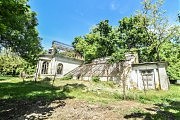
But this did not happen. As they say, “life is life” – the principle of irresponsibility and the grasping reflex triumphed.
It was practically impossible to stop the inertia and momentum of the previously gained process of destroying the sanatorium-resort complex institutions. Decisions on land distribution and permits for illegal construction, as you understand, were not made unilaterally, but within a system of established relationships: “you scratch my back, I’ll scratch yours.” The catalyst for this process was that none of the responsible officials, based on the results of the large-scale inspection in 2003, were truly brought to criminal responsibility according to the law.
As a result, today, despite the work done to bring a number of the city’s regulatory and legal framework in urban planning policy into compliance with the country’s legislative field, and the approval of the new General Plan of the city, the process of degradation and destruction of the city’s health and recreational complex continues, as does illegal construction on the territories of its institutions.
Out of 32 medical sanatoriums, 14 remain, one rehabilitation complex of the “Khadzhibey” sanatorium, and one center for medical rehabilitation and sanatorium treatment “Odesa” of the Ministry of Defense of Ukraine (formerly the legendary “Lermontovsky” clinical sanatorium). Together, they occupy 146 hectares of sanatorium-resort designated territory, whereas in the recent past this figure was 353.5 hectares. All the land under the former sanatoriums has been distributed, I emphasize – illegally, for so-called “high-rise elite residential construction.”
The 90 institutions that in the recent past provided services for recreation, rehabilitation, and sports health can only be spoken of in the past tense today. Practically, all 266.5 hectares of their health and recreational territory have been transferred by our city council with “good intentions” and personal gain to private individuals and various firms for the same illegal “elite multi-story residential construction.”
Unfortunately, this is not the end of the destructive process of destroying the city’s health and recreational complex institutions and the barbaric construction on its most valuable lands. The process continues, although with less dynamism.
About 30% of sanatoriums that are de jure preserved are included in the list of sanatoriums that are de facto no longer functioning. A “no-rules” battle is underway for their territory.
For example, the multidisciplinary sanatorium for children with parents “Krasnye Zori,” one of the oldest in Odesa, was closed in March 2017. Since then, the buildings and wards of the sanatorium have been systematically destroyed. Since its closure, it has experienced two fires, and the entire territory lies in ruins. A “no-rules” battle, I repeat, is taking place in the very center of the resort area (9th station of Bolshoy Fontan) for 4.2 hectares of our city’s health and recreational territory, where the construction of multi-story residential buildings is planned.
Undoubtedly, the city authorities should have intervened in this process and, based on the city’s General Plan and the norms of laws on the use of health and recreational territories, made an unambiguous decision. But this is not happening. The issue will likely be decided based on the principle of “who gives more and to whom.”
French Boulevard, 63/65. At this address, just a few years ago, there was a general-profile sanatorium for children with parents “Magnolia,” which received up to 1500 vacationers per month. According to all indicators of sanatorium-resort service, specialists classified it as one of the best institutions: advanced medical care, modern residential buildings, a year-round indoor swimming pool with mineral water (the only one in Odesa), the path to the sea was first by elevator from the main building, and then, without exaggeration, through a fairytale tunnel to the sandy beach. All this made it somewhat unique.
But the city council decided to allow a certain company, “Trans Ocean Tour,” to “purchase a land plot of 3.44 hectares at the address French Boulevard, 63/65 for subsequent operation and maintenance of a multidisciplinary health resort for children with parents.” Today, there is nothing to maintain; literally all buildings, wards, and the pool have been demolished. On their site, a group of 30-32-story residential buildings is under construction. The building density exceeds all regulatory indicators. It doesn’t matter what these structures will be officially called; the unique sanatorium no longer exists…
All this is happening before the eyes of numerous city services that are supposed to control the decisions made by the city council and executive committee, and ensure the implementation of laws on the use of health and recreational lands. But the city authorities are inactive.
Before sending the above materials to print, I asked my friend, a highly respected specialist in state construction and regional policy, to review them. After reading them and thinking, he said: “Everything is correct, but a similar situation exists practically everywhere in large cities. Don’t waste your time uselessly.” In response, I read an excerpt from the 3rd volume of the General Plan of Odesa: “Among the priorities of the city’s socio-economic development, which determine the strategy of its economic growth, increasing the competitiveness of the economy, and implementing social policy, are the health and recreational and tourism spheres.” I would add that “one must fight for the implementation of this provision, act, and not be in the position of an ‘American observer’.” There are still chances to solve this problem.
The Lungs of the City – the Sea, Greenery
Undoubtedly, the Black Sea is one of the most important factors of attraction for all people coming to our city. On its beaches, you can fill your lungs with air saturated with iodine, the smell of algae, and unique freshness, and breathe, and breathe. As the famous song goes: “and I couldn’t get enough to breathe.”
I remember my mother’s instructions before being sent (annually) to the pioneer camp of the Cable Plant, which was located between the 10th and 11th stations of Bolshoy Fontan: “Valya, breathing the sea air there on the shore for one hour is like eating a plate of chicken broth. Breathe deeply.”
The city beach zone stretches along almost the entire sea border of the city: from the northeast (from Luzanovka beach) to the beaches in the Chernomorka area in the southwest – that’s over 40 km, and it occupies an area of about 56 hectares of sandy and pebble coast. Several beaches are equipped and meet all sanitary and hygienic requirements. They are equipped with modern climate pavilions, comfortable sunbeds, solariums, and awnings, and can be considered therapeutic beaches.
However, to ensure the normative capacity of the beaches for all visitors and city residents, at a rate of 5 sq. m of beach per person, their area needs to be increased by almost three times – by 100 hectares (48 hectares directly for people’s recreation and 55.2 hectares for engineering protection of the coastal territory from landslides).
Considering that the coastal zone performs a crucial recreational function, the solution of its development issues should be under the direct and constant control of the city authorities. The system of their operation, ensuring full accessibility for people, and, of course, financial relations of rental payments with the city budget should also change. The operation of the beach zone as a recreational resource of the city should bring considerable funds to its budget.
Today, most city beaches are leased by various business entities under long-term lease agreements. The agreements provide for rental payments in conjunction with coastal protection structures. According to the law, coastal protection structures cannot be leased to private entrepreneurs. Leases should only be formalized for sandy or gravel plots of land, which are the beaches themselves.
All concluded lease agreements include cost calculations based on an “independent valuation of the real estate object.” However, in accordance with the legislation, there should be an assessment of recreational land, which is many times higher than the assessment of real estate. The estimated value is the main criterion for calculating the rental fee.
If we analyze the data from the fiscal service, namely the payments of lessees TOV “Epicenter,” “Star Limited,” “Trinita,” and others for leasing city beaches, we conclude that their annual transfers to the city budget are covered by their income for 2-3 weeks of the high season. This does not include income received by lessees from additional services that are massively offered to the public on the beaches. For example, the most well-equipped beach “Kaleton” is located on the sands of the city beach “Dolphin”: the lessee rents 4,000 sq. m of sandy beach from the city and pays about 4,000 UAH to the city budget monthly – that’s 48,000 UAH per year, while earning 20-25,000 UAH in one day during the summer season, not counting additional services and related trade…
This approach to using the city’s most valuable recreational resources must be fundamentally changed by using a system of rent payments and new approaches to assessing the value of recreational land leased. The amount of annual payments to the revenue side of the budget from beach leases should not be 1.1-1.2% of total income, as it is today, but at least 4-5%. Only with such economic approaches will the city be able to accumulate financial resources for creating new beach areas, coastal protection, and solving the most pressing problems of green construction in it.
The issues and problems of green spaces (bringing their areas up to the norms established by laws and regulations, their maintenance, preservation, and reproduction) are among the paramount for the city authorities in the process of increasing its health and recreational and tourist potential. But first, the barbaric system of attitudes of the city authorities and developers towards the green heritage must be destroyed. The thoughtless, illegal, and unpunished destruction of not only general-use plantings (parks, boulevards, squares, plantations, etc.) but also green plantings in protected areas cannot be assessed as anything other than a grave crime against citizens and the city itself. But here, too, the principle of irresponsibility prevails; criminals get away with fines that mean nothing to them. This must be stopped.
The Park of the Chkalov Sanatorium, with an area of about 18 hectares of recreational land, located in the very center of the historical area “French Boulevard,” is included in the register of park-monuments of garden and park art. Here, since the founding of the city, century-old relict trees and unique shrubs of diverse species have been grown. Today, the park has been turned into a territory of various warehouses, parking lots, and car parks. Its shady alleys are blocked by boom barriers and concrete blocks regulating entry into various institutions and firms incompatible with the very concept of a “park-monument of garden and park art.” What historical area can be seriously discussed when it is dynamically transforming into a deep, sunless canyon, through the bottom of which flows an endless river of vehicles around the clock?
In the very center of one of the two historical areas of “French Boulevard,” dozens of unique dachas and buildings in terms of their architecture have been demolished. On their land plots, multi-story residential buildings have been built (illegally). Construction and destruction of artifacts in the historical area continue today, without slowing down. The city authorities must uncompromisingly and unambiguously put an end to this process of destruction and degradation, rather than adopting numerous city programs that do not fundamentally change anything under the slogans “Let’s Save…”, “Let’s Beautify…”, “Let’s Reconstruct…”.
As a result, the area of general-use green spaces in the city is decreasing year by year; today, it is 742.1 hectares. The provision of city residents with this category of green spaces is 7.4 sq. m per person, while the normative need is 14.4 sq. m. Based on these norms, over the next 5-6 years, more than 1220 hectares of parks, squares, boulevards, and plantations need to be created in the city. In doing so, it is necessary to be guided by the provisions of building codes and regulations, according to which “green construction” objects should be located considering their transport accessibility for citizens. As you can see, the task is not simple, but it must be solved, solved systematically and without delay.
The current General Plan of our city lists territories for the creation of new squares and green zones. More than four years have passed since the approval of this key document, but when analyzing the work in this direction, it seems that few city leaders are familiar with these provisions of the General Plan. When asked why specific addresses for new general-use green construction are not indicated and publicized in various plans, the answer is usually one: “there are no available plots.”
But they exist, and even in abundance! In addition to specific addresses in the General Plan itself, the 2018 Regional Environmental Passport indicates that Odesa has 460 hectares of land without vegetation cover, and these are the most problematic areas from an environmental perspective. In my opinion, it is necessary to urgently conduct an inventory of these lands and start solving the problem of providing citizens with general-use green spaces from them.
The Path to Creating a Hospitality Industry
The described process of degradation of Odesa’s sanatorium-resort and resort-recreational complex generates a number of negative problems affecting not only the development of our city but literally every citizen. This primarily concerns the creation of new jobs based on the use of the city’s health, recreational, and resort-tourist resources, and the creation of a hospitality industry.
For our Odesa, solving this problem is of paramount importance. Over the past ten years, the number of employed workers in enterprises in almost all types of economic activity has decreased by 30%. In industry, transport, and communications – by 40 to 50%.
The transition to a modern innovative model of city development does not solve this problem but causes transformational changes in its non-productive sphere.
Among the priorities of the city’s socio-economic development, which determine its economic development strategy, increase competitiveness, and implement social policy, are the health and recreational and resort-tourist spheres of activity. These strategic directions of the city’s development are also indicated in the current General Plan of Odesa for the entire planning period – until 2031. They are based on the analysis and calculations of the availability of both natural healing and resort-recreational resources of the city.
The conclusion is as follows: Odesa has enormous health and recreational potential. In terms of mineral water (with a 24-day treatment course, including mineral water baths), 24,500 people can be served daily; the resource for mud treatment is practically unlimited. And this is not to mention the presence of a sea beach area with a calculated capacity for simultaneous rest of 330,000 people. And our sun, our air cocktail of sea and steppe air…
This is our Odesa Klondike of development resources. This is the foundation for the revival of Odesa resorts, for the creation of a modern hospitality industry.
The main directions for the development of this industry are defined and substantiated in the scientific and practical proposals of the Ukrainian Research Institute of Medical Rehabilitation and Balneology, located in our city. The main tasks for their implementation are:
— reconstruction of the existing recreational fund in accordance with social needs in a market economy;
— construction of new sanatorium-resort and recreational facilities according to world standards for the integration of the national system of treatment, rest, and tourism into international structures;
— creation of a regulatory and legal framework, primarily at the territorial level, for the sustainable development of sanatorium-resort and resort-tourism activities.
The assessment of the capabilities and capacity of the city’s sanatorium-resort facilities indicates that half of them have significant territorial resources for further development.
All the above conclusions, assessments, main tasks, and directions in creating a modern industry – the hospitality industry – are undoubtedly correct and scientifically substantiated. But all these correct words must be reinforced by constant practical work on their implementation. With specific deadlines. To this end, it is necessary to develop and approve the “Strategy for the Development of the Health and Recreational and Tourist Complex of Odesa,” and coordinate it at the regional and state levels. It should be remembered that in the process of implementing the strategy, the city acts as a subject of market relations and, by creating a hospitality industry, solves a strategic task – increasing its competitiveness, economic, and social development.
The strategy for the development of the sanatorium-resort and tourism spheres should include the reconstruction and construction of year-round sanatorium-resort facilities, balneological clinics, hotels, as well as accompanying infrastructure (therapeutic beaches, solariums, squares, parks, etc.). In my opinion, this entire multifunctional process should be managed by a single newly created management structure.
Today, there are over ten programs in the city, approved at city council sessions, which, to varying degrees, address issues of maintaining and developing the sanatorium-medical and resort-recreational zones in our city. But there is no specific, unified final goal that the city wants to achieve. There are 3-4 times more executors of these programs than the programs themselves, mainly departments and administrations of the city council. Hundreds of millions of hryvnias are spent annually on the implementation of programs. The results of their implementation are assessed by the amount of funds mastered from the city budget, not by the achievement of specific goals. The practical impact on stopping the degradation of the city’s health and recreational complex is zero, let alone its development.
I am reviewing the “Report on the results of the activities of the Department of Ecology and Development of Recreational Zones of the Odesa City Council for 2018.” The report is multi-page, with 3-4 photos on each page confirming the written content. One-third of the report is devoted to the implementation of the city program for regulating the population of stray animals in 2016-2021. There is practically no mention of the development of recreational zones in our city. The amount allocated from the city budget for the activities of this department in 2018 is 18.5 million hryvnias. I emphasize that this is a report from the department responsible for the development of recreational zones in the city. As they say, no comments are needed.
Unfortunately, these are the approaches, methods, and systems for solving the problems of developing sanatorium-resort territories in our region, regardless of the scale of the problem and its significance – at the city, regional, or national levels.
The Kuyalnik estuary is a unique natural object that has not only city and regional value; it has enormous health and recreational potential of global significance. Everyone agrees on this. But for about a quarter of a century, the sword of Damocles of an ecological catastrophe has hung over it, which is inexorably approaching every year.
The authorities, simulating the process of solving this global problem, allocate budget funds for the implementation of a dozen different targeted measures, allegedly saving the Kuyalnik estuary, but which do not affect the process of the approaching ecological catastrophe. The budget funds are no longer in the tens or even hundreds of millions, but in the billions of hryvnias spent.
And there is a comprehensive solution to this problem. It is presented in the recently published monograph “Kuyalnik Estuary: Realities and Prospects for Recreational Use.” The authors of this publication are scientists and practitioners from the Institute of Market Problems and Economic-Ecological Research of the National Academy of Sciences of Ukraine and the aforementioned Ukrainian Research Institute of Medical Rehabilitation and Balneology of the Ministry of Health of Ukraine. The monograph provides a scientific and practical justification for solving the problem of the Kuyalnik estuary, recommendations for a comprehensive economic and ecological approach to managing its recreational potential, and reveals the socio-economic prospects for the development of the estuary and its surrounding territory. But all these scientific and practical developments must be consolidated by practical actions for their implementation. It is precisely for this reason that a state, strategic approach, not a parochial one, is needed to solve this problem.
The first steps towards implementing plans for creating a modern hospitality industry must be based on strict adherence to legislative and building codes and regulations aimed at preserving existing health and recreational territories, operating sanatorium-resort institutions, and preventing changes in the intended use of health and recreational lands.
Without these priority professional actions, there will be no chance of reviving a modern hospitality industry in our city of Odesa.











