

It’s not about real geishas and samurai, but about miniature dolls that were exhibited at the Art Museum during the three “Days of Japan”. The exhibition was dedicated to the 50th anniversary of the establishment of sister city relations between Yokohama and Odessa.
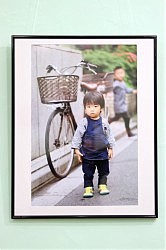
Along with traditional Japanese dolls (they play a special role on Girls’ Day, celebrated in Japan on March 3), the exhibition included photographs telling about the daily life of the Land of the Rising Sun.
— The idea with photographs was spontaneous. We wanted to show Ukrainians what Japanese people are like. It is generally believed that Japan has only samurai and geishas, but Japanese people are just like us, — noted one of the exhibition organizers, Victoria Muronchuk.
The spirit of exotic antiquity was absorbed by porcelain dishes, calligraphy samples, and fans. Three exhibition halls housed over a hundred works by Japanese and Ukrainian masters.
Temari attracted special attention at the exhibition — small Japanese embroidered balls that came to Japan from China. In imitation of the ball games played by young men (kemari), young beauties at the imperial court invented the game of temari (meaning “ball of thread”) — to toss a beautiful ball to each other while singing rhythmic songs. Later, temari were used for children’s games, each Japanese province invented its own characteristic embroidery patterns, and mothers made balls from scraps of old kimonos. Today, these balls are presented as memorable gifts that, according to belief, bring happiness and prosperity.
Interestingly, there is a Temari Association in Ukraine, and this year a world record was set for a ball with a diameter of 2.16 meters and a weight of 440 kilograms — you can’t play with that! The temari made by Kyiv residents Iryna Kravchenko, Olga Anokhina, and other masters slightly resemble Ukrainian vyshyvankas in their patterns, such is the interpenetration of cultures.
During these days, museum visitors were also able to get acquainted with the ancient art of calligraphy, learn to create origami (cut paper ornaments) and furoshiki (fabric for wrapping and carrying various items). The program of the Days of Japan in Odessa included film screenings and a children’s and youth judo tournament. In addition, everyone could try their hand at learning the Japanese language. Of course, one cannot master this language in three days; one can only become interested and subsequently add extra colors to one’s life with new pursuits.











