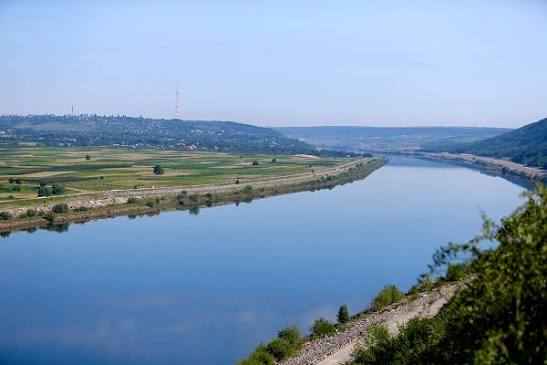
This year, four residents of our region have already contracted leptospirosis – in Lyubashevsky, Izmailsky, Savransky, and Kiliysky districts (the latter case was registered just the other day). Men leading an active lifestyle, who are now patients at the infectious diseases hospital, were fishing in the Danube floodplains and swimming in the Savranka and Southern Bug rivers. This was reported by Sergey Dementyev, head of the particularly dangerous infections department of the regional SES.
All patients are adults who, it would seem, not only listen to doctors’ advice but also try to follow it: after all, the region’s sanitary service warns annually about the rules that must be observed to avoid contracting leptospirosis. For example, fans of summer water recreation should avoid shallow bodies of water (not only not drink from them but even not wash their faces) as well as unequipped swimming areas, and choose fishing spots carefully. Prefer places frequented by as few wild and domestic animals as possible: they, including various rodents – rats, particularly nutria, house mice, and others – are the source of leptospirosis infection for humans.
Leptospirosis cases among people in our region are registered annually. For instance, in 2010, 12 people fell ill – one case each in Odesa and Belgorod-Dnestrovsky, Baltsky, Belyaevsky districts, two cases in Kominternovsky, and six in Savransky; two patients died. In 2011, 7 people fell ill – one case each in Odesa, Izmail, and in Kominternovsky and Razdelnyansky districts, two cases in Bolgradsky, one of which was fatal.
The news that leptospirosis is widespread globally is unlikely to be comforting. It would be good if this information served to increase epidemic vigilance: leptospirosis is an acute infectious disease caused by various leptospires. There are over 100 varieties, differing both geographically and depending on the animal (source of infection) that is sick. People, explains epidemiologist Sergey Dementyev, most often get infected while swimming and using water from open reservoirs contaminated by leptospire-carrying animals for household needs, as well as during agricultural work on wet lands, hunting, fishing, caring for domestic animals, butchering carcasses, processing animal raw materials, and consuming food contaminated by rodents, or raw milk from cows with leptospirosis.
Farm animals get infected during grazing, drinking, through feed and bedding contaminated with leptospires, as well as in natural foci, i.e., where this infection circulates among wild animals. There are 32 such territories in our region across 9 districts: Baltsky, Belyaevsky, Izmailsky, Kodymsky, Kiliysky, Lyubashevsky, Nikolaevsky, Savransky, Tatarbunarsky. From the external environment, the pathogen enters the bodies of animals and humans through damaged skin and mucous membranes of the oral cavity, gastrointestinal tract, eyes, nose, and external genitalia.
Territories where leptospirosis is detected in animals are leptospirosis foci, potentially dangerous to humans. They are divided into natural, which we discussed above, anthropurgic (agricultural), and mixed.
It is worth mentioning again that the carriers of leptospires in natural foci are various small, moisture-loving rodents, field mice, gray rats, house mice, as well as shrews and hedgehogs. Human illness in such foci is strictly tied to the summer-autumn period (June-September), when agricultural work is in full swing, the swimming season is at its peak, as are hunting and fishing, etc.
Anthropurgic foci are characterized by group or individual cases of illness among people.
In most cases, those in the “risk group” fall ill – vacationers at small lakes and rivers, fishermen, hunters, veterinarians, and utility workers.
Unfortunately, in recent years, there has been an increase in cases where leptospirosis pathogens are transmitted through food, water, and household items contaminated with rodent excrement. This most often occurs in cities, especially port cities, and less often in rural areas. Such sporadic morbidity is observed throughout the year. The incidence peaks in autumn when the rat population is particularly high. According to laboratory studies of rodents for leptospire carriage, conducted annually by the regional SES’s particularly dangerous infections laboratory, up to 30% of these animals are infected.
This situation, emphasizes Sergey Dementyev, is primarily due to the small scale of preventive measures, namely, rodent extermination (deratization). Preventive deratization yields positive results if carried out twice a year – in spring and autumn. Locally, according to the Law of Ukraine “On Ensuring the Sanitary and Epidemiological Well-being of the Population,” this work must be organized by the heads of enterprises, organizations, and institutions, as well as local self-government bodies.
Patients with leptospirosis must be hospitalized in an infectious diseases ward; however, they pose no particular danger to others: leptospirosis is not transmitted from person to person.
Overall, the prognosis, especially with the anicteric course of leptospirosis, is favorable. However, in severe cases of the disease, with jaundice and pronounced renal-hepatic syndrome, hemorrhagic manifestations, the prognosis is significantly more complex, especially with delayed medical attention: fatal outcomes are possible.
Do not take leptospirosis lightly, warns the specialist. This acute infectious disease is characterized by complications such as meningitis, encephalitis, polyneuritis, myocarditis, iritis, iridocyclitis, and uveitis.
An epidemiological investigation of each case of leptospirosis is conducted jointly by an epidemiologist and a veterinary medicine specialist. In foci (domestic, industrial, natural), a full range of anti-epidemic and preventive measures is carried out.
Leptospirosis prevention is a comprehensive set of organizational, economic, medical, and sanitary-veterinary measures. In settlements that are unfavorable for leptospirosis and their surroundings, it is necessary to drain swampy areas, combat rodents, and prevent contamination of food products and water with their excrement.
Do not forget about personal prevention: where there is a potential risk of leptospirosis infection, work should be done in protective clothing – a jumpsuit, rubber boots, gloves, goggles, and also try to avoid micro-injuries to the skin and mucous membranes.