

Perhaps I would have loved Brussels even if this city were not the capital of Belgium, the cultural and political center of the European Community.
The city has a population of over 1 million inhabitants. Just like in Odessa. And here, like in my hometown, they like to organize various festivals. Even during times of economic crisis. So as not to forget that Brussels is a cultural and political center not only of small Belgium but of all of Europe.
It is considered the “main gateway” to Belgium: major routes pass through Brussels: from the ports of the English Channel through Flemish cities. In addition, it is a railway transport route from France to the Netherlands.
Brussels, which took its name from “Bruxelles,” meaning “city of marshes,” originated in the 6th century AD on the trade route between the cities of Cologne and Bruges/Ghent. During the reign of the Habsburgs, the city prospered and eventually became the capital of Spanish Holland. In the 19th century, it acquired the status of the capital of newly independent Belgium.
The word “Brussels” has long been used worldwide to denote the EU as a whole. After all, it was in the capital of Belgium that all three EU institutions settled: the Commission, the Council of Ministers, and the European Parliament. And NATO too. About a third of Brussels’ population has foreign passports.
Brussels is the headquarters of the European Union and NATO, there are certainly very important buildings here, hiding top-secret documents in their safes, but it also has many interesting places for tourists.
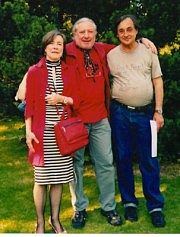
It’s no wonder that Brussels residents consider their city magnificent. Let Parisians argue that this is not entirely true, but Brussels residents know the advantages of their hometown better. The best guides are Brussels residents of the third or fourth generation. I was lucky: Odette Stoclet, a lawyer, a rich woman, a joker, and her husband, the famous American minimalist composer Charlemagne Palestine, showed me around Brussels several times. Charlemagne’s father was born in Odessa.
Four years ago, Palestine came to Odessa in an orange vest, as he was a fervent supporter of the Kyiv Maidan at the time. The walk with Charlemagne and Odette around Odessa was delightful, and his orange vest and cowboy hat attracted the attention of passers-by.
Odette and Charlemagne’s house is in the very center of Brussels. This house is exactly 100 years old. And it has a lot of Odessa in it, which did not surprise me at all. Odette Stoclet is one of the three co-owners of a grand palace built in the early twentieth century by the famous Viennese architect Josef Hoffmann on Avenue de Tervueren for Odette’s grandfather, engineer Stoclet. Moreover, this palace houses a beautiful collection of Viennese Art Nouveau. What wonderful paintings, ceramics, small sculptures, and glass are here. And the stained glass windows were made by the brilliant Austrian painter Gustav Klimt.
I am pleased that it was Odette who said that Odessa and Brussels are as similar as brother and sister.
With Palestine, we were in the largest beer bar, which used to be a garage, and broke glasses, like hussars, to the glory of Odessa and Brussels. Then the waiter approached Charlemagne and asked if he was the one who broke the glasses, and he replied: “Do I look like that kind of person?” I must say that Charlemagne Palestine has long been one of the attractions of Brussels.
Naturally, the heart of the city is the Grand Place. The square is always lively. It is surrounded by houses built in the 17th century. Architecture connoisseurs consider this rectangle of 34 magnificent houses one of the most beautiful places in Europe. Each house has its own name and each once belonged to a specific guild. For example, the “She-wolf” house was occupied by the archers’ guild. In the old mansion Le Cygne (The Swan), Karl Marx and Friedrich Engels led the German Workers’ Society, and now it houses one of the most expensive Brussels restaurants. It’s a pity I never got to visit it.
Above all the houses rises the majestic building of the town hall (Hôtel de Ville), which is a masterpiece of Gothic architecture. When the cannons of King Louis XIV of France reduced the city center to rubble in 1695, only the Gothic town hall miraculously survived, its construction taking place in 3 stages. The left wing was built in 1402 by Jacques Van Thienen, and the right wing was completed in 1445 by an unknown architect. In 1450, the building was crowned with a 90-meter watchtower with a statue of St. Michael, the patron saint of Brussels.
Opposite the Town Hall stands the “King’s House,” but, however, no king ever lived in it. From the 13th century, the house served alternately as a bakery warehouse, a tribunal, and a prison. In 1873, architect Victor Jamaer reconstructed the building in the Gothic style. Currently, the “King’s House” houses the Municipal Museum.
Not far from the Grand Place is the famous Manneken Pis fountain. There are many legends about its origin. According to one of them, four centuries ago, a boy saved the city from fire in this way. Manneken Pis has a wardrobe of over 2000 outfits, stored in the “King’s House” in the Municipal Museum.
The Cathedral of St. Michael and St. Gudula is impressive. Construction completed in 1226. The architecture of the building consists of different styles: Romanesque, Gothic, and Renaissance. The facade has two towers, each 70 meters high. Inside, the building is illuminated by soft light filtering through high windows with stained glass of amazing clarity.
One of the most famous historical attractions of the city is the Royal Saint-Hubert Galleries between Rue Marché-aux-Herbes and Rue de l’Écuyer. This is the first architectural complex with covered galleries in Europe (1847), now surrounded by dozens of art galleries, cafes, restaurants, and theaters. On Place du Musée is the palace of Charles of Lorraine. South of the Royal Square are the Sablon quarters, where you should visit the Egmont Palace (18th century), the Minimes Church (1715), and the beautiful Gothic Church of Notre-Dame du Sablon (16th century).
You should definitely take a walk through the “Brussels Park,” formerly the royal dynasty’s hunting park, and admire several picturesque ponds.
In the southeastern, business part of the city, the squares of Marie-Louise and Ambiorix, as well as the Sonian Forest and Cambre Forest, are interesting. Thousands of tourists are attracted to the Abbey of La Cambre (13th-18th centuries, now housing the National Geographic Institute and the Cambre Higher School of Fine Arts) in the Ixelles Ponds area, as well as Cambre Square and the Théâtre de Poche.
In Odessa, as you know, there is the House of Clowns, and in Brussels, there is the Comic Museum, located at the end of Rue de Sable. This museum is a gift to the people of Brussels from King Baudouin. Every year, this museum is visited by about 200,000 visitors. The famous Brussels director Boris Lehman, whose parents are also from Odessa, made a film about the Comic Museum and his hair. The very form of this film, according to Lehman, a laureate of various prestigious film awards, is disheveled, bare-headed, free, and open. And in this film, there is, of course, the Potemkin Stairs, which Boris considers the main Odessan beard.
There are no former Odessans. And one of the most famous Belgian pianists (laureate, professor) Yevgeny Mogilevsky, who graduated from the Stolyarsky School in his mother’s class, feels like an eternal Odessan.
Brussels artist Constanteiler Nius has released a book of etchings about Odessa. She devours Babel’s stories. And in Odessa, she was particularly struck by the anecdotes. She published some of them on the back of her etchings.
In Belgium, Babel, Paustovsky, and Olesha are published. In Brussels, 10,000 Spaniards work in the EU, but I am friends with only one – Aida Martinez. Rather, she gets offended when called a Spaniard, as she is Catalan from Barcelona. She studied in St. Petersburg and Kyiv and, knowing all Slavic languages, works as a translator in the EU. She is annoyed that the Ukrainian language (which she likes) is not yet in high demand in the EU.
Mocking French people say that quite often over Brussels, from the stalls where they fry potatoes, there is a thick haze, similar to the smog over Victorian London. And indeed, french fries were invented by the Belgians. The city is also famous for Brussels lace. But visiting men are not interested in lace. Therefore, all guidebooks indicate that Gambrinus, who invented brewing and was elected patron of brewers, was from Flanders. It is the Belgians who are the world champions in beer drinking. Small Belgium produces the most varieties of it. Now beer is brewed in almost all Belgian monasteries. For example, the monks of the Trappist order from the Chimay, Orval, and Maredsous monasteries are famous for producing top-fermented beer containing up to 10 percent alcohol. Detailed information about the secrets of Brabant brewing art can be obtained in one of the guild houses on the Grand Place. The Beer Museum is located here, and you can easily learn how it was brewed in the 17th century.
And the outskirts of Brussels are interesting. And they resemble the outskirts of Odessa. Only the Black Sea is missing. But Brussels has many parks decorated with excellent statues. Among them are many monuments to poets and writers. And also, it seems to me, the whole city is singing a song to the words of Mustai Karim about the king who returned from the war. But the people of Brussels do not want to fight. And therefore, they often laugh. And they invent various incredible stories about themselves. But they treat their monarchs well. And they drink beer to the health of the royal couple. A lot of beer.
Long live glorious and ever cheerful Brussels!











